London School of Hygiene and Tropical Medicine, London, UK.
BMC Public Health. 2011 Apr 13;11 Suppl 3(Suppl 3):S9. doi: 10.1186/1471-2458-11-S3-S9.
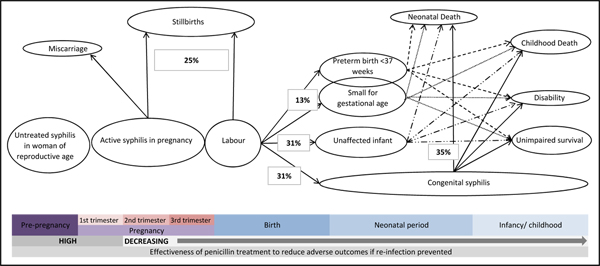
Globally syphilis is an important yet preventable cause of stillbirth, neonatal mortality and morbidity.
This review sought to estimate the effect of detection and treatment of active syphilis in pregnancy with at least 2.4 MU benzathine penicillin (or equivalent) on syphilis-related stillbirths and neonatal mortality.
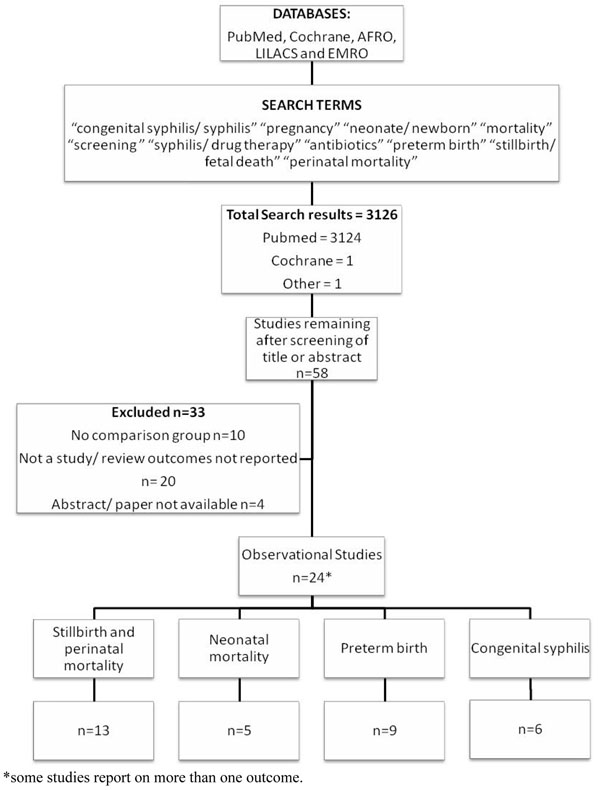
We conducted a systematic literature review of multiple databases to identify relevant studies. Data were abstracted into standardised tables and the quality of evidence was assessed using adapted GRADE criteria. Where appropriate, meta-analyses were undertaken.
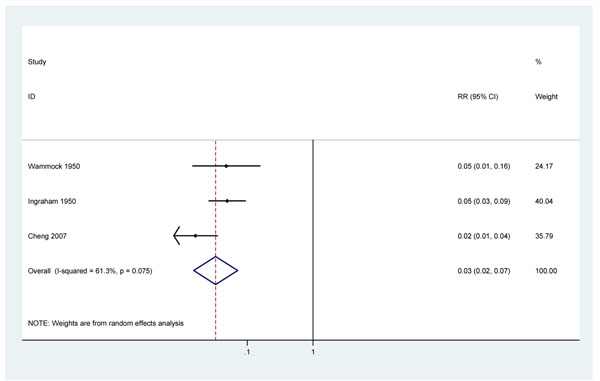
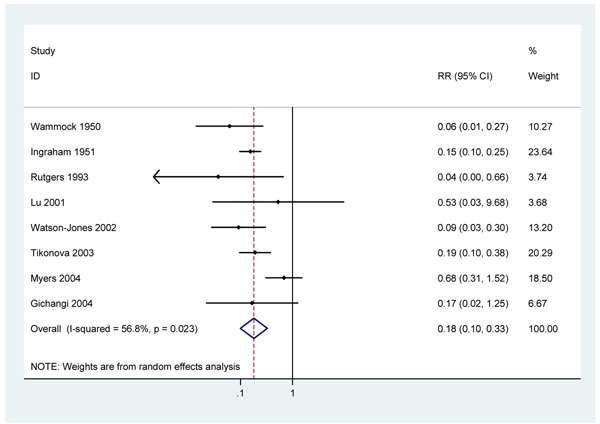
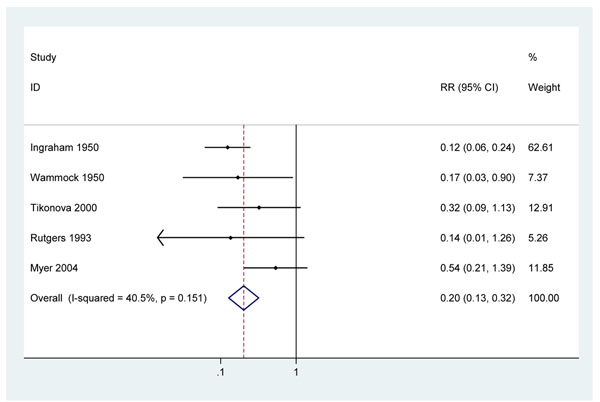
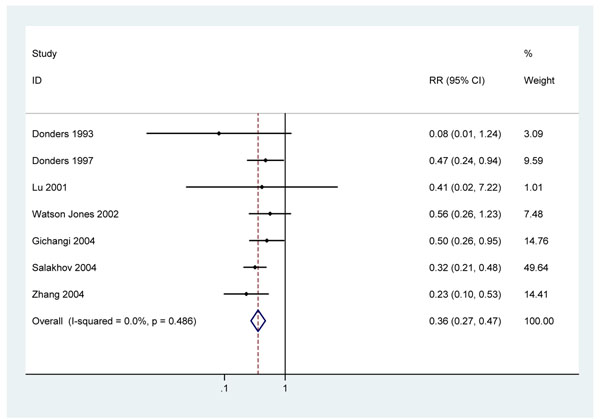
Moderate quality evidence (3 studies) supports a reduction in the incidence of clinical congenital syphilis of 97% (95% c.i 93 - 98%) with detection and treatment of women with active syphilis in pregnancy with at least 2.4 MU penicillin. The results of meta-analyses suggest that treatment with penicillin is associated with an 82% reduction in stillbirth (95% c.i. 67 - 90%) (8 studies), a 64% reduction in preterm delivery (95% c.i. 53 - 73%) (7 studies) and an 80% reduction in neonatal deaths (95% c.i. 68 - 87%) (5 studies). Although these effect estimates were large and remarkably consistent across studies, few of the studies adjusted for potential confounding factors and thus the overall quality of the evidence was considered low. However, given these large observed effects and a clear biological mechanism for effectiveness the GRADE recommendation is strong.
Detection and appropriate, timely penicillin treatment is a highly effective intervention to reduce adverse syphilis-related pregnancy outcomes. More research is required to identify the most cost-effective strategies for achieving maximum coverage of screening for all pregnant women, and access to treatment if required.
全球范围内,梅毒是导致死产、新生儿死亡和发病的一个重要但可预防的原因。
本综述旨在评估对至少接受 2.4 百万国际单位苄星青霉素(或等效药物)治疗的妊娠期活动性梅毒进行检测和治疗,对与梅毒相关的死产和新生儿死亡的影响。
我们对多个数据库进行了系统文献回顾,以确定相关研究。将数据摘录到标准表格中,并使用改编的 GRADE 标准评估证据质量。在适当的情况下,进行了荟萃分析。
有中等质量证据(3 项研究)支持对妊娠期活动性梅毒女性进行检测和治疗,用至少 2.4 百万国际单位青霉素治疗,可以使临床先天性梅毒的发生率降低 97%(95%可信区间 93-98%)。荟萃分析的结果表明,用青霉素治疗与死产减少 82%(95%可信区间 67-90%)(8 项研究)、早产减少 64%(95%可信区间 53-73%)(7 项研究)和新生儿死亡减少 80%(95%可信区间 68-87%)(5 项研究)相关。尽管这些效应估计值较大且在研究间非常一致,但很少有研究调整了潜在的混杂因素,因此证据的总体质量被认为较低。然而,鉴于这些观察到的巨大效果以及青霉素有效性的明确生物学机制,GRADE 推荐意见很强。
检测和适当、及时的青霉素治疗是减少不良与梅毒相关的妊娠结局的有效干预措施。需要进一步研究以确定实现所有孕妇筛查全覆盖和获得治疗的最具成本效益的策略。