Department of Cell and Molecular Physiology, University of North Carolina, Chapel Hill, NC, USA.
J Neurodev Disord. 2011 Sep;3(3):282-92. doi: 10.1007/s11689-011-9081-8. Epub 2011 Apr 21.
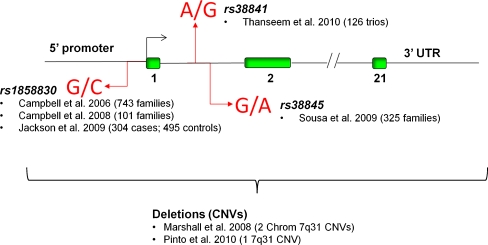
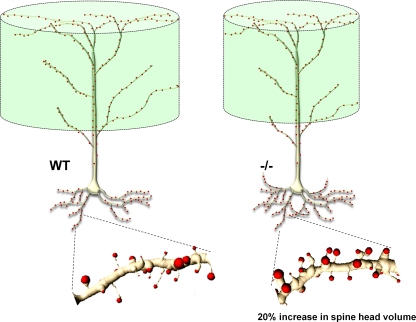
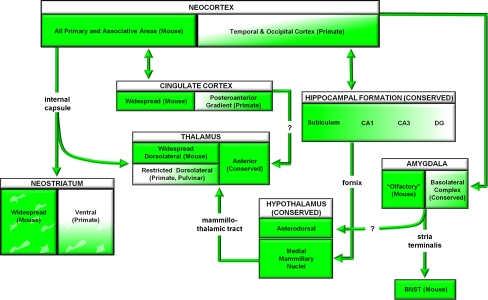
The validity for assigning disorder risk to an autism spectrum disorder (ASD) candidate gene comes from convergent genetic, clinical, and developmental neurobiology data. Here, we review these lines of evidence from multiple human genetic studies, and non-human primate and mouse experiments that support the conclusion that the MET receptor tyrosine kinase (RTK) functions to influence synapse development in circuits relevant to certain core behavioral domains of ASD. There is association of both common functional alleles and rare copy number variants that impact levels of MET expression in the human cortex. The timing of Met expression is linked to axon terminal outgrowth and synaptogenesis in the developing rodent and primate forebrain, and both in vitro and in vivo studies implicate this RTK in dendritic branching, spine maturation, and excitatory connectivity in the neocortex. This impact can occur in a cell-nonautonomous fashion, emphasizing the unique role that Met plays in specific circuits relevant to ASD.
将疾病风险分配给自闭症谱系障碍 (ASD) 候选基因的有效性来自于趋同的遗传、临床和发育神经生物学数据。在这里,我们回顾了来自多个人类遗传研究、非人类灵长类动物和小鼠实验的这些证据,这些证据支持这样的结论,即 MET 受体酪氨酸激酶 (RTK) 能够影响与 ASD 某些核心行为领域相关的回路中的突触发育。在人类大脑皮层中,常见的功能等位基因和罕见的拷贝数变异都与 MET 表达水平有关。Met 的表达时间与发育中的啮齿动物和灵长类动物前脑的轴突末端生长和突触发生有关,体外和体内研究都表明这种 RTK 参与了树突分支、棘突成熟和新皮层中的兴奋性连接。这种影响可以以非细胞自主的方式发生,强调了 Met 在与 ASD 相关的特定回路中发挥的独特作用。