Department of Mechanical Engineering, University of Victoria, PO Box 3055, STN CSC, Victoria, British Columbia, V8W 3P6 Canada.
Stem Cell Res Ther. 2011 Apr 15;2(2):17. doi: 10.1186/scrt58.
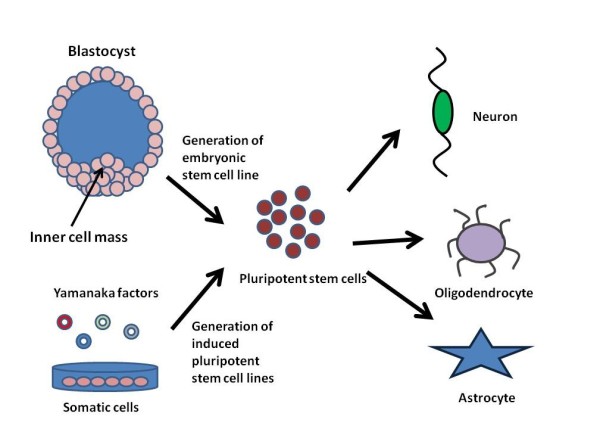
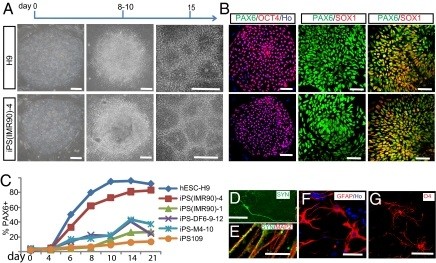
With the recent start of the first clinical trial evaluating a human embryonic stem cell-derived therapy for the treatment of acute spinal cord injury, it is important to review the current literature examining the use of embryonic stem cells for neural tissue engineering applications with a focus on diseases and disorders that affect the central nervous system. Embryonic stem cells exhibit pluripotency and thus can differentiate into any cell type found in the body, including those found in the nervous system. A range of studies have investigated how to direct the differentiation of embryonic cells into specific neural phenotypes using a variety of cues to achieve the goal of replacing diseased or damaged neural tissue. Additionally, the recent development of induced pluripotent stem cells provides an intriguing alternative to the use of human embryonic stem cell lines for these applications. This review will discuss relevant studies that have used embryonic stem cells to replicate the tissue found in the central nervous system as well as evaluate the potential of induced pluripotent stem cells for the aforementioned applications.
随着首个评估人类胚胎干细胞衍生疗法治疗急性脊髓损伤的临床试验的启动,重要的是要回顾当前研究文献,重点关注影响中枢神经系统的疾病和障碍,探讨胚胎干细胞在神经组织工程应用中的用途。胚胎干细胞具有多能性,因此可以分化为体内任何类型的细胞,包括神经系统中的细胞。一系列研究已经调查了如何使用各种线索来指导胚胎细胞分化为特定的神经表型,以实现替代患病或受损神经组织的目标。此外,诱导多能干细胞的最新发展为这些应用提供了一种有吸引力的替代方案,无需使用人胚胎干细胞系。本综述将讨论使用胚胎干细胞复制中枢神经系统组织的相关研究,并评估诱导多能干细胞在上述应用中的潜力。