Centre for Immunology and Infectious Disease, Blizard Institute of Cell and Molecular Science, Barts and the London School of Medicine and Dentistry, London, UK.
J Inflamm (Lond). 2011 May 3;8:11. doi: 10.1186/1476-9255-8-11.
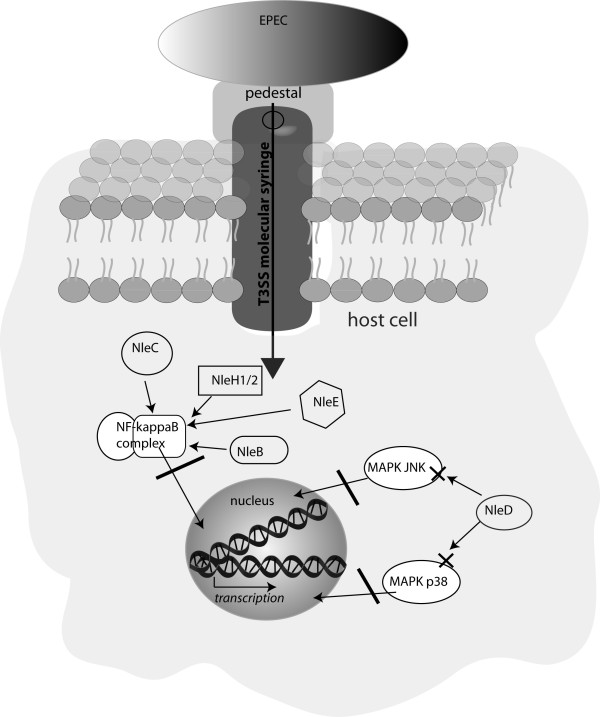
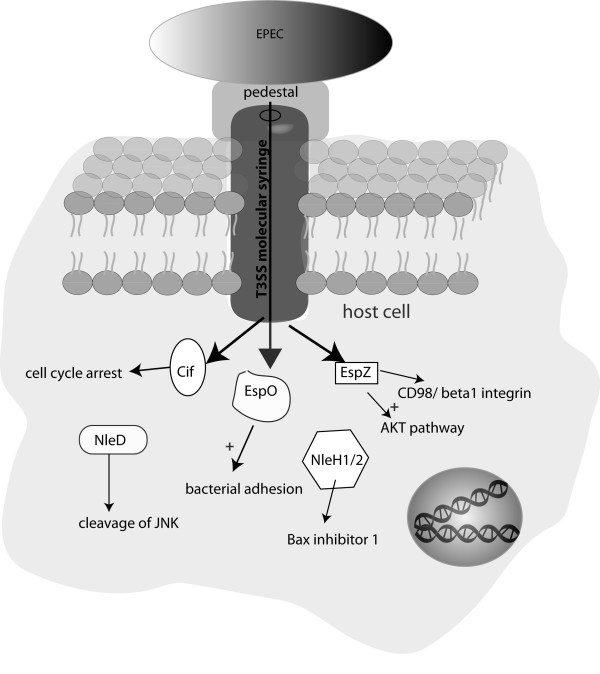
The intestinal immune system and the epithelium are the first line of defense in the gut. Constantly exposed to microorganisms from the environment, the gut has complex defense mechanisms to prevent infections, as well as regulatory pathways to tolerate commensal bacteria and food antigens. Intestinal pathogens have developed strategies to regulate intestinal immunity and inflammation in order to establish or prolong infection. The organisms that employ a type III secretion system use a molecular syringe to deliver effector proteins into the cytoplasm of host cells. These effectors target the host cell cytoskeleton, cell organelles and signaling pathways. This review addresses the multiple mechanisms by which the type III secretion system targets the intestinal immune response, with a special focus on pathogenic E. coli.
肠道免疫系统和上皮细胞是肠道的第一道防线。肠道不断暴露于来自环境的微生物中,因此具有复杂的防御机制来预防感染,同时还具有调节途径来耐受共生细菌和食物抗原。肠道病原体已开发出调节肠道免疫和炎症的策略,以建立或延长感染。使用 III 型分泌系统的生物体使用分子注射器将效应蛋白递送到宿主细胞的细胞质中。这些效应物靶向宿主细胞的细胞骨架、细胞器和信号通路。本综述讨论了 III 型分泌系统靶向肠道免疫反应的多种机制,特别关注致病性大肠杆菌。