Mizushina Yoshiyuki, Maeda Jun, Irino Yasuhiro, Nishida Masayuki, Nishiumi Shin, Kondo Yasuyuki, Nishio Kazuyuki, Kuramochi Kouji, Tsubaki Kazunori, Kuriyama Isoko, Azuma Takeshi, Yoshida Hiromi, Yoshida Masaru
Laboratory of Food & Nutritional Sciences, Department of Nutritional Science, Kobe-Gakuin University, Nishi-ku, Kobe, Hyogo 651-2180, Japan.
Int J Mol Sci. 2011 Feb 10;12(2):1115-32. doi: 10.3390/ijms12021115.
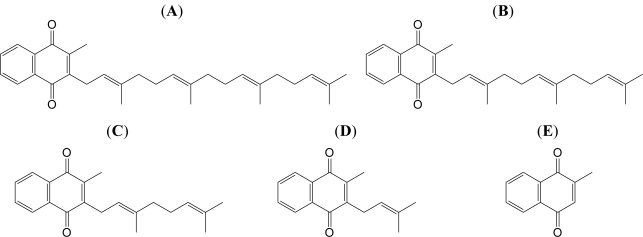
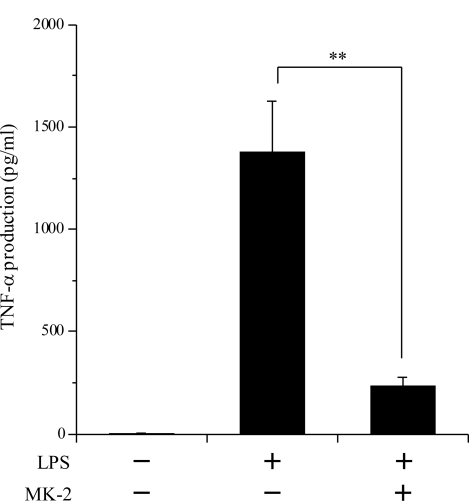
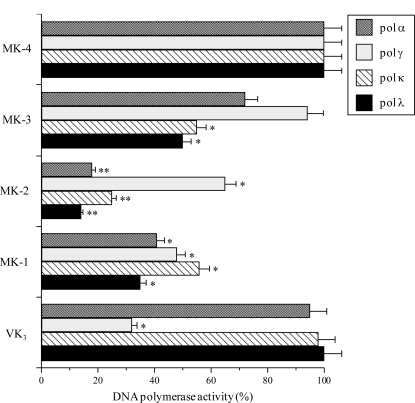
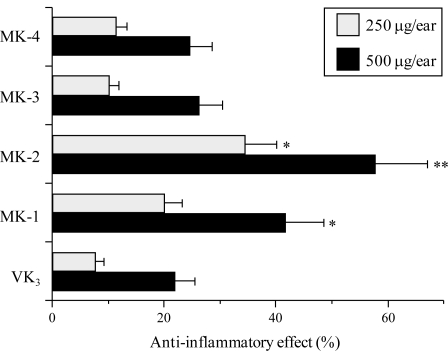
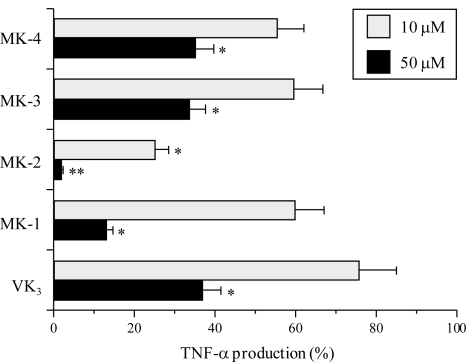
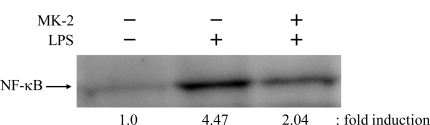
Previously, we reported that vitamin K(3) (VK(3)), but not VK(1) or VK(2) (=MK-4), inhibits the activity of human DNA polymerase γ (pol γ). In this study, we chemically synthesized three intermediate compounds between VK(2) and VK(3), namely MK-3, MK-2 and MK-1, and investigated the inhibitory effects of all five compounds on the activity of mammalian pols. Among these compounds, MK-2 was the strongest inhibitor of mammalian pols α, κ and λ, which belong to the B, Y and X families of pols, respectively; whereas VK(3) was the strongest inhibitor of human pol γ, an A-family pol. MK-2 potently inhibited the activity of all animal species of pol tested, and its inhibitory effect on pol λ activity was the strongest with an IC(50) value of 24.6 μM. However, MK-2 did not affect the activity of plant or prokaryotic pols, or that of other DNA metabolic enzymes such as primase of pol α, RNA polymerase, polynucleotide kinase or deoxyribonuclease I. Because we previously found a positive relationship between pol λ inhibition and anti-inflammatory action, we examined whether these compounds could inhibit inflammatory responses. Among the five compounds tested, MK-2 caused the greatest reduction in 12-O-tetradecanoylphorbol-13-acetate (TPA)-induced acute inflammation in mouse ear. In addition, in a cell culture system using mouse macrophages, MK-2 displayed the strongest suppression of the production of tumor necrosis factor (TNF)-α induced by lipopolysaccharide (LPS). Moreover, MK-2 was found to inhibit the action of nuclear factor (NF)-κB. In an in vivo mouse model of LPS-evoked acute inflammation, intraperitoneal injection of MK-2 in mice led to suppression of TNF-α production in serum. In conclusion, this study has identified VK(2) and VK(3) intermediates, such as MK-2, that are promising anti-inflammatory candidates.
此前,我们报道维生素K(3)(VK(3))可抑制人DNA聚合酶γ(pol γ)的活性,而VK(1)或VK(2)(=甲萘醌-4,MK-4)则无此作用。在本研究中,我们化学合成了VK(2)和VK(3)之间的三种中间化合物,即MK-3、MK-2和MK-1,并研究了这五种化合物对哺乳动物DNA聚合酶活性的抑制作用。在这些化合物中,MK-2是哺乳动物DNA聚合酶α、κ和λ的最强抑制剂,它们分别属于DNA聚合酶的B、Y和X家族;而VK(3)是人DNA聚合酶γ(A家族DNA聚合酶)的最强抑制剂。MK-2能有效抑制所测试的所有动物物种DNA聚合酶的活性,其对DNA聚合酶λ活性的抑制作用最强,IC(50)值为24.6 μM。然而,MK-2不影响植物或原核生物DNA聚合酶的活性,也不影响其他DNA代谢酶的活性,如DNA聚合酶α的引发酶、RNA聚合酶、多核苷酸激酶或脱氧核糖核酸酶I。由于我们之前发现DNA聚合酶λ抑制与抗炎作用之间存在正相关关系,因此我们研究了这些化合物是否能抑制炎症反应。在所测试的五种化合物中,MK-2能最大程度地减轻12-O-十四烷酰佛波醇-13-乙酸酯(TPA)诱导的小鼠耳部急性炎症。此外,在使用小鼠巨噬细胞的细胞培养系统中,MK-2对脂多糖(LPS)诱导的肿瘤坏死因子(TNF)-α的产生表现出最强的抑制作用。此外,还发现MK-2能抑制核因子(NF)-κB的作用。在LPS诱发的急性炎症小鼠体内模型中,给小鼠腹腔注射MK-2可抑制血清中TNF-α的产生。总之,本研究鉴定出了VK(2)和VK(3)的中间化合物,如MK-2,它们是很有前景的抗炎候选物。