Centre for International Health, Burnet Institute, Melbourne, Australia.
Reprod Health. 2011 May 5;8:11. doi: 10.1186/1742-4755-8-11.
Adolescent pregnancy has significant health and socio-economic consequences for women, their families and communities. Efforts to prevent too-early pregnancy rely on accurate information about adolescents' knowledge, behaviours and access to family planning, however available data are limited in some settings. Demographic and Health Survey (DHS) reports are recognised as providing nationally representative data that are accessible to policymakers and programmers. This paper reviews DHS reports for low and lower middle income countries in East Asia and the Pacific to determine what information regarding adolescent fertility and family planning is available, and summarises key findings.
The most recent DHS reports were sought for the 33 low and lower middle income countries in the East Asia and Pacific region as defined by UNICEF and World Bank. Age-disaggregated data for all indicators relevant to fertility and current use, knowledge and access to family planning information and services were sought to identify accessible information. Reported data were analysed using an Excel database to determine outcomes for adolescents and compare with adult women.
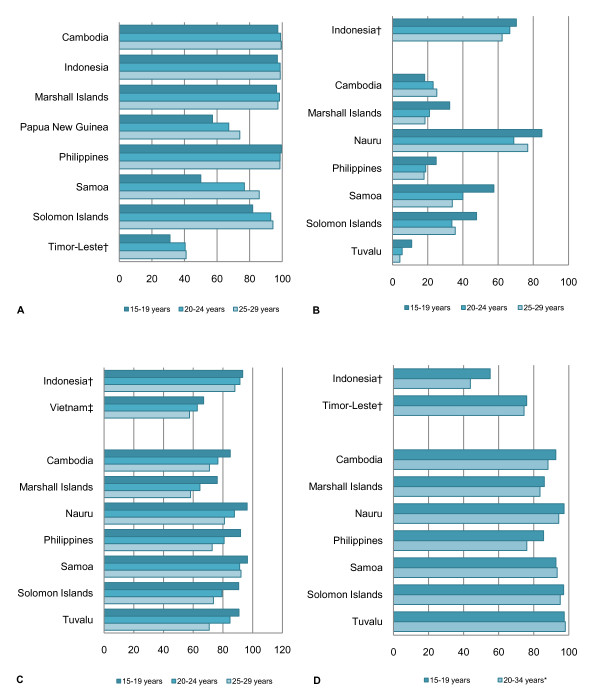
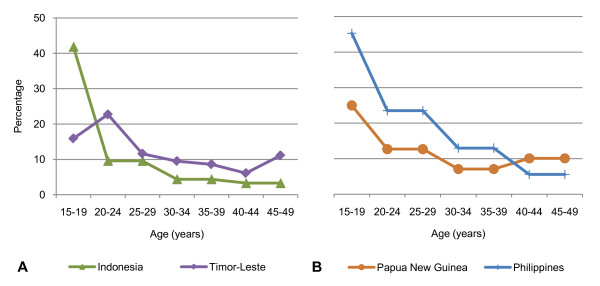
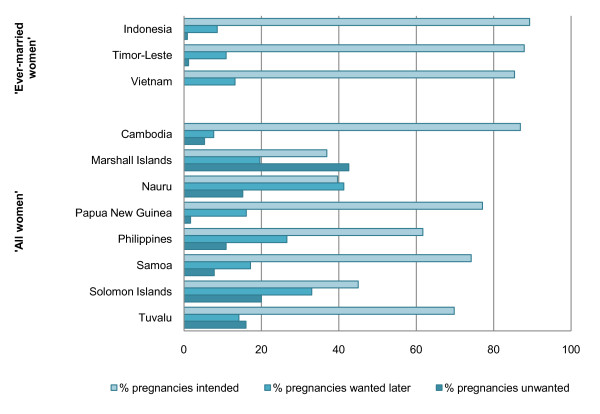
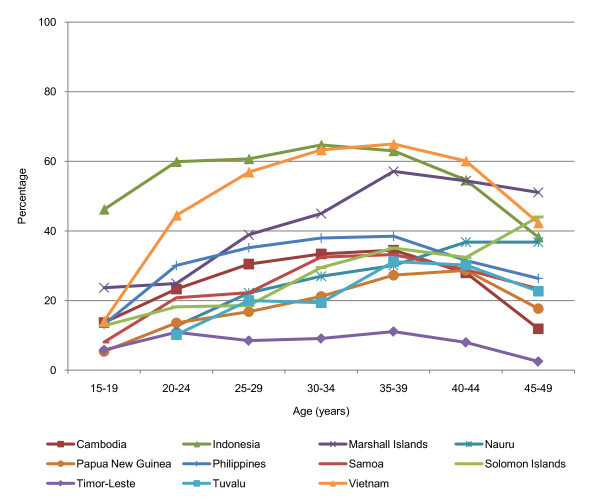
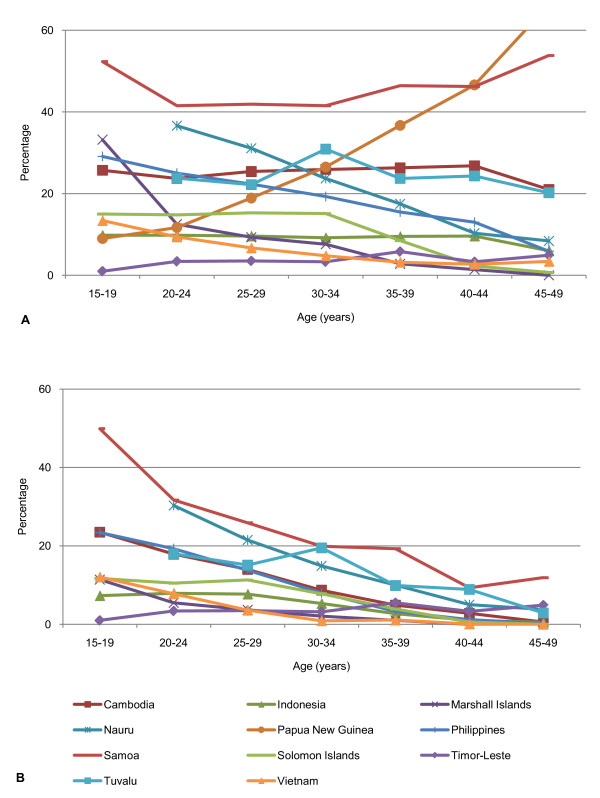
DHS reports were available for eleven countries: Cambodia, Indonesia, Marshall Islands, Nauru, Papua New Guinea, Philippines, Samoa, Solomon Islands, Timor-Leste, Tuvalu and Vietnam. Twenty seven of 40 relevant DHS indicators reported outcomes for adolescent women aged 15-19 years. There were limited data for unmarried adolescents. A significant proportion of women commence sexual activity and childbearing during adolescence in the context of low contraceptive prevalence and high unmet need for contraception. Adolescent women have lower use of contraception, poorer knowledge of family planning and less access to information and services than adult women.
DHS reports provide useful and accessible data, however, they are limited by the failure to report data for unmarried adolescents and report age-disaggregated data for some indicators. Further research is required to better understand the barriers that both married and unmarried adolescents face accessing reproductive health information and services, and their information and service delivery preferences.
少女怀孕对妇女、其家庭和社区都有重大的健康和社会经济影响。为了防止过早怀孕,需要依靠关于青少年的知识、行为以及获取计划生育服务的准确信息,然而在某些情况下,可用数据有限。人口与健康调查(DHS)报告被认为是提供国家代表性数据的方式,这些数据可供政策制定者和规划人员使用。本文审查了东亚和太平洋地区的低收入和中低收入国家的 DHS 报告,以确定有关青少年生育和计划生育的信息,总结了关键发现。
为了确定可获取的信息,我们寻找了联合国儿童基金会和世界银行定义的东亚和太平洋地区的 33 个低收入和中低收入国家的最新 DHS 报告。我们寻找了所有与生育和当前使用、计划生育知识和获取计划生育信息和服务相关的年龄分类数据,以确定可获取的信息。我们使用 Excel 数据库分析报告数据,以确定青少年的结果,并与成年妇女进行比较。
有 11 个国家的 DHS 报告可用:柬埔寨、印度尼西亚、马绍尔群岛、瑙鲁、巴布亚新几内亚、菲律宾、萨摩亚、所罗门群岛、东帝汶、图瓦卢和越南。在 40 个相关 DHS 指标中,有 27 个报告了 15-19 岁少女的结果。关于未婚青少年的数据有限。在避孕普及率低和对避孕需求未得到满足的情况下,相当一部分妇女在青春期开始性行为和生育。青少年妇女的避孕使用率较低,对计划生育的了解较差,获取信息和服务的机会也较少。
DHS 报告提供了有用且可获取的数据,但存在未报告未婚青少年数据以及某些指标未报告年龄分类数据的局限性。需要进一步研究,以更好地了解已婚和未婚青少年在获取生殖健康信息和服务方面面临的障碍,以及他们对信息和服务提供的偏好。