Department of Neurology and Oncology, Johns Hopkins University School of Medicine, Baltimore, MD, USA.
Cancer Gene Ther. 2011 Aug;18(8):563-70. doi: 10.1038/cgt.2011.23. Epub 2011 May 6.
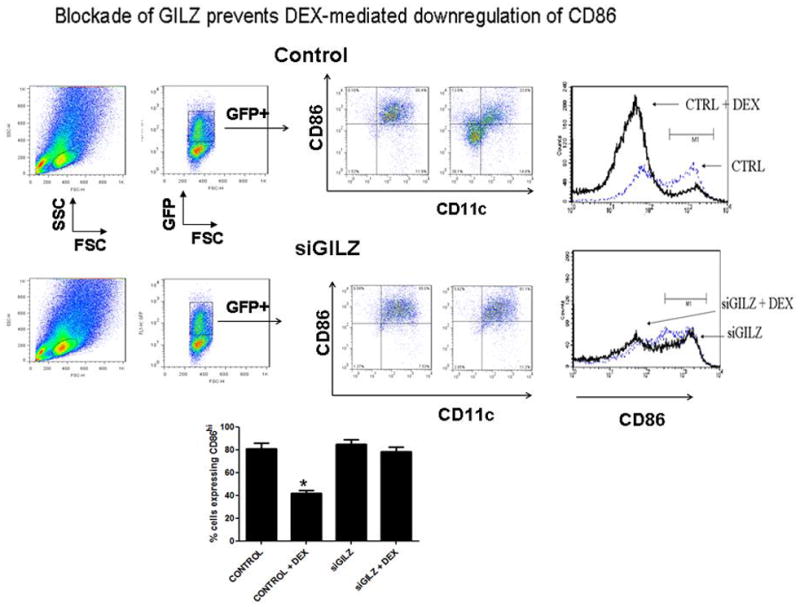
Dendritic cell (DC) vaccines have shown great promise in generating antitumor immune responses but have generally fallen short of producing durable cures. Determining mechanisms by which these vaccines fail will provide one strategy toward improving their success. Several manipulations of DCs have improved their migration and longevity, but the immune inhibitory environment surrounding tumors provides a powerful suppressive influence. To determine the mechanisms by which DCs at the site of the tumor convert to a suppressive phenotype, we evaluated pathways in DCs that become expressed at the tumor site. Our results revealed that tumors lead to induction of the glucocorticoid-induced leucine zipper (GILZ) gene in DCs, and that this gene is critical for the development of tumor-induced tolerance of both DCs and T cells. Previous data suggested that GILZ is a pivotal gene in the balance between activation and tolerance of DCs. Our new data show that GILZ is highly upregulated in DCs in the tumor microenvironment in vivo and that blockade of this gene in DC vaccines significantly improves long-term survival. These results suggest that GILZ may be an ideal candidate gene to target for novel immune-based tumor therapies.
树突状细胞 (DC) 疫苗在产生抗肿瘤免疫反应方面显示出巨大的潜力,但总体上未能产生持久的治愈效果。确定这些疫苗失败的机制将提供一种提高其成功率的策略。对 DC 的几种操作可以改善其迁移和寿命,但肿瘤周围的免疫抑制环境提供了强大的抑制影响。为了确定肿瘤部位的 DC 转化为抑制表型的机制,我们评估了在肿瘤部位表达的 DC 中的途径。我们的结果表明,肿瘤导致 DC 中糖皮质激素诱导的亮氨酸拉链 (GILZ) 基因的诱导,并且该基因对于 DC 和 T 细胞的肿瘤诱导耐受的发展至关重要。先前的数据表明,GILZ 是 DC 激活和耐受之间平衡的关键基因。我们的新数据表明,GILZ 在体内肿瘤微环境中的 DC 中高度上调,并且在 DC 疫苗中阻断该基因可显著提高长期存活率。这些结果表明,GILZ 可能是针对新型免疫肿瘤治疗的理想候选基因。