Department of Chemical and Biomolecular Engineering, University of California-Los Angeles, 420 Westwood Plaza, Los Angeles, CA 90095, USA.
Appl Microbiol Biotechnol. 2011 Jun;90(5):1681-90. doi: 10.1007/s00253-011-3173-y. Epub 2011 Mar 10.
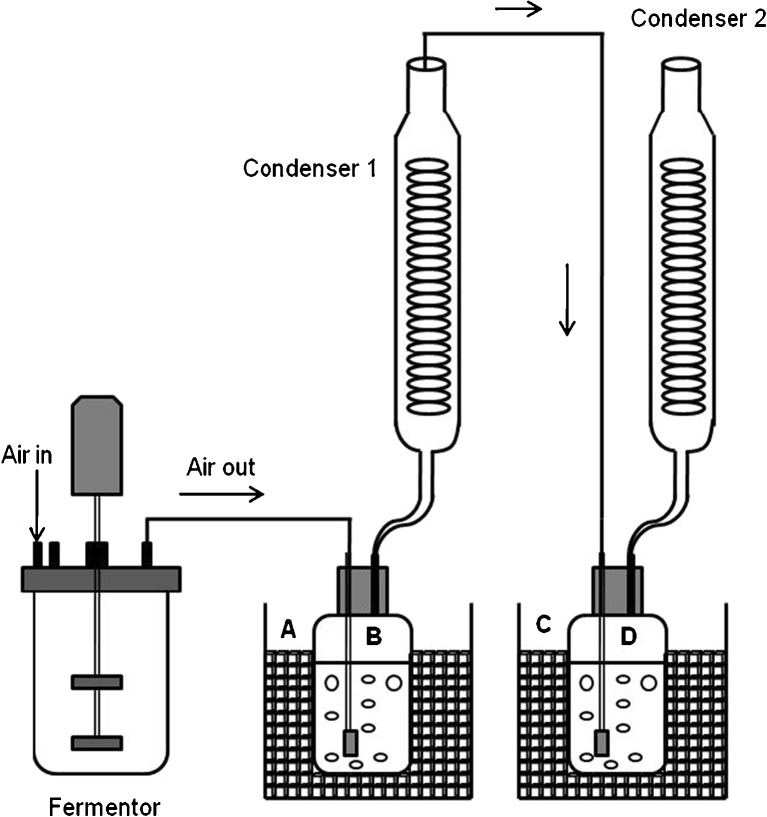
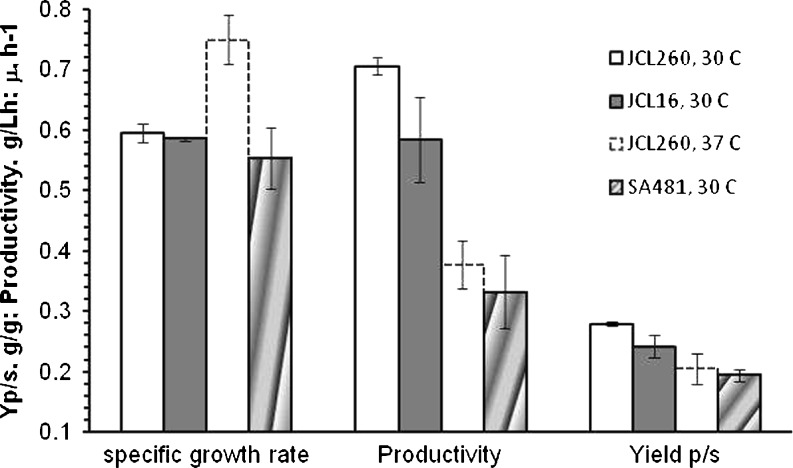
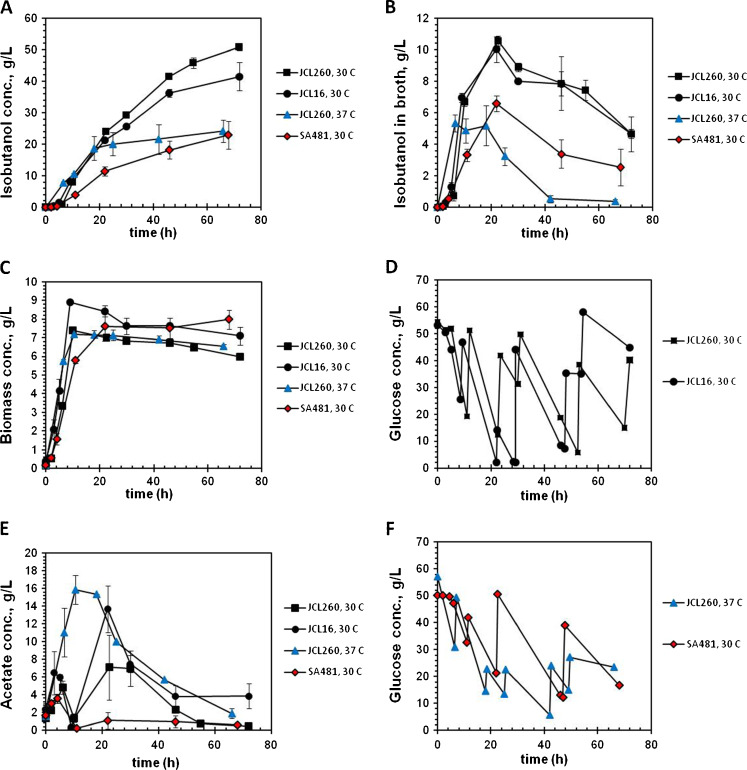
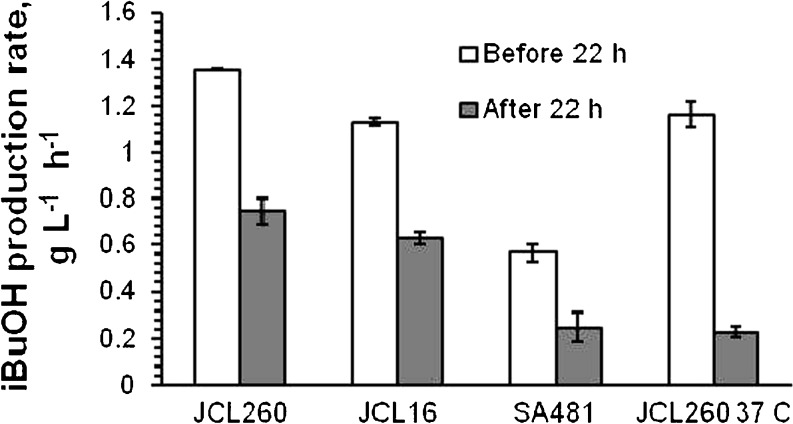
Promising approaches to produce higher alcohols, e.g., isobutanol, using Escherichia coli have been developed with successful results. Here, we translated the isobutanol process from shake flasks to a 1-L bioreactor in order to characterize three E. coli strains. With in situ isobutanol removal from the bioreactor using gas stripping, the engineered E. coli strain (JCL260) produced more than 50 g/L in 72 h. In addition, the isobutanol production by the parental strain (JCL16) and the high isobutanol-tolerant mutant (SA481) were compared with JCL260. Interestingly, we found that the isobutanol-tolerant strain in fact produced worse than either JCL16 or JCL260. This result suggests that in situ product removal can properly overcome isobutanol toxicity in E. coli cultures. The isobutanol productivity was approximately twofold and the titer was 9% higher than n-butanol produced by Clostridium in a similar integrated system.
使用大肠杆菌生产高浓度醇,例如异丁醇的方法已经取得了成功。在这里,我们将异丁醇的生产过程从摇瓶转移到 1L 生物反应器中,以对三种大肠杆菌菌株进行特性分析。通过气提从生物反应器中就地去除异丁醇,工程大肠杆菌菌株(JCL260)在 72 小时内生产了超过 50g/L 的异丁醇。此外,还比较了亲本菌株(JCL16)和高耐异丁醇突变株(SA481)的异丁醇生产能力与 JCL260 的比较。有趣的是,我们发现耐异丁醇菌株的生产能力实际上比 JCL16 或 JCL260 都差。这一结果表明,原位产物去除可以有效克服大肠杆菌培养物中的异丁醇毒性。与类似的集成系统中由梭菌生产的正丁醇相比,异丁醇的生产力约提高了两倍,浓度提高了 9%。