Department of Internal Medicine, University of New Mexico, Albuquerque, NM 87108, USA.
Parasit Vectors. 2011 May 14;4:77. doi: 10.1186/1756-3305-4-77.
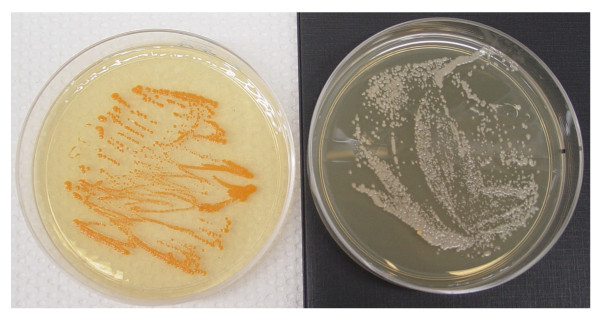
Paratransgenesis is an approach to reducing arthropod vector competence using genetically modified symbionts. When applied to control of Chagas disease, the symbiont bacterium Rhodococcus rhodnii, resident in the gut lumen of the triatomine vector Rhodnius prolixus (Hemiptera: Reduviidae), is transformed to export cecropin A, an insect immune peptide. Cecropin A is active against Trypanosoma cruzi, the causative agent of Chagas disease. While proof of concept has been achieved in laboratory studies, a rigorous and comprehensive risk assessment is required prior to consideration of field release. An important part of this assessment involves estimating probability of transgene horizontal transfer to environmental organisms (HGT). This article presents a two-part risk assessment methodology: a theoretical model predicting HGT in the gut of R. prolixus from the genetically transformed symbiont R. rhodnii to a closely related non-target bacterium, Gordona rubropertinctus, in the absence of selection pressure, and a series of laboratory trials designed to test the model.
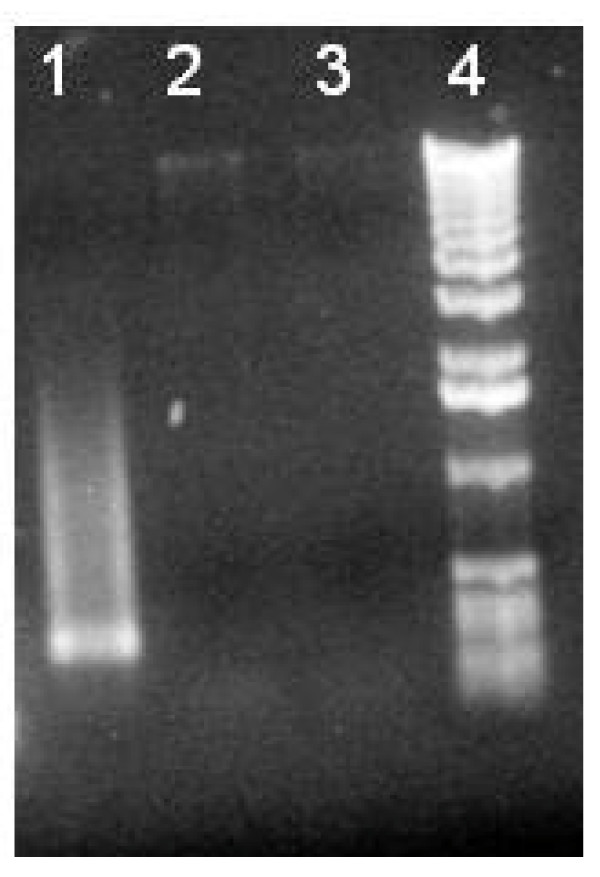
The model predicted an HGT frequency of less than 1.14 × 10(-16) per 100,000 generations at the 99% certainty level. The model was iterated twenty times, with the mean of the ten highest outputs evaluated at the 99% certainty level. Laboratory trials indicated no horizontal gene transfer, supporting the conclusions of the model.
The model treats HGT as a composite event, the probability of which is determined by the joint probability of three independent events: gene transfer through the modalities of transformation, transduction, and conjugation. Genes are represented in matrices and Monte Carlo method and Markov chain analysis are used to simulate and evaluate environmental conditions. The model is intended as a risk assessment instrument and predicts HGT frequency of less than 1.14 × 10(-16) per 100,000 generations. With laboratory studies that support the predictions of this model, it may be possible to argue that HGT is a negligible consideration in risk assessment of genetically modified R. rhodnii released for control of Chagas disease.
共生体基因改造是一种降低节肢动物媒介能力的方法。当应用于控制恰加斯病时,共生菌罗得西亚罗氏菌(Rhodococcus rhodnii)驻留在三锥虫媒介 Rhodnius prolixus(半翅目:Reduviidae)的肠道腔中,被转化为输出抗菌肽 Cecropin A。Cecropin A 对恰加斯病的病原体克氏锥虫(Trypanosoma cruzi)有效。虽然在实验室研究中已经证明了概念验证,但在考虑田间释放之前,需要进行严格和全面的风险评估。该评估的一个重要部分涉及估计转基因横向转移到环境生物(HGT)的概率。本文提出了一种两部分风险评估方法:一种理论模型,用于预测在没有选择压力的情况下,从遗传转化的共生体罗得西亚罗氏菌(Rhodococcus rhodnii)到密切相关的非靶标细菌戈尔登纳鲁比鲁珀廷克氏菌(Gordona rubropertinctus)在 R. prolixus 肠道中的 HGT 概率,以及一系列旨在测试该模型的实验室试验。
模型预测在 99%置信水平下,每 10 万代的 HGT 频率小于 1.14×10(-16)。该模型迭代了二十次,在 99%置信水平下评估了十个最高输出的平均值。实验室试验表明没有水平基因转移,支持模型的结论。
该模型将 HGT 视为复合事件,其概率由三个独立事件的联合概率决定:通过转化、转导和接合的方式进行基因转移。基因用矩阵表示,蒙特卡罗方法和马尔可夫链分析用于模拟和评估环境条件。该模型旨在作为一种风险评估工具,预测每 10 万代的 HGT 频率小于 1.14×10(-16)。由于实验室研究支持该模型的预测,因此可能可以认为在评估用于控制恰加斯病的遗传修饰罗得西亚罗氏菌释放的风险时,HGT 是一个可以忽略不计的考虑因素。