• 文献检索
  • 文档翻译
  • 深度研究
  • 学术资讯
  • Suppr Zotero 插件Zotero 插件
  • 邀请有礼
  • 套餐&价格
  • 历史记录
应用&插件
Suppr Zotero 插件Zotero 插件浏览器插件Mac 客户端Windows 客户端微信小程序
定价
高级版会员购买积分包购买API积分包
服务
文献检索文档翻译深度研究API 文档MCP 服务
关于我们
关于 Suppr公司介绍联系我们用户协议隐私条款
关注我们

Suppr 超能文献

核心技术专利:CN118964589B侵权必究
粤ICP备2023148730 号-1Suppr @ 2026

文献检索

告别复杂PubMed语法,用中文像聊天一样搜索,搜遍4000万医学文献。AI智能推荐,让科研检索更轻松。

立即免费搜索

文件翻译

保留排版,准确专业,支持PDF/Word/PPT等文件格式,支持 12+语言互译。

免费翻译文档

深度研究

AI帮你快速写综述,25分钟生成高质量综述,智能提取关键信息,辅助科研写作。

立即免费体验

二氧化碳激光消融联合病灶内注射类固醇对瘢痕疙瘩的影响。

Effect of carbon dioxide laser ablation followed by intralesional steroids on keloids.

作者信息

Garg Gaurav A, Sao Prajct P, Khopkar Uday S

机构信息

Department of Dermatology, Seth GS Medical College and KEM Hospital, Mumbai, India.

出版信息

J Cutan Aesthet Surg. 2011 Jan;4(1):2-6. doi: 10.4103/0974-2077.79176.

DOI:10.4103/0974-2077.79176
PMID:21572673
原文链接:https://pmc.ncbi.nlm.nih.gov/articles/PMC3081479/
Abstract

UNLABELLED

Keloid is a difficult-to-treat condition and an ideal treatment modality is not available. Carbon dioxide (CO(2)) laser is one of the modalities to treat keloids.

AIM

To evaluate the effect of CO(2) laser ablation followed by intralesional steroids on keloids.

SETTINGS AND DESIGN

This was a prospective, single-center, uncontrolled, open study.

MATERIALS AND METHODS

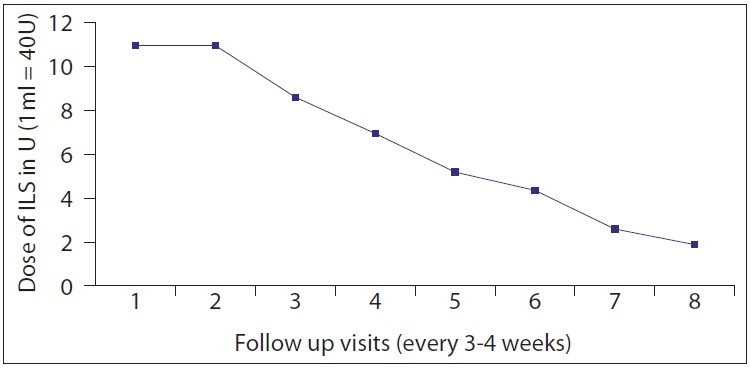
Twenty-eight patients having 35 keloids were included in the study. Keloids were ablated or excised with CO(2) laser followed by intralesional steroid 3-4 weeks apart for 6 months. Results were evaluated after 6 months of stopping of intralesional steroids.

STATISTICAL ANALYSIS

Fisher's exact test was applied for obtaining difference in recurrence rate of regular and irregular patients.

RESULTS

Thirteen patients followed up regularly for intralesional steroids. During 6 months of follow-up after stoppage of steroids, only two patients showed recurrence. Ten patients were irregular for intralesional steroids and seven of them showed recurrence. Difference in recurrence rate of regular and irregular patients was significant.

CONCLUSION

Only CO(2) laser ablation is not sufficient for halting the pathogenesis of keloid formation.We therefore conclude that CO(2) laser followed by intralesional steroid is a useful therapeutic approach for the treatment of keloids; however, patients need to be observed for recurrence over the next 1 year.

摘要

未标注

瘢痕疙瘩是一种难以治疗的病症,目前尚无理想的治疗方式。二氧化碳(CO₂)激光是治疗瘢痕疙瘩的方式之一。

目的

评估二氧化碳激光消融联合病灶内注射类固醇对瘢痕疙瘩的治疗效果。

设置与设计

这是一项前瞻性、单中心、非对照、开放性研究。

材料与方法

本研究纳入了28例患有35个瘢痕疙瘩的患者。使用二氧化碳激光对瘢痕疙瘩进行消融或切除,随后每隔3 - 4周进行一次病灶内注射类固醇,持续6个月。在停止病灶内注射类固醇6个月后评估结果。

统计分析

采用Fisher精确检验来获取规律随访和不规律随访患者复发率的差异。

结果

13例患者规律随访病灶内注射类固醇情况。在停止注射类固醇后的6个月随访期间,仅有2例患者出现复发。10例患者不规律随访病灶内注射类固醇情况,其中7例出现复发。规律随访和不规律随访患者的复发率差异显著。

结论

仅用二氧化碳激光消融不足以阻止瘢痕疙瘩形成的发病机制。因此,我们得出结论,二氧化碳激光联合病灶内注射类固醇是治疗瘢痕疙瘩的一种有效治疗方法;然而,在接下来的1年中需要观察患者是否复发。
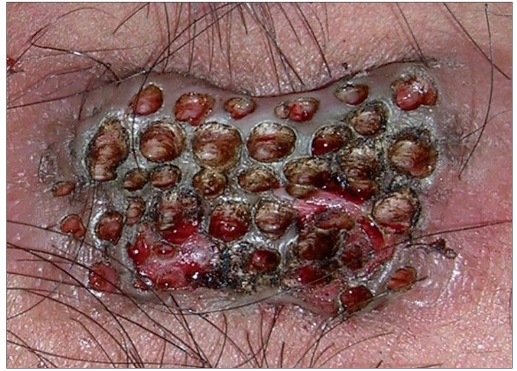
https://cdn.ncbi.nlm.nih.gov/pmc/blobs/4c5f/3081479/36882d5d84b2/JCAS-4-2-g007.jpg
https://cdn.ncbi.nlm.nih.gov/pmc/blobs/4c5f/3081479/5d3dfa839147/JCAS-4-2-g001.jpg
https://cdn.ncbi.nlm.nih.gov/pmc/blobs/4c5f/3081479/a96f02142d63/JCAS-4-2-g002.jpg
https://cdn.ncbi.nlm.nih.gov/pmc/blobs/4c5f/3081479/9950cbfa5df6/JCAS-4-2-g003.jpg
https://cdn.ncbi.nlm.nih.gov/pmc/blobs/4c5f/3081479/6334a87f939d/JCAS-4-2-g004.jpg
https://cdn.ncbi.nlm.nih.gov/pmc/blobs/4c5f/3081479/c1b9c7ebcaf3/JCAS-4-2-g005.jpg
https://cdn.ncbi.nlm.nih.gov/pmc/blobs/4c5f/3081479/729234dc7781/JCAS-4-2-g006.jpg
https://cdn.ncbi.nlm.nih.gov/pmc/blobs/4c5f/3081479/36882d5d84b2/JCAS-4-2-g007.jpg
https://cdn.ncbi.nlm.nih.gov/pmc/blobs/4c5f/3081479/5d3dfa839147/JCAS-4-2-g001.jpg
https://cdn.ncbi.nlm.nih.gov/pmc/blobs/4c5f/3081479/a96f02142d63/JCAS-4-2-g002.jpg
https://cdn.ncbi.nlm.nih.gov/pmc/blobs/4c5f/3081479/9950cbfa5df6/JCAS-4-2-g003.jpg
https://cdn.ncbi.nlm.nih.gov/pmc/blobs/4c5f/3081479/6334a87f939d/JCAS-4-2-g004.jpg
https://cdn.ncbi.nlm.nih.gov/pmc/blobs/4c5f/3081479/c1b9c7ebcaf3/JCAS-4-2-g005.jpg
https://cdn.ncbi.nlm.nih.gov/pmc/blobs/4c5f/3081479/729234dc7781/JCAS-4-2-g006.jpg
https://cdn.ncbi.nlm.nih.gov/pmc/blobs/4c5f/3081479/36882d5d84b2/JCAS-4-2-g007.jpg

相似文献

1
Effect of carbon dioxide laser ablation followed by intralesional steroids on keloids.二氧化碳激光消融联合病灶内注射类固醇对瘢痕疙瘩的影响。
J Cutan Aesthet Surg. 2011 Jan;4(1):2-6. doi: 10.4103/0974-2077.79176.
2
Retrospective analysis of earlobe keloids treated with the carbon dioxide laser ablation or cold steel debulking surgery.二氧化碳激光消融或冷钢减容手术治疗耳垂瘢痕疙瘩的回顾性分析
J Cosmet Laser Ther. 2013 Oct;15(5):271-3. doi: 10.3109/14764172.2013.769275. Epub 2013 Mar 6.
3
Surgical approach in the management of ear keloids: our experience with 30 patients.手术治疗耳部瘢痕疙瘩:我们对 30 例患者的经验。
Int J Dermatol. 2021 Dec;60(12):1553-1560. doi: 10.1111/ijd.15761. Epub 2021 Jul 24.
4
The use of the 300 microsecond 1064 nm Nd:YAG laser in the treatment of keloids.300微秒1064纳米钕钇铝石榴石激光在瘢痕疙瘩治疗中的应用。
J Drugs Dermatol. 2013 Nov;12(11):1256-62.
5
Location of Keloids and Its Treatment Modality May Influence the Keloid Recurrence in Children.瘢痕疙瘩的位置及其治疗方式可能影响儿童瘢痕疙瘩的复发。
J Craniofac Surg. 2015 Jun;26(4):1355-7. doi: 10.1097/SCS.0000000000001747.
6
Therapeutic Efficacy of Intralesional Steroid With Carbon Dioxide Laser Versus With Cryotherapy in Treatment of Keloids: A Randomized Controlled Trial.病灶内注射类固醇联合二氧化碳激光与冷冻疗法治疗瘢痕疙瘩的疗效比较:一项随机对照试验
Dermatol Surg. 2016 Oct;42(10):1188-98. doi: 10.1097/DSS.0000000000000873.
7
Laser-assisted topical steroid application versus steroid injection for treating keloids: A split side study.激光辅助局部应用类固醇与类固醇注射治疗瘢痕疙瘩的对比研究:一项双侧对照研究
J Cosmet Dermatol. 2021 Jan;20(1):138-142. doi: 10.1111/jocd.13521. Epub 2020 Jun 16.
8
Surgical excision and immediate postoperative radiotherapy versus cryotherapy and intralesional steroids in the management of keloids: a prospective clinical trial.手术切除联合术后即刻放疗与冷冻治疗联合皮损内糖皮质激素治疗瘢痕疙瘩的前瞻性临床研究。
Med Princ Pract. 2010;19(5):402-5. doi: 10.1159/000316381. Epub 2010 Jul 14.
9
The effect of carbon dioxide laser surgery on the recurrence of keloids.二氧化碳激光手术对瘢痕疙瘩复发的影响。
Plast Reconstr Surg. 1991 Jan;87(1):44-9; discussion 50-3.
10
Carbon dioxide laser excision of earlobe keloids. A prospective study and critical analysis of existing data.二氧化碳激光切除耳垂瘢痕疙瘩:一项前瞻性研究及对现有数据的批判性分析。
Arch Otolaryngol Head Neck Surg. 1989 Sep;115(9):1107-11. doi: 10.1001/archotol.1989.01860330097026.

引用本文的文献

1
A Randomized Study to Evaluate the Efficacy and Adverse Effects of Cryotherapy Combined with Intralesional Steroids, Intralesional Bleomycin Combined with Steroids and Fractional CO Laser in Keloids.一项评估冷冻疗法联合病灶内注射类固醇、病灶内注射博来霉素联合类固醇以及分次二氧化碳激光治疗瘢痕疙瘩的疗效和不良反应的随机研究。
Indian Dermatol Online J. 2025 Apr 15;16(3):407-413. doi: 10.4103/idoj.idoj_789_24. eCollection 2025 May-Jun.
2
Efficacy of Nd:YAG Laser and Intralesional Triamcinolone Injection Combination Therapy in the Postoperative Management of Keloids.钕钇铝石榴石激光与曲安奈德病灶内注射联合治疗在瘢痕疙瘩术后管理中的疗效
Aesthetic Plast Surg. 2025 Jan;49(2):576-583. doi: 10.1007/s00266-024-04433-z. Epub 2024 Oct 7.
3

本文引用的文献

1
TREATMENT OF KELOIDS WITH TRIAMCINOLONE ACETONIDE INJECTED INTRALESIONALLY.皮损内注射曲安奈德治疗瘢痕疙瘩
JAMA. 1965 Apr 26;192:325-6. doi: 10.1001/jama.1965.03080170053019.
2
Pilot study of the effect of postoperative imiquimod 5% cream on the recurrence rate of excised keloids.5%咪喹莫特乳膏对切除瘢痕疙瘩复发率影响的初步研究
J Am Acad Dermatol. 2002 Oct;47(4 Suppl):S209-11. doi: 10.1067/mjd.2002.126585.
3
Use of cryotherapy in the treatment of keloids.冷冻疗法在瘢痕疙瘩治疗中的应用。
Influence of scar age, laser type and laser treatment intervals on paediatric burn scars: a systematic review and meta-analysis.
瘢痕年龄、激光类型及激光治疗间隔时间对小儿烧伤瘢痕的影响:一项系统评价与Meta分析
Burns Trauma. 2024 Feb 2;12:tkad046. doi: 10.1093/burnst/tkad046. eCollection 2024.
4
Influence of scar age, laser type and laser treatment intervals on adult burn scars: A systematic review and meta-analysis.瘢痕年龄、激光类型及激光治疗间隔时间对成人烧伤瘢痕的影响:一项系统评价与Meta分析
PLoS One. 2023 Sep 27;18(9):e0292097. doi: 10.1371/journal.pone.0292097. eCollection 2023.
5
Keloid Treatment Using Plasma Exeresis: A Pilot Trial Study.使用等离子体切除术治疗瘢痕疙瘩:一项初步试验研究。
J Lasers Med Sci. 2023 Mar 14;14:e7. doi: 10.34172/jlms.2023.07. eCollection 2023.
6
Keloid treatments: an evidence-based systematic review of recent advances.瘢痕疙瘩治疗:最新进展的循证系统评价。
Syst Rev. 2023 Mar 14;12(1):42. doi: 10.1186/s13643-023-02192-7.
7
Treatment of Keloids Using Plasma Skin Regeneration Combined with Radiation Therapy Under the Evaluation of Patient and Observer Scar Assessment Scale.在患者和观察者瘢痕评估量表评估下,采用等离子皮肤再生联合放射治疗瘢痕疙瘩
Clin Cosmet Investig Dermatol. 2021 Aug 5;14:981-989. doi: 10.2147/CCID.S321348. eCollection 2021.
8
Efficacy and safety of laser combination therapy and laser alone therapy for keloid: a systematic review and meta-analysis.激光联合治疗与单纯激光治疗瘢痕疙瘩的疗效和安全性:系统评价和荟萃分析。
Lasers Med Sci. 2022 Mar;37(2):1127-1138. doi: 10.1007/s10103-021-03364-4. Epub 2021 Jul 20.
9
Keloid Scars: An Updated Review of Combination Therapies.瘢痕疙瘩:联合治疗的最新综述
Cureus. 2021 Jan 30;13(1):e12999. doi: 10.7759/cureus.12999.
10
Keloids: a review of therapeutic management.瘢痕疙瘩:治疗管理综述。
Int J Dermatol. 2021 Jun;60(6):661-671. doi: 10.1111/ijd.15159. Epub 2020 Sep 9.
J Dermatol Surg Oncol. 1993 Jun;19(6):529-34. doi: 10.1111/j.1524-4725.1993.tb00386.x.
4
Topical silicone gel sheeting in the treatment of hypertrophic scars and keloids. A dermatologic experience.外用硅胶凝胶片治疗增生性瘢痕和瘢痕疙瘩:皮肤科经验
J Dermatol Surg Oncol. 1993 Oct;19(10):912-6. doi: 10.1111/j.1524-4725.1993.tb00978.x.
5
Clinical uses of lasers in dermatology.激光在皮肤科的临床应用。
Lasers Surg Med. 1995;16(1):2-23. doi: 10.1002/lsm.1900160103.
6
The local treatment of hypertrophic scars and keloids with topical retinoic acid.外用维甲酸对增生性瘢痕和瘢痕疙瘩的局部治疗
Br J Dermatol. 1980 Sep;103(3):319-23. doi: 10.1111/j.1365-2133.1980.tb07251.x.
7
Preliminary results of argon and carbon dioxide laser treatment of keloid scars.
Lasers Surg Med. 1984;4(3):283-90. doi: 10.1002/lsm.1900040309.
8
Correlation of keloid recurrence with completeness of local excision. A negative report.
Plast Reconstr Surg. 1972 Aug;50(2):163-6. doi: 10.1097/00006534-197208000-00011.
9
Superpulsed lasers: minimizing thermal damage with short duration, high irradiance pulses.超脉冲激光:用短持续时间、高辐照度脉冲将热损伤降至最低。
J Dermatol Surg Oncol. 1987 Sep;13(9):955-64. doi: 10.1111/j.1524-4725.1987.tb00571.x.
10
Lasers--25 years later.
Int J Dermatol. 1986 May;25(4):209-16. doi: 10.1111/j.1365-4362.1986.tb02227.x.