Department of Engineering Science, University of Oxford, Oxford, United Kingdom.
PLoS Comput Biol. 2011 May;7(5):e1001130. doi: 10.1371/journal.pcbi.1001130. Epub 2011 May 5.
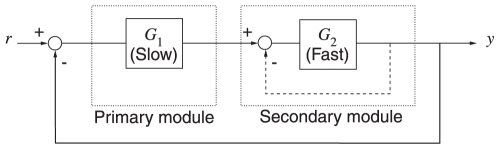
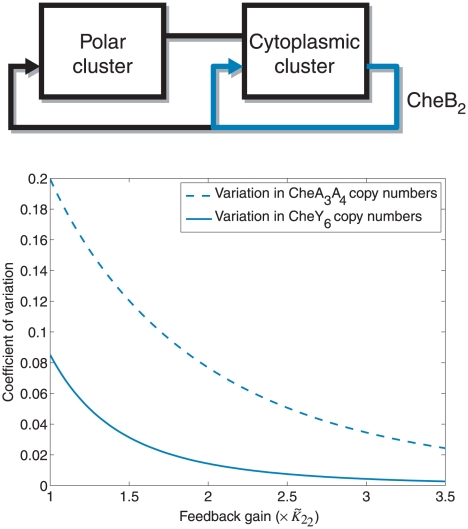
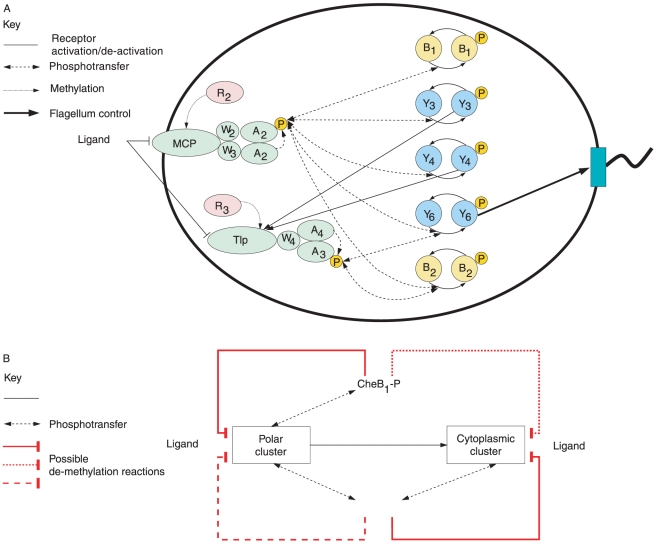
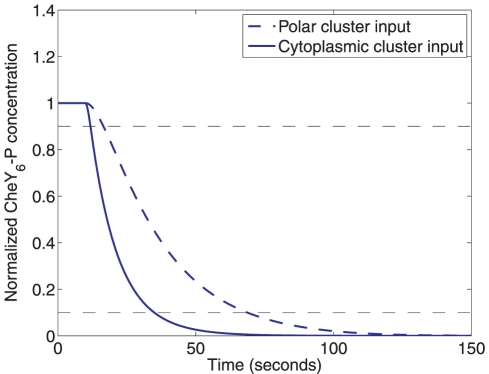
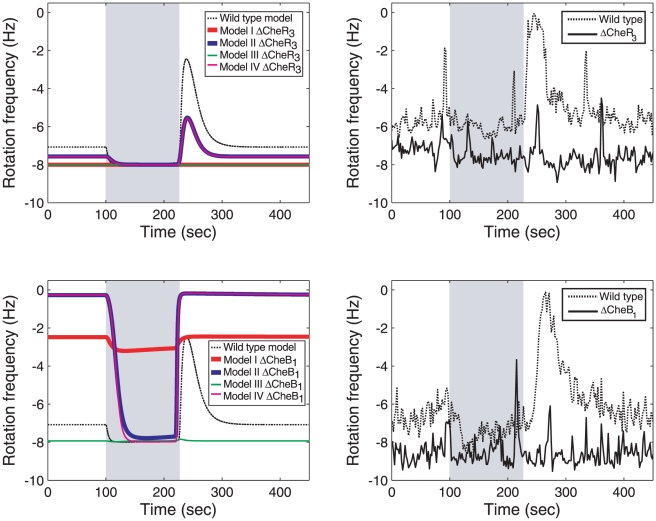
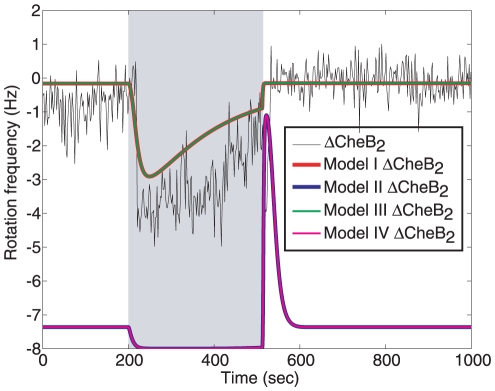
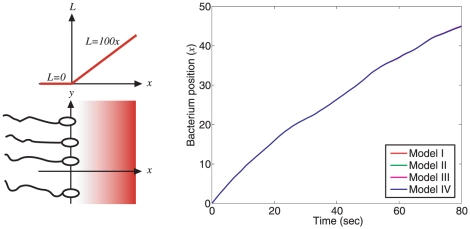
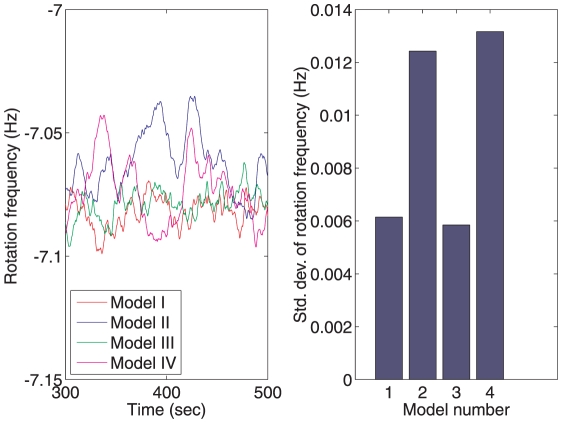
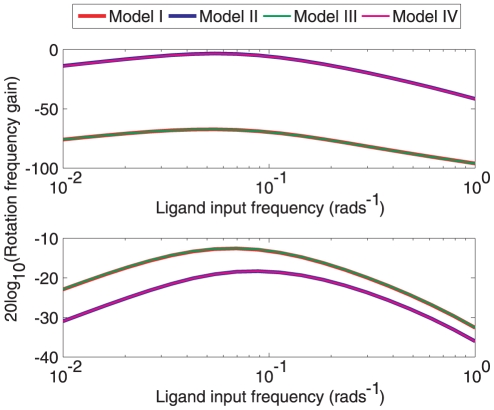
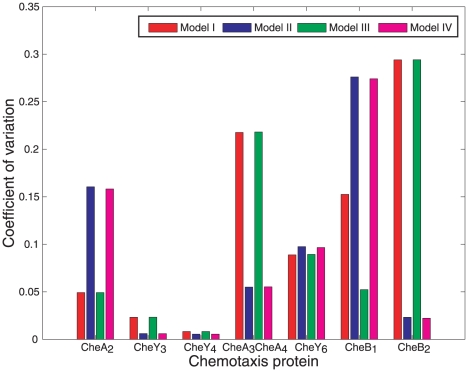
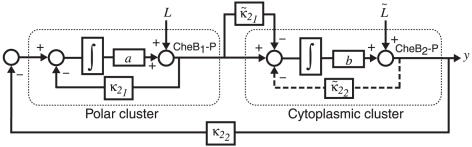
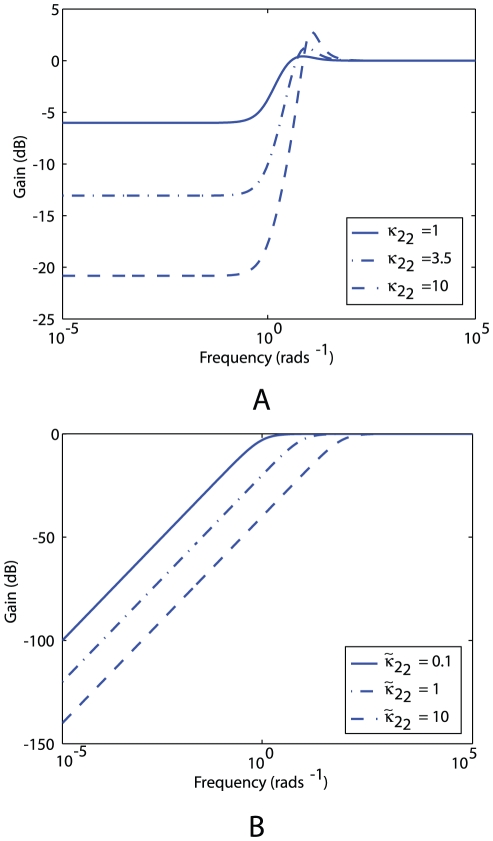
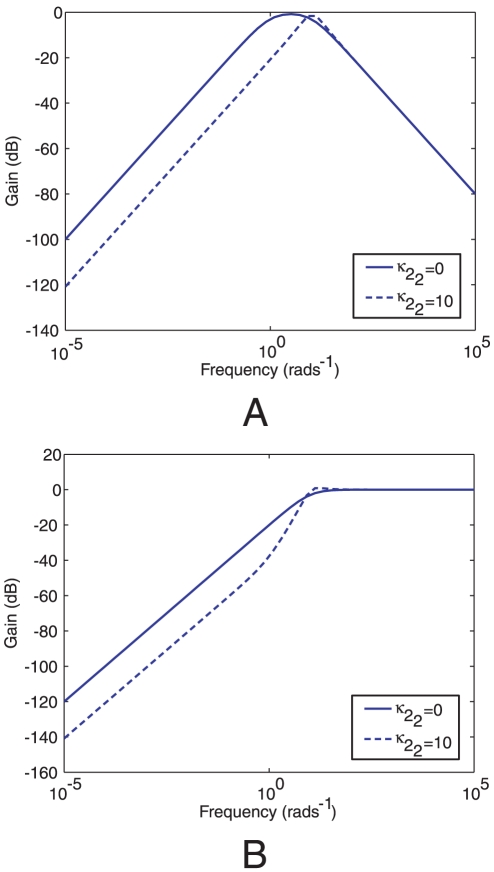
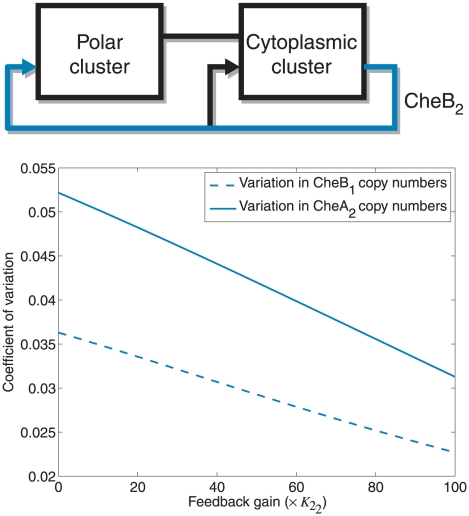
Bacteria move towards favourable and away from toxic environments by changing their swimming pattern. This response is regulated by the chemotaxis signalling pathway, which has an important feature: it uses feedback to 'reset' (adapt) the bacterial sensing ability, which allows the bacteria to sense a range of background environmental changes. The role of this feedback has been studied extensively in the simple chemotaxis pathway of Escherichia coli. However it has been recently found that the majority of bacteria have multiple chemotaxis homologues of the E. coli proteins, resulting in more complex pathways. In this paper we investigate the configuration and role of feedback in Rhodobacter sphaeroides, a bacterium containing multiple homologues of the chemotaxis proteins found in E. coli. Multiple proteins could produce different possible feedback configurations, each having different chemotactic performance qualities and levels of robustness to variations and uncertainties in biological parameters and to intracellular noise. We develop four models corresponding to different feedback configurations. Using a series of carefully designed experiments we discriminate between these models and invalidate three of them. When these models are examined in terms of robustness to noise and parametric uncertainties, we find that the non-invalidated model is superior to the others. Moreover, it has a 'cascade control' feedback architecture which is used extensively in engineering to improve system performance, including robustness. Given that the majority of bacteria are known to have multiple chemotaxis pathways, in this paper we show that some feedback architectures allow them to have better performance than others. In particular, cascade control may be an important feature in achieving robust functionality in more complex signalling pathways and in improving their performance.
细菌通过改变游动模式来朝着有利环境和远离有毒环境移动。这种反应受化学趋性信号通路调控,该通路具有一个重要特征:它使用反馈来“重置”(适应)细菌感应能力,从而使细菌能够感应一系列背景环境变化。这种反馈的作用在大肠杆菌的简单化学趋性途径中已经得到了广泛研究。然而,最近发现大多数细菌都有多种大肠杆菌蛋白的化学趋性同源物,从而导致了更复杂的途径。在本文中,我们研究了含有大肠杆菌化学趋性蛋白多种同源物的球形红杆菌中的反馈的配置和作用。多种蛋白质可以产生不同的可能反馈配置,每种配置都具有不同的趋化性能质量和对生物参数变化和不确定性以及细胞内噪声的鲁棒性水平。我们开发了四个对应于不同反馈配置的模型。通过一系列精心设计的实验,我们对这些模型进行了区分,并否定了其中三个模型。当根据噪声和参数不确定性的鲁棒性来检查这些模型时,我们发现未被否定的模型优于其他模型。此外,它具有“级联控制”反馈架构,该架构在工程中被广泛用于提高系统性能,包括鲁棒性。鉴于大多数细菌已知具有多种趋化途径,本文表明,某些反馈架构可以使它们具有比其他途径更好的性能。特别是,级联控制可能是在更复杂的信号通路中实现稳健功能并提高其性能的重要特征。