Department of Psychology, University of Rhode Island, Kingston, RI 02881, USA.
Psychol Addict Behav. 2012 Mar;26(1):30-41. doi: 10.1037/a0023879. Epub 2011 May 16.
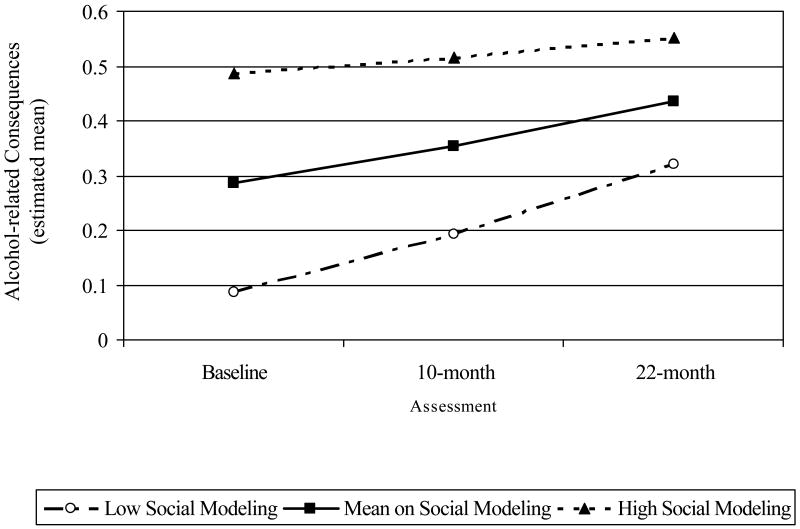
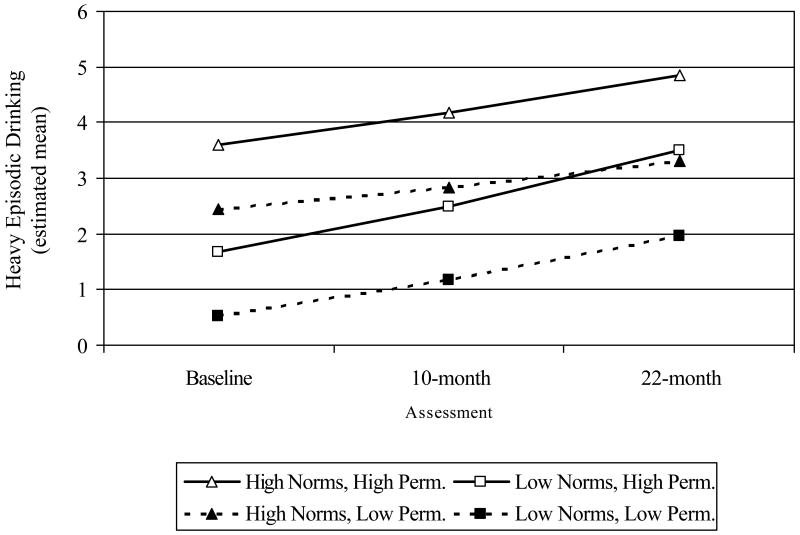
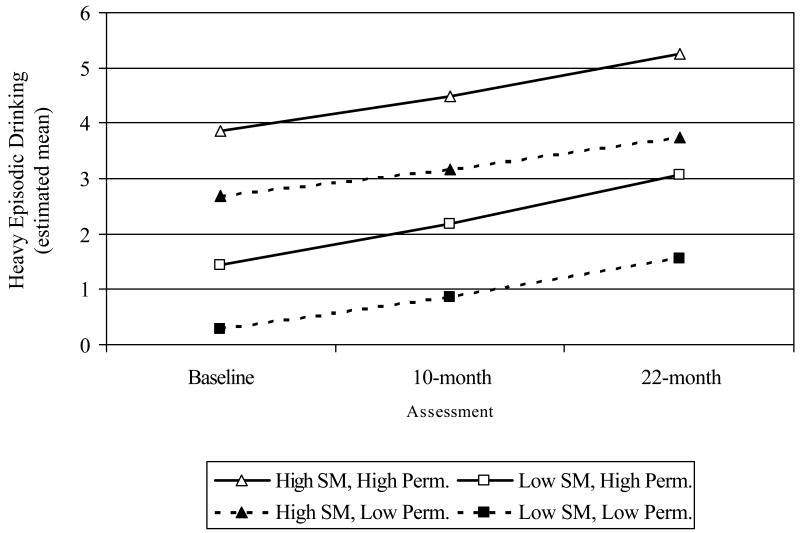
This prospective study used a conceptually based risk and protective framework to investigate whether parental influences exert a protective effect on the robust association between peer influences and college alcohol involvement. Participants were incoming freshmen in the control condition of a randomized clinical trial, N = 256, 57.0% female, baseline age: M = 18.36 years (SD = 0.41). Participants completed telephone surveys in the summer before matriculation (baseline) and in the spring of the freshman (10-month) and sophomore years (22-month) with 85.6% retention at 22-months. Latent growth models were estimated for heavy episodic drinking and alcohol-related consequences. Descriptive norms and social modeling among peers were positively associated with initial heavy drinking and consequences; parental drinking permissiveness was positively associated with initial heavy drinking. Greater social modeling among peers was associated with less growth in consequences. Parental monitoring was not significantly associated with alcohol involvement. Prematriculation social modeling exhibited a weaker positive association with initial heavy drinking and consequences at low prematriculation parental drinking permissiveness compared to high. Similarly, prematriculation descriptive norms exhibited a weaker positive association with initial heavy drinking at low prematriculation parental drinking permissiveness compared to high. Prematriculation descriptive norms were not significantly associated with growth in heavy drinking at low parental drinking permissiveness; in contrast, higher prematriculation descriptive norms were associated with less growth in heavy drinking at high parental drinking permissiveness. Findings provide support for a protective parental influence on peer-alcohol relations extending into college. Parental drinking permissiveness may be an important target for parent-based interventions.
本前瞻性研究采用基于概念的风险和保护框架,调查父母的影响是否对同伴影响与大学生饮酒之间的强关联产生保护作用。参与者为一项随机临床试验对照条件下的新生,N = 256,女性占 57.0%,基线年龄:M = 18.36 岁(SD = 0.41)。参与者在入学前的夏天(基线)和新生(10 个月)和大二(22 个月)春季通过电话调查完成调查,22 个月时的保留率为 85.6%。对重度间断性饮酒和与酒精相关后果进行潜增长模型估计。同伴中的描述性规范和社会模仿与初始重度饮酒和后果呈正相关;父母的饮酒宽容度与初始重度饮酒呈正相关。同伴中的社会模仿越多,后果的增长就越少。父母的监督与酒精的摄入没有显著的关联。与高父母饮酒宽容度相比,低父母饮酒宽容度下,入学前的社会模仿与初始重度饮酒和后果的正相关较弱。同样,与高父母饮酒宽容度相比,低父母饮酒宽容度下,入学前的描述性规范与初始重度饮酒的正相关较弱。低父母饮酒宽容度下,入学前的描述性规范与重度饮酒的增长没有显著的关联;相反,高父母饮酒宽容度下,较高的入学前描述性规范与重度饮酒的减少有关。研究结果为父母对同伴饮酒关系的保护作用延伸到大学提供了支持。父母的饮酒宽容度可能是基于父母的干预的重要目标。