Center for Molecular Medicine, National Heart, Lung, and Blood Institute, National Institutes of Health, Bethesda, Maryland, United States of America.
PLoS One. 2011 May 12;6(5):e19785. doi: 10.1371/journal.pone.0019785.
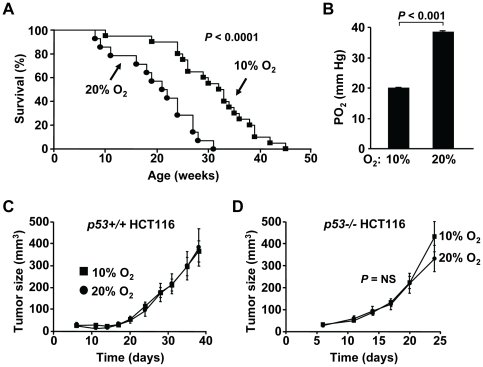
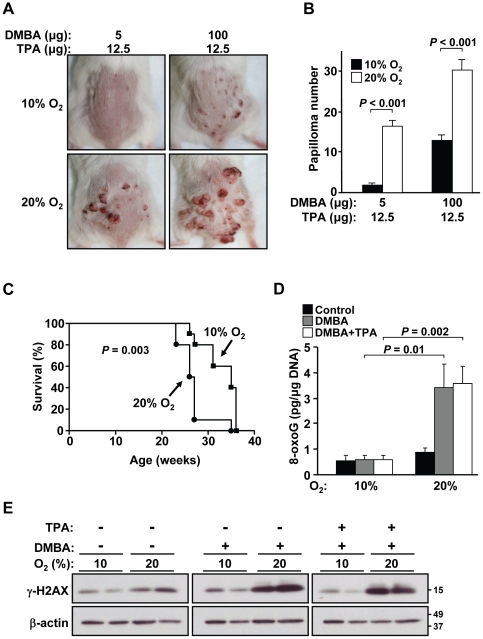
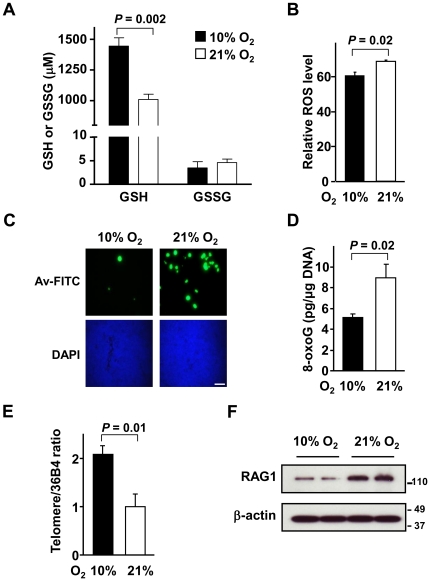
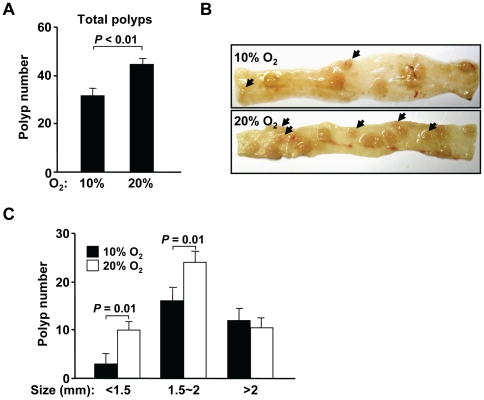
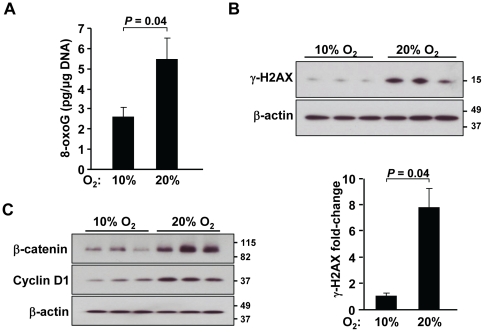
Oxygen serves as an essential factor for oxidative stress, and it has been shown to be a mutagen in bacteria. While it is well established that ambient oxygen can also cause genomic instability in cultured mammalian cells, its effect on de novo tumorigenesis at the organismal level is unclear. Herein, by decreasing ambient oxygen exposure, we report a ∼50% increase in the median tumor-free survival time of p53-/- mice. In the thymus, reducing oxygen exposure decreased the levels of oxidative DNA damage and RAG recombinase, both of which are known to promote lymphomagenesis in p53-/- mice. Oxygen is further shown to be associated with genomic instability in two additional cancer models involving the APC tumor suppressor gene and chemical carcinogenesis. Together, these observations represent the first report directly testing the effect of ambient oxygen on de novo tumorigenesis and provide important physiologic evidence demonstrating its critical role in increasing genomic instability in vivo.
氧气是氧化应激的一个必要因素,它已被证明是细菌的诱变剂。虽然已经证实环境氧气也会导致培养的哺乳动物细胞基因组不稳定,但它对机体水平新发生肿瘤形成的影响尚不清楚。在此,通过降低环境氧气暴露,我们报告 p53-/- 小鼠的中位无肿瘤存活时间增加了约 50%。在胸腺中,降低氧气暴露降低了氧化 DNA 损伤和 RAG 重组酶的水平,这两者都已知可促进 p53-/- 小鼠的淋巴瘤发生。氧气还与涉及 APC 肿瘤抑制基因和化学致癌作用的另外两种癌症模型中的基因组不稳定性有关。总之,这些观察结果代表了直接测试环境氧气对新发生肿瘤形成的影响的第一个报告,并提供了重要的生理证据,证明其在体内增加基因组不稳定性中的关键作用。