Department of Molecular Biotechnology and Health Sciences, Molecular Biotechnology Center, 10124 Torino, Italy.
Department of Translational Medicine, University of Piemonte Orientale, 28100 Novara, Italy.
Cell Res. 2018 Mar;28(3):265-280. doi: 10.1038/cr.2017.155. Epub 2017 Dec 8.
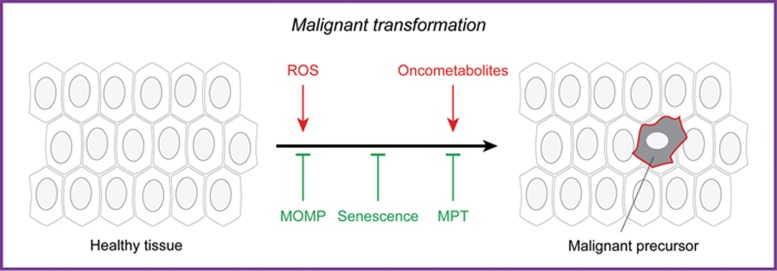
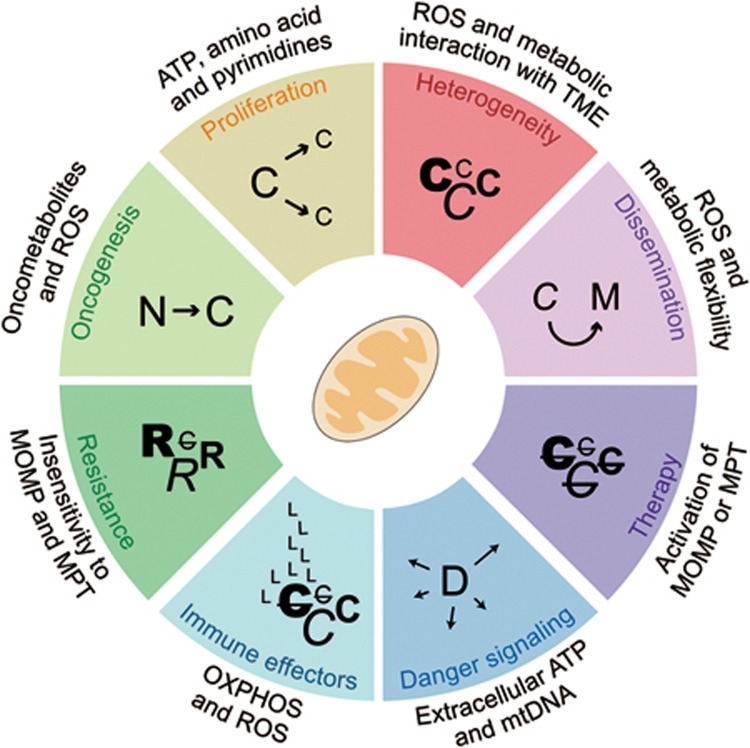
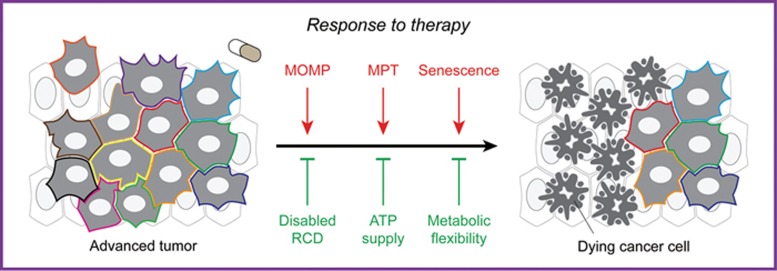
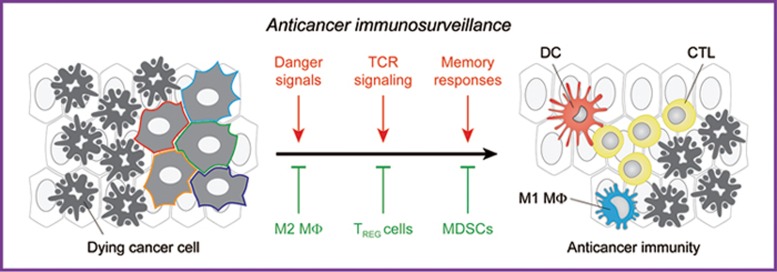
Glycolysis has long been considered as the major metabolic process for energy production and anabolic growth in cancer cells. Although such a view has been instrumental for the development of powerful imaging tools that are still used in the clinics, it is now clear that mitochondria play a key role in oncogenesis. Besides exerting central bioenergetic functions, mitochondria provide indeed building blocks for tumor anabolism, control redox and calcium homeostasis, participate in transcriptional regulation, and govern cell death. Thus, mitochondria constitute promising targets for the development of novel anticancer agents. However, tumors arise, progress, and respond to therapy in the context of an intimate crosstalk with the host immune system, and many immunological functions rely on intact mitochondrial metabolism. Here, we review the cancer cell-intrinsic and cell-extrinsic mechanisms through which mitochondria influence all steps of oncogenesis, with a focus on the therapeutic potential of targeting mitochondrial metabolism for cancer therapy.
长期以来,糖酵解一直被认为是癌细胞能量产生和合成代谢生长的主要代谢过程。尽管这种观点对于开发强大的成像工具起到了重要作用,这些工具仍在临床中使用,但现在很明显,线粒体在肿瘤发生中起着关键作用。线粒体除了发挥核心生物能量功能外,还确实为肿瘤合成代谢提供了构建模块,控制氧化还原和钙稳态,参与转录调控,并控制细胞死亡。因此,线粒体成为开发新型抗癌药物的有前途的靶点。然而,肿瘤在与宿主免疫系统的密切相互作用的背景下发生、进展和对治疗产生反应,许多免疫学功能依赖于完整的线粒体代谢。在这里,我们综述了线粒体影响肿瘤发生所有阶段的内在和外在细胞机制,重点介绍了针对线粒体代谢进行癌症治疗的治疗潜力。