Kühn J E, Kramer M D, Willenbacher W, Wieland U, Lorentzen E U, Braun R W
Institute of Medical Virology, University of Heidelberg, Federal Republic of Germany.
J Virol. 1990 Jun;64(6):2491-7. doi: 10.1128/JVI.64.6.2491-2497.1990.
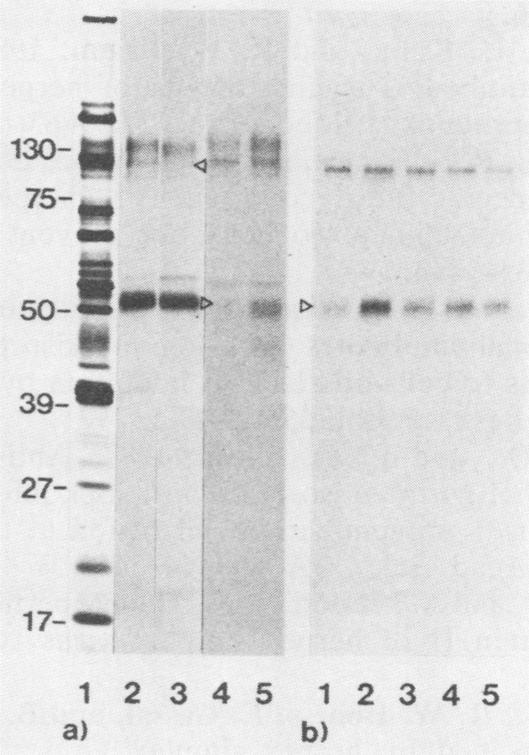
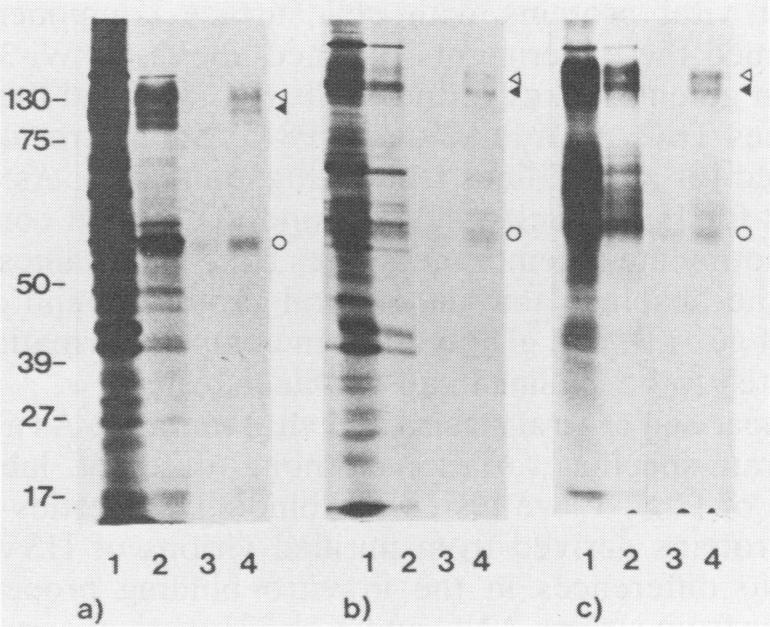
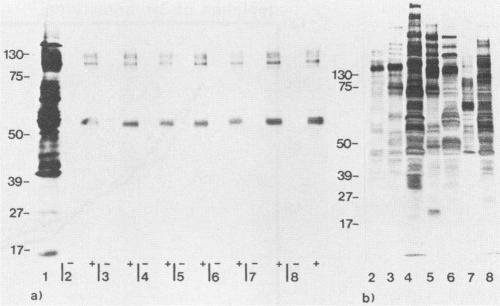
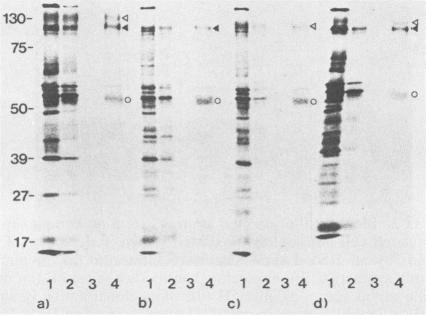
To investigate the interaction of herpes simplex virus type 1 (HSV-1) with the cell surface, we studied the formation of complexes by HSV-1 virion proteins with biotinylated cell membrane components. HSV-1 virion proteins reactive with surface components of HEp-2 and other cells were identified as gC, gB, and gD. Results from competition experiments suggested that binding of gC, gB, and gD occurred in a noncooperative way. The observed complex formation could be specifically blocked by monospecific rabbit antisera against gB and gD. The interaction of gD with the cell surface was also inhibited by monoclonal antibody IV3.4., whereas other gD-specific monoclonal antibodies, despite their high neutralizing activity, were not able to inhibit this interaction. Taken together, these data provide direct evidence that at least three of the seven known HSV-1 glycoproteins are able to form complexes with cellular surface structures.
为了研究单纯疱疹病毒1型(HSV-1)与细胞表面的相互作用,我们研究了HSV-1病毒粒子蛋白与生物素化细胞膜成分形成复合物的情况。与HEp-2及其他细胞表面成分发生反应的HSV-1病毒粒子蛋白被鉴定为gC、gB和gD。竞争实验结果表明,gC、gB和gD的结合以非协同方式发生。观察到的复合物形成可被针对gB和gD的单特异性兔抗血清特异性阻断。单克隆抗体IV3.4也可抑制gD与细胞表面的相互作用,而其他gD特异性单克隆抗体尽管具有高中和活性,却无法抑制这种相互作用。综上所述,这些数据提供了直接证据,表明七种已知的HSV-1糖蛋白中至少有三种能够与细胞表面结构形成复合物。