Department of Molecular and Cell Biology, University of California at Berkeley, Berkeley, CA 94720, USA.
Science. 2011 May 20;332(6032):981-4. doi: 10.1126/science.1202692.
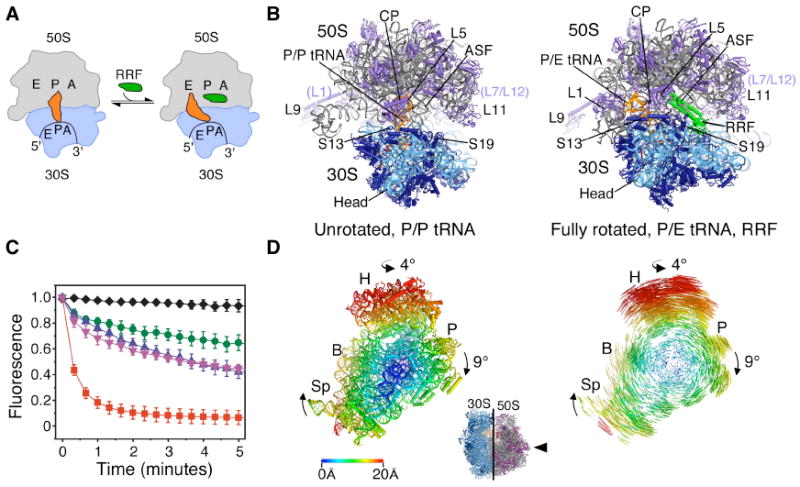
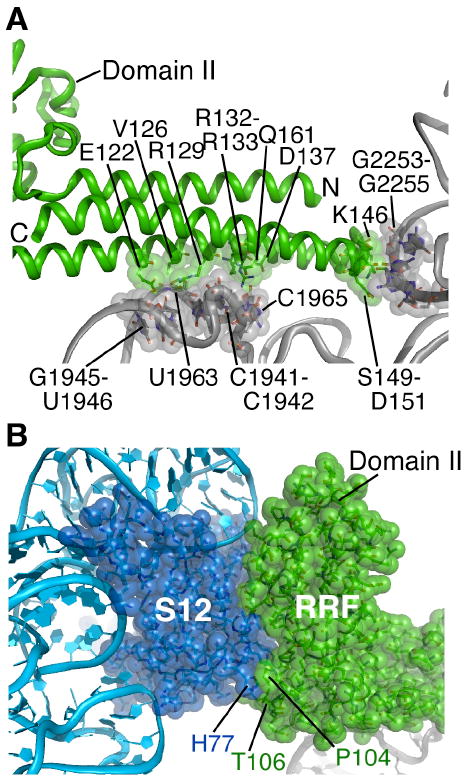
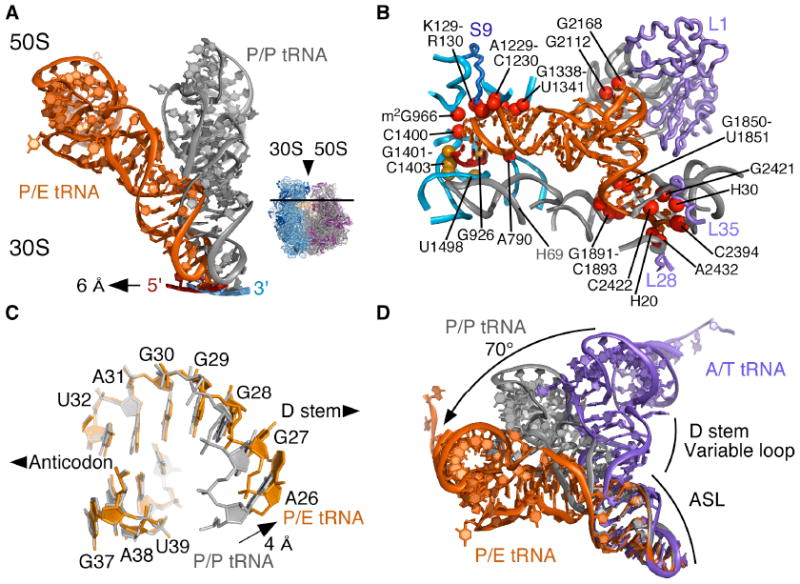
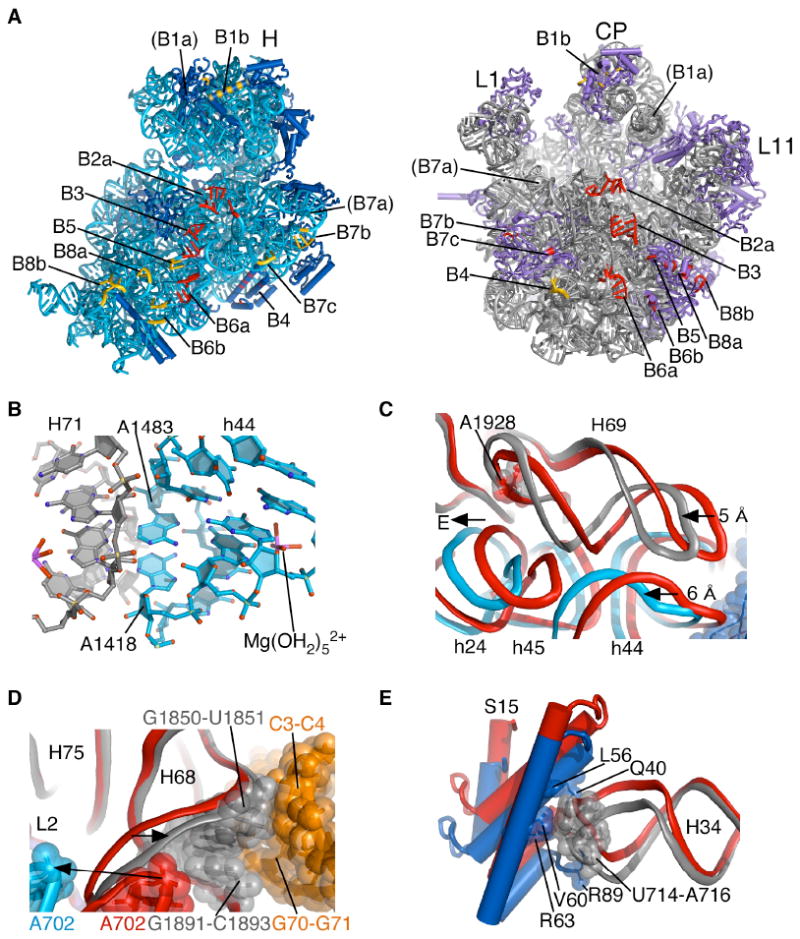
During protein synthesis, the ribosome controls the movement of tRNA and mRNA by means of large-scale structural rearrangements. We describe structures of the intact bacterial ribosome from Escherichia coli that reveal how the ribosome binds tRNA in two functionally distinct states, determined to a resolution of ~3.2 angstroms by means of x-ray crystallography. One state positions tRNA in the peptidyl-tRNA binding site. The second, a fully rotated state, is stabilized by ribosome recycling factor and binds tRNA in a highly bent conformation in a hybrid peptidyl/exit site. The structures help to explain how the ratchet-like motion of the two ribosomal subunits contributes to the mechanisms of translocation, termination, and ribosome recycling.
在蛋白质合成过程中,核糖体通过大规模的结构重排来控制 tRNA 和 mRNA 的运动。我们描述了来自大肠杆菌的完整细菌核糖体的结构,这些结构揭示了核糖体如何在两种功能上不同的状态下结合 tRNA,分辨率达到约 3.2 埃,这是通过 X 射线晶体学确定的。一种状态将 tRNA 定位在肽酰-tRNA 结合位点。第二种是完全旋转的状态,由核糖体回收因子稳定,并以高度弯曲的构象结合 tRNA,形成混合的肽酰/出口位点。这些结构有助于解释两个核糖体亚基的棘轮运动如何有助于转位、终止和核糖体回收的机制。