Center for Neuroscience and Cell Biology, University of Coimbra, Coimbra, Portugal.
PLoS One. 2011;6(5):e19850. doi: 10.1371/journal.pone.0019850. Epub 2011 May 16.
The need for woman-controlled, cheap, safe, effective, easy-to-use and easy-to-store topical applications for prophylaxis against sexually transmitted infections (STIs) makes surfactant-containing formulations an interesting option that requires a more fundamental knowledge concerning surfactant toxicology and structure-activity relationships.
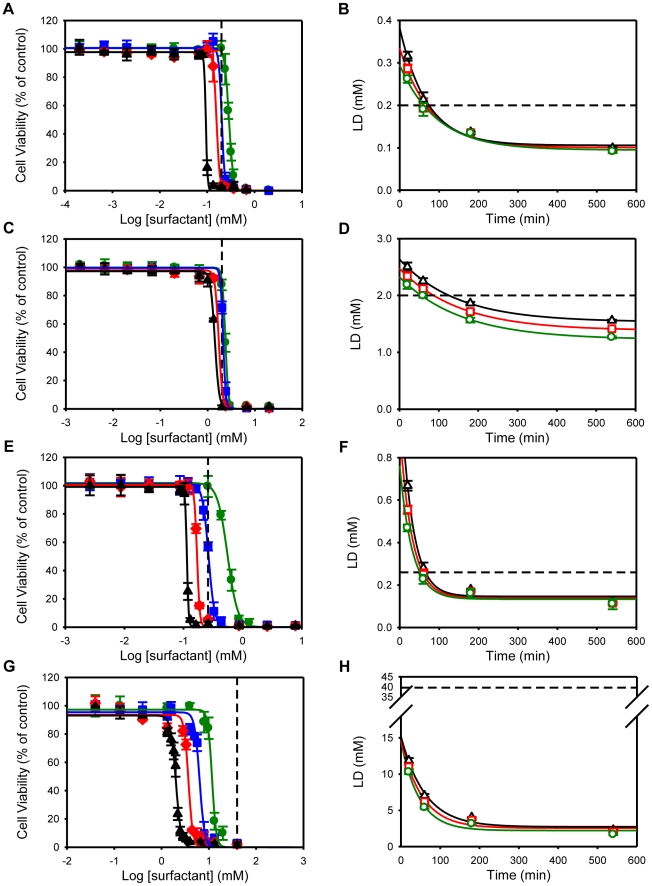
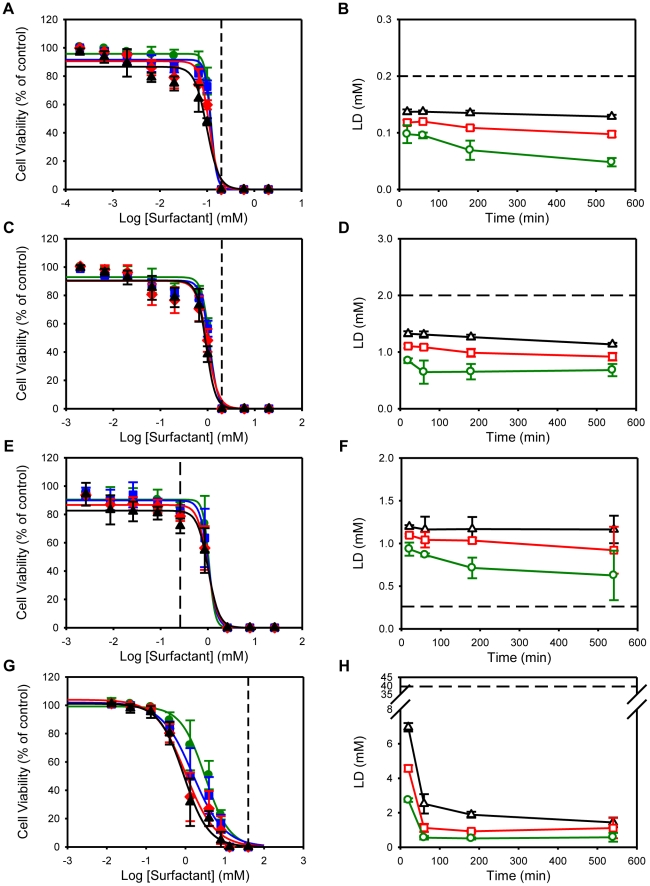
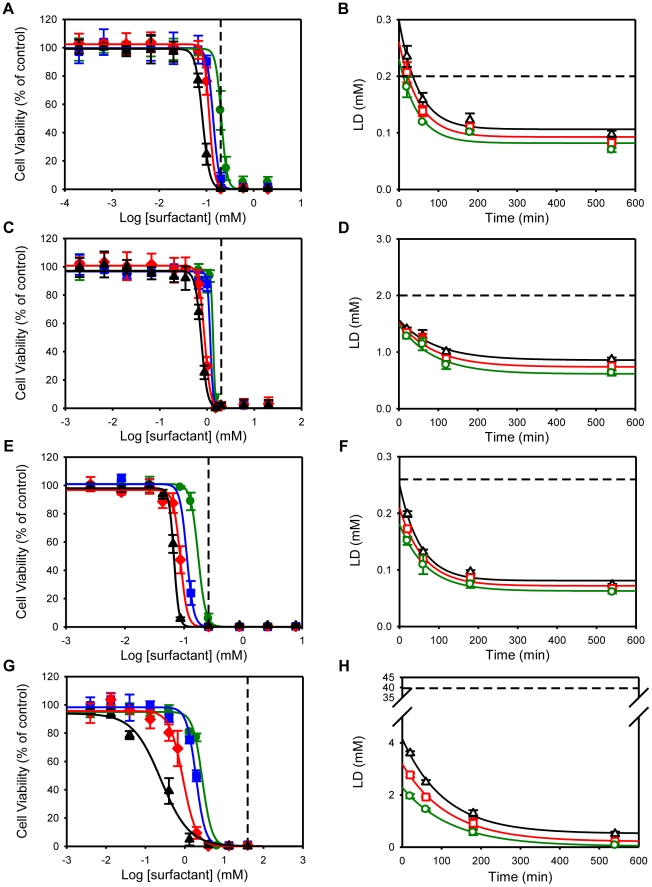
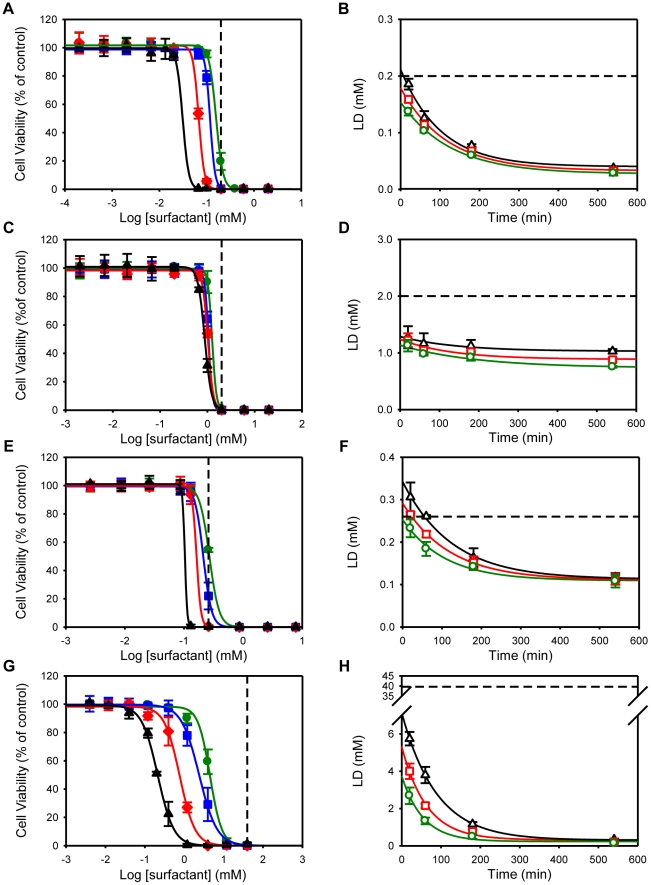
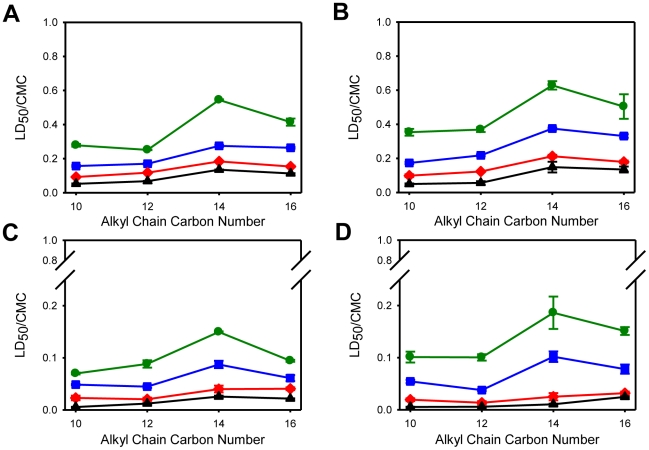
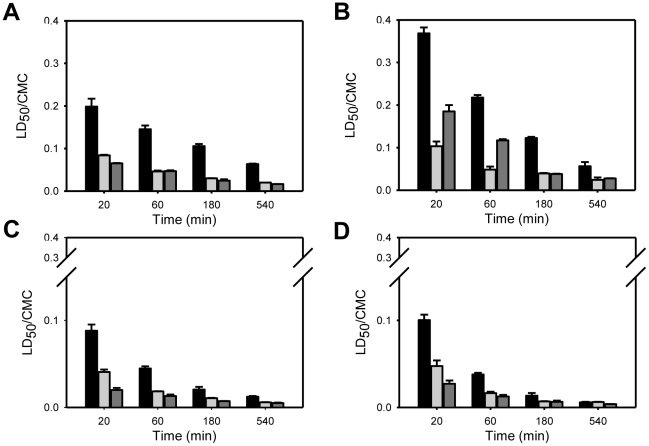
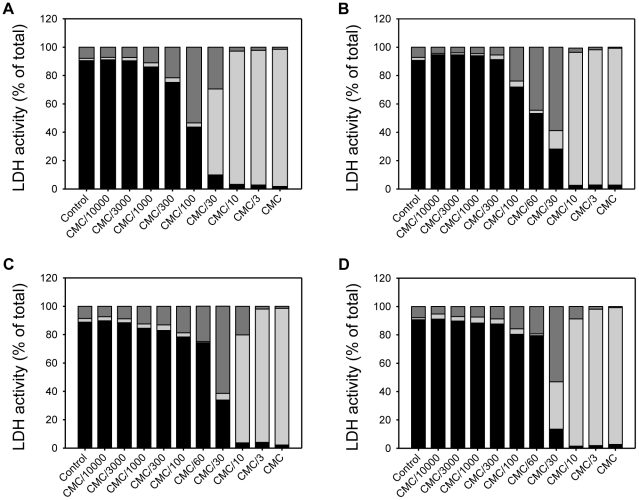
METHODOLOGY/PRINCIPAL FINDINGS: We report in vitro effects of surfactant concentration, exposure time and structure on the viability of mammalian cell types typically encountered in the vagina, namely, fully polarized and confluent epithelial cells, confluent but non-polarized epithelial-like cells, dendritic cells, and human sperm. Representatives of the different families of commercially available surfactants--nonionic (Triton X-100 and monolaurin), zwitterionic (DDPS), anionic (SDS), and cationic (C(n)TAB (n = 10 to 16), C(12)PB, and C(12)BZK)--were examined. Triton X-100, monolaurin, DDPS and SDS were toxic to all cell types at concentrations around their critical micelle concentration (CMC) suggesting a non-selective mode of action involving cell membrane destabilization and/or destruction. All cationic surfactants were toxic at concentrations far below their CMC and showed significant differences in their toxicity toward polarized as compared with non-polarized cells. Their toxicity was also dependent on the chemical nature of the polar head group. Our results suggest an intracellular locus of action for cationic surfactants and show that their structure-activity relationships could be profitably exploited for STI prophylaxis in vaginal gel formulations. The therapeutic indices comparing polarized epithelial cell toxicity to sperm toxicity for all surfactants examined, except C(12)PB and C(12)BZK, does not justify their use as contraceptive agents. C(12)PB and C(12)BZK are shown to have a narrow therapeutic index recommending caution in their use in contraceptive formulations.
CONCLUSIONS/SIGNIFICANCE: Our results contribute to understanding the mechanisms involved in surfactant toxicity, have a predictive value with regard to their safety, and may be used to design more effective and less harmful surfactants for use in topical applications for STI prophylaxis.
需要女性控制、廉价、安全、有效、易于使用且易于储存的局部应用制剂来预防性传播感染(STIs),这使得含有表面活性剂的制剂成为一种有趣的选择,这需要更深入地了解表面活性剂的毒理学和结构-活性关系。
方法/主要发现:我们报告了表面活性剂浓度、暴露时间和结构对阴道中常见的哺乳动物细胞类型活力的体外影响,即完全极化和汇合的上皮细胞、汇合但非极化的上皮样细胞、树突状细胞和人类精子。我们研究了不同商业表面活性剂家族的代表——非离子型(Triton X-100 和月桂酸单甘油酯)、两性离子型(DDPS)、阴离子型(SDS)和阳离子型(C(n)TAB(n=10 至 16)、C(12)PB 和 C(12)BZK)。Triton X-100、月桂酸单甘油酯、DDPS 和 SDS 在接近其临界胶束浓度(CMC)的浓度下对所有细胞类型均有毒性,表明其作用模式是非选择性的,涉及细胞膜的不稳定和/或破坏。所有阳离子表面活性剂在远低于 CMC 的浓度下均有毒性,并且在其对极化细胞与非极化细胞的毒性方面表现出显著差异。它们的毒性也取决于极性头基团的化学性质。我们的结果表明阳离子表面活性剂的作用部位在细胞内,并表明其结构-活性关系可用于阴道凝胶制剂中 STI 的预防。除 C(12)PB 和 C(12)BZK 外,所有研究的表面活性剂的极化上皮细胞毒性与精子毒性的治疗指数均表明它们不适合用作避孕剂。C(12)PB 和 C(12)BZK 的治疗指数较窄,建议在避孕制剂中使用时要谨慎。
结论/意义:我们的研究结果有助于理解表面活性剂毒性的机制,对其安全性具有预测价值,并可用于设计更有效和危害更小的表面活性剂,用于 STI 预防的局部应用。