Department of Biochemistry, University of Washington, Seattle, Washington, United States of America.
PLoS One. 2011;6(5):e19230. doi: 10.1371/journal.pone.0019230. Epub 2011 May 16.
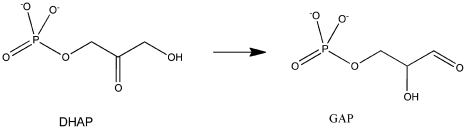
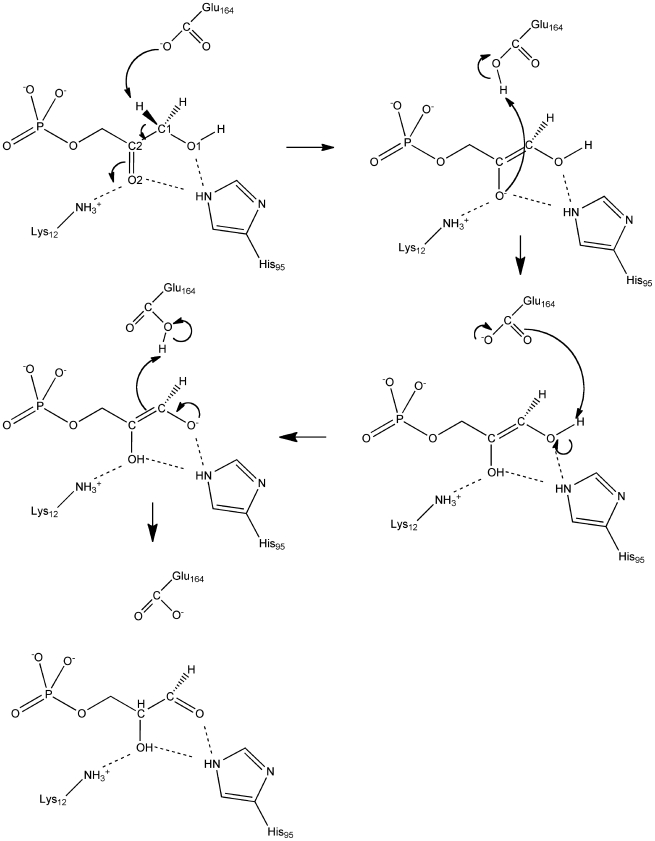
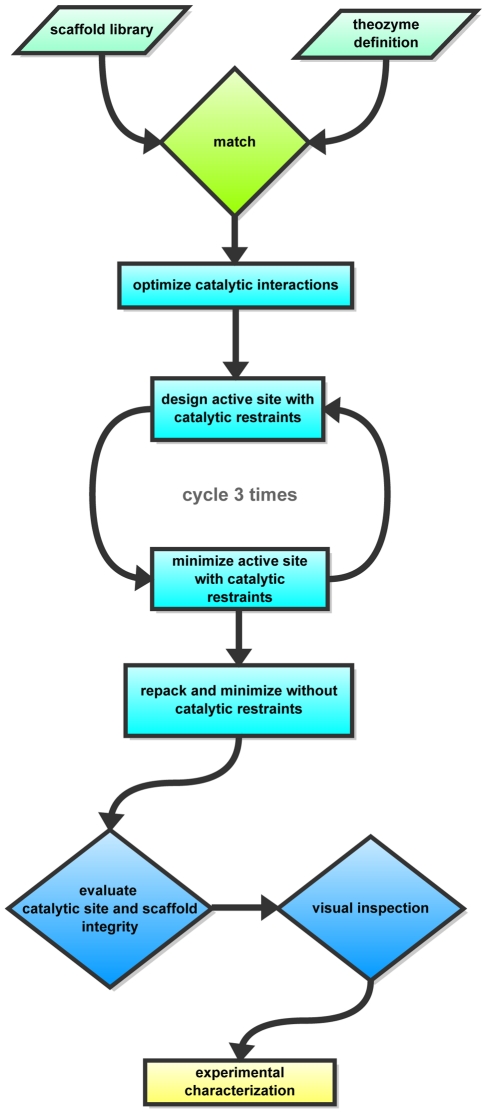
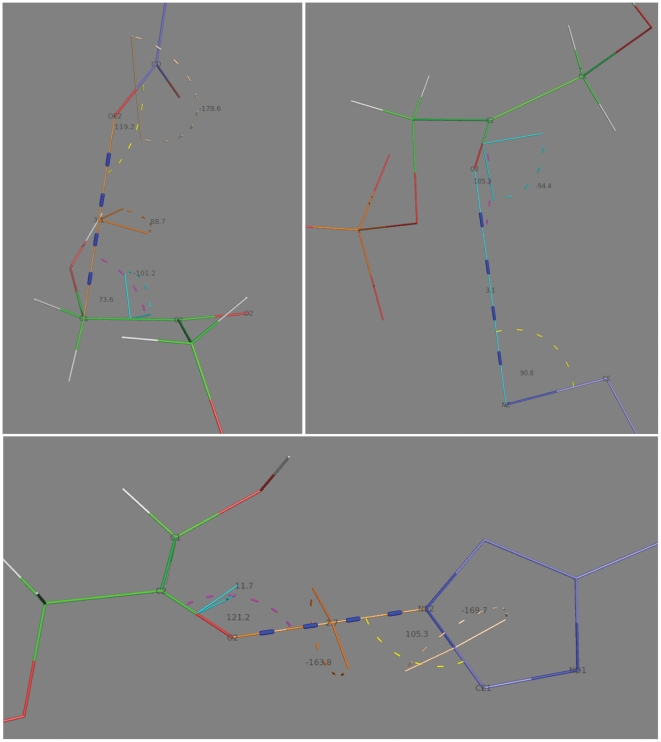
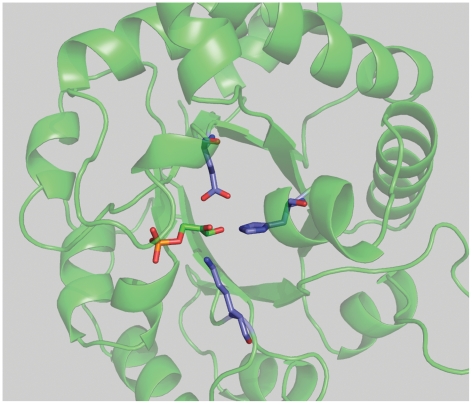
The Rosetta de novo enzyme design protocol has been used to design enzyme catalysts for a variety of chemical reactions, and in principle can be applied to any arbitrary chemical reaction of interest. The process has four stages: 1) choice of a catalytic mechanism and corresponding minimal model active site, 2) identification of sites in a set of scaffold proteins where this minimal active site can be realized, 3) optimization of the identities of the surrounding residues for stabilizing interactions with the transition state and primary catalytic residues, and 4) evaluation and ranking the resulting designed sequences. Stages two through four of this process can be carried out with the Rosetta package, while stage one needs to be done externally. Here, we demonstrate how to carry out the Rosetta enzyme design protocol from start to end in detail using for illustration the triosephosphate isomerase reaction.
罗莎塔从头酶设计方案已被用于设计各种化学反应的酶催化剂,原则上可以应用于任何感兴趣的任意化学反应。该过程有四个阶段:1)选择催化机制和相应的最小模型活性位点,2)确定一组支架蛋白中可以实现这个最小活性位点的位置,3)优化与过渡态和主要催化残基的稳定相互作用的周围残基的身份,4)评估和排列产生的设计序列。该过程的第二到第四阶段可以使用罗莎塔软件包完成,而第一阶段需要外部完成。在这里,我们使用磷酸丙糖异构酶反应来说明如何详细地从头到尾完成罗莎塔酶设计方案。