Nicolaidis Christina, Raymaker Dora, McDonald Katherine, Dern Sebastian, Ashkenazy Elesia, Boisclair Cody, Robertson Scott, Baggs Amanda
Oregan Health and Science University, USA.
Prog Community Health Partnersh. 2011 Summer;5(2):143-50. doi: 10.1353/cpr.2011.0022.
Most community-based participatory research (CBPR) projects involve local communities defined by race, ethnicity, geography, or occupation. Autistic self-advocates, a geographically dispersed community defined by disability, experience issues in research similar to those expressed by more traditional minorities.
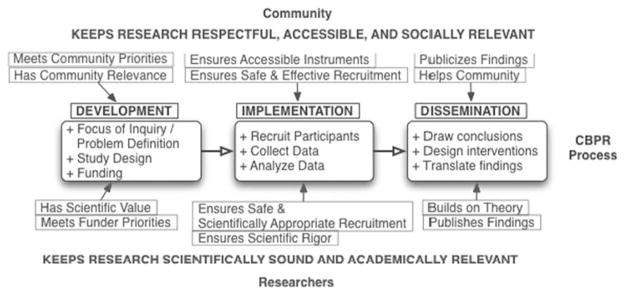
We sought to build an academic-community partnership that uses CBPR to improve the lives of people on the autistic spectrum.
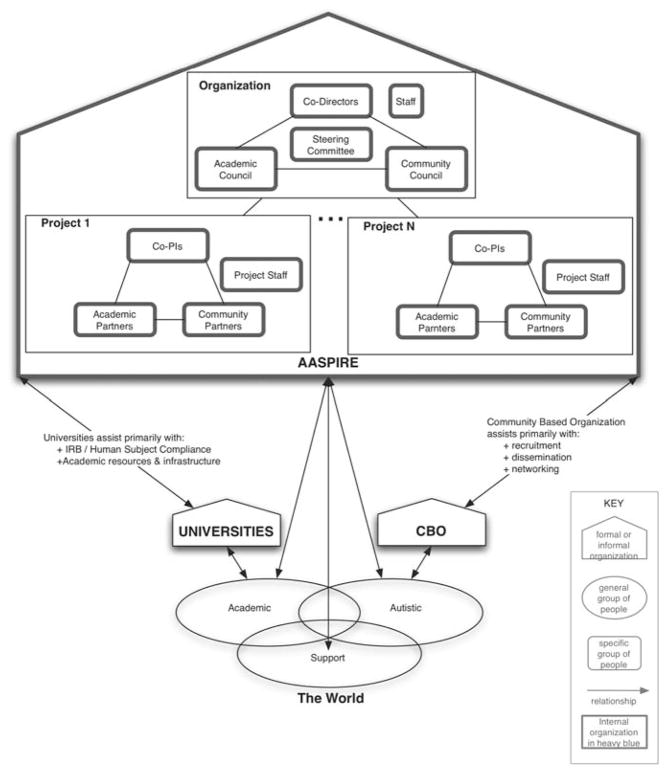
The Academic Autistic Spectrum Partnership in Research and Education (AASPIRE) includes representatives from academic, self-advocate, family, and professional communities. We are currently conducting several studies about the health care experiences and well-being of autistic adults.
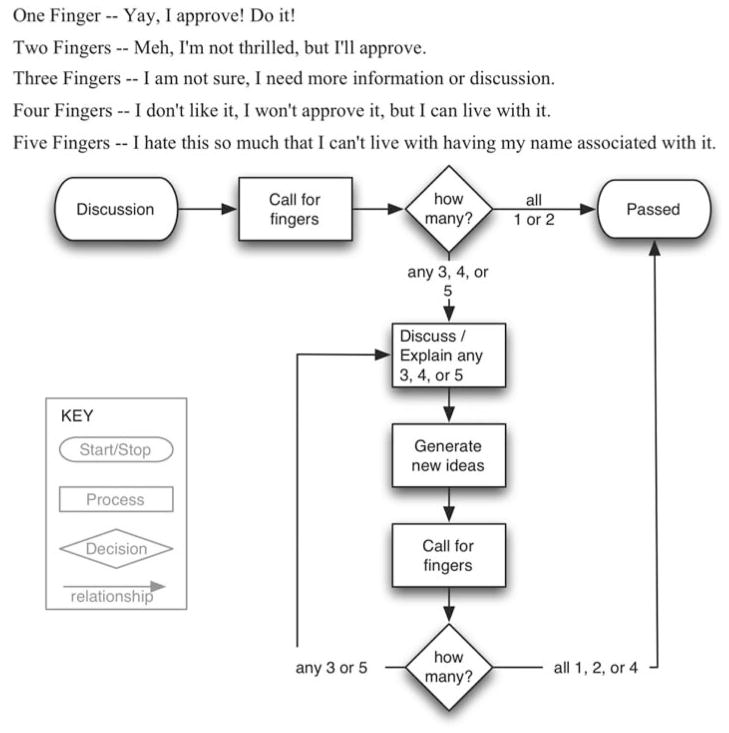
We have learned a number of strategies that integrate technology and process to successfully equalize power and accommodate diverse communication and collaboration needs.
CBPR can be conducted successfully with autistic self-advocates. Our strategies may be useful to other CBPR partnerships, especially ones that cannot meet in person or that include people with diverse communication needs.
大多数基于社区的参与性研究(CBPR)项目涉及由种族、民族、地理位置或职业定义的当地社区。自闭症自我倡导者是一个由残疾定义的地理上分散的社区,他们在研究中遇到的问题与更传统的少数群体所表达的问题类似。
我们试图建立一种学术 - 社区伙伴关系,利用CBPR改善自闭症谱系人群的生活。
研究与教育领域的学术自闭症谱系伙伴关系(AASPIRE)包括来自学术、自我倡导者、家庭和专业社区的代表。我们目前正在进行几项关于自闭症成年人医疗保健经历和福祉的研究。
我们学到了一些整合技术和流程的策略,以成功平衡权力并满足多样化的沟通与协作需求。
CBPR可以与自闭症自我倡导者成功开展。我们的策略可能对其他CBPR伙伴关系有用,特别是那些无法亲自见面或包括有多样化沟通需求人群的伙伴关系。