Thomas Jefferson University, Department of Biochemistry and Molecular Biology, Philadelphia, Pennsylvania 19107, USA.
Nat Commun. 2011;2:329. doi: 10.1038/ncomms1331.
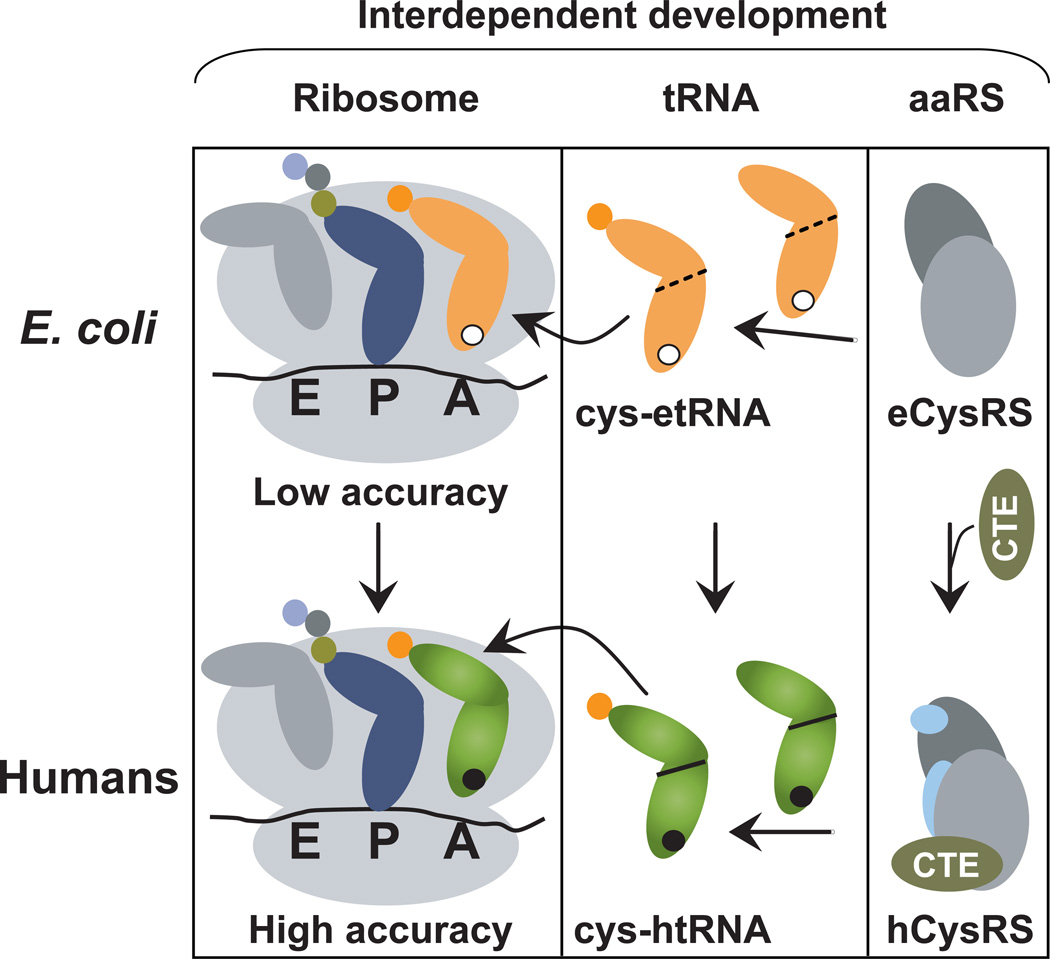
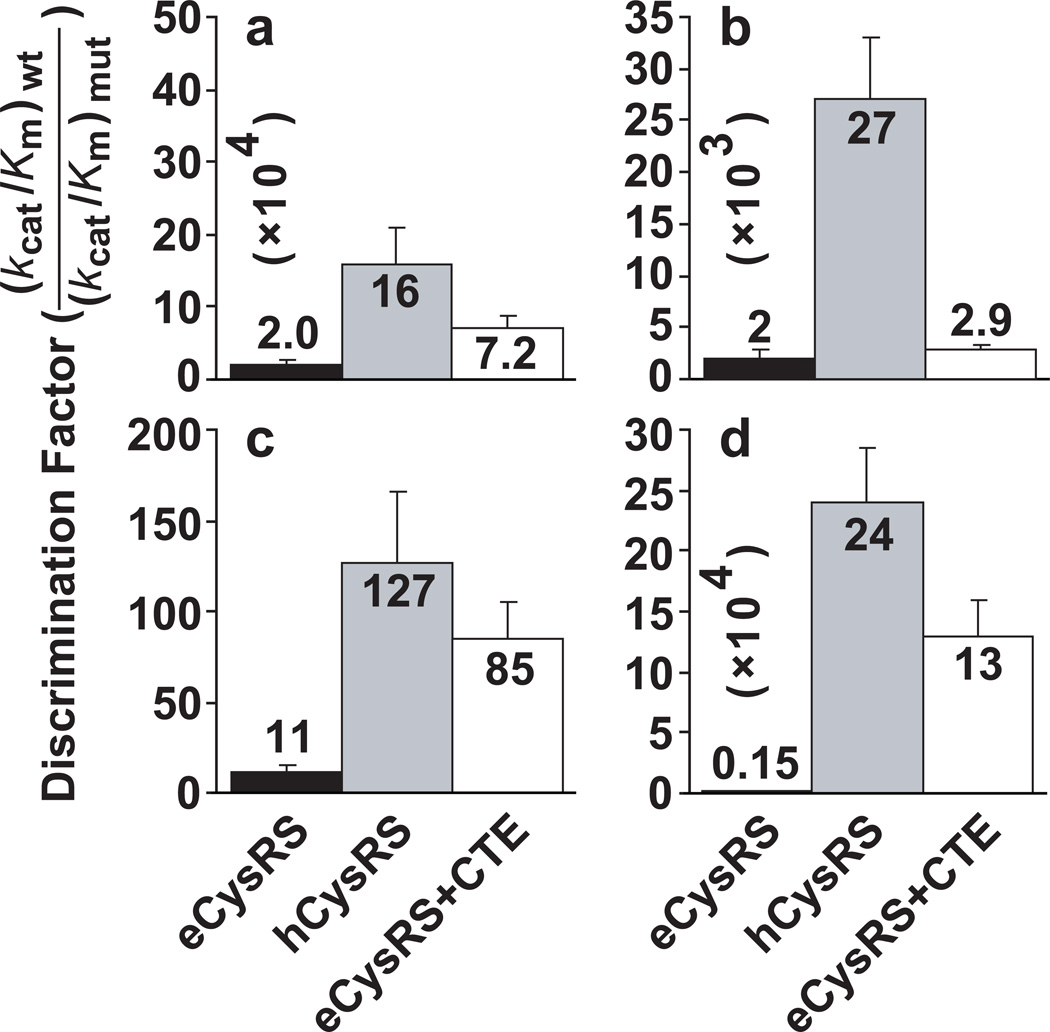
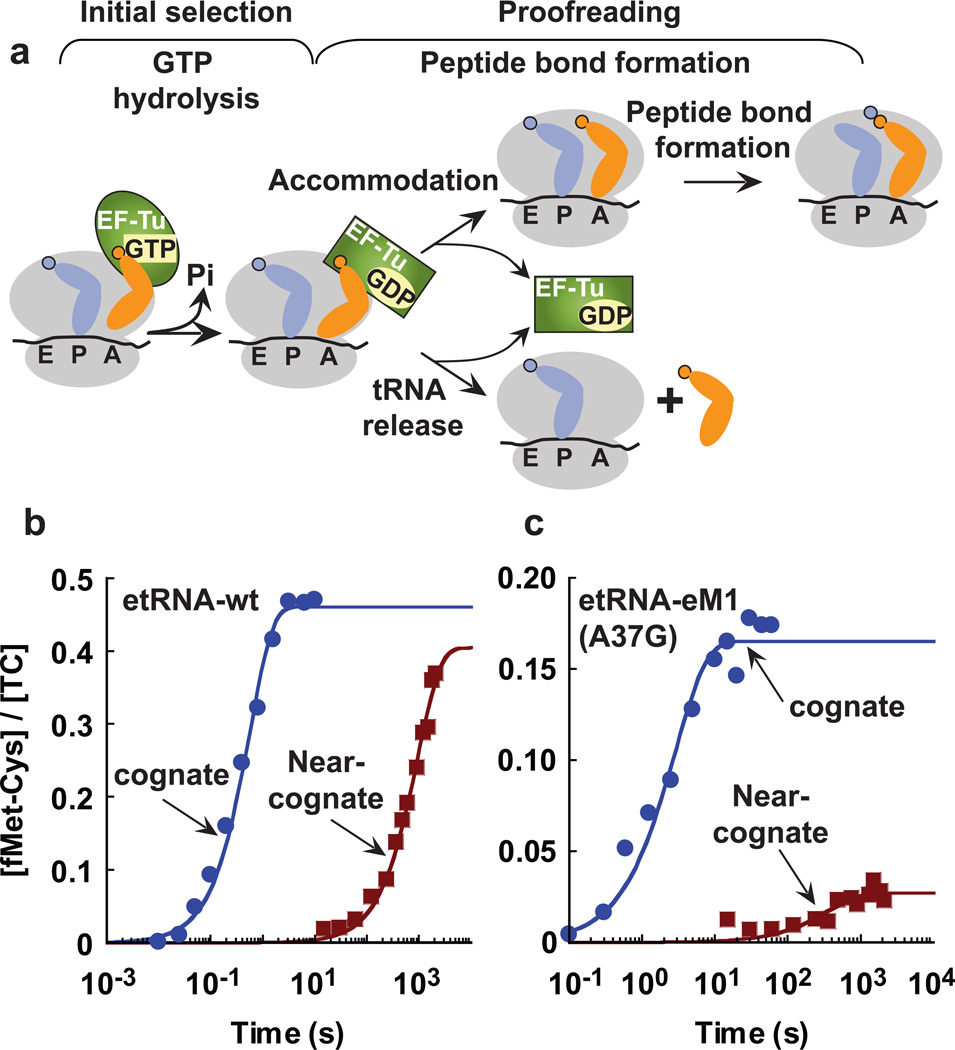
Although the nucleotides in tRNA required for aminoacylation are conserved in evolution, bacterial aminoacyl-transfer RNA synthetases are unable to acylate eukaryotic tRNA. The cross-species barrier may be due to the absence of eukaryote-specific domains from bacterial aminoacyl-transfer RNA synthetases. Here we show that whereas Escherichia coli CysRS cannot acylate human tRNA(Cys), the fusion of a eukaryote-specific domain of human CysRS overcomes the cross-species barrier in human tRNA(Cys). In addition to enabling recognition of the sequence differences in the tertiary core of tRNA(Cys), the fused eukaryotic domain redirects the specificity of E. coli CysRS from the A37 present in bacterial tRNA(Cys) to the G37 in mammals. Further experiments show that the accuracy of codon recognition on the ribosome was also highly sensitive to the A37G transition in tRNA(Cys). These results raise the possibility of the development of tRNA nucleotide determinants for aminoacylation being interdependent with those for ribosome decoding.
尽管 tRNA 中用于氨酰化的核苷酸在进化中是保守的,但细菌氨酰-tRNA 合成酶无法酰化真核 tRNA。这种跨物种的障碍可能是由于细菌氨酰-tRNA 合成酶缺乏真核生物特有的结构域。在这里,我们发现大肠杆菌 CysRS 不能酰化人 tRNA(Cys),而人 CysRS 的一个真核生物特有的结构域的融合克服了人 tRNA(Cys)中的跨物种障碍。除了能够识别 tRNA(Cys)三级核心中的序列差异外,融合的真核结构域还将大肠杆菌 CysRS 的特异性从细菌 tRNA(Cys)中的 A37 重新定向到哺乳动物中的 G37。进一步的实验表明,核糖体上密码子识别的准确性也对 tRNA(Cys)中的 A37G 转换高度敏感。这些结果提出了这样一种可能性,即 tRNA 核苷酸决定氨酰化的因素与核糖体解码的因素可能相互依赖。