Department of Biotechnology, Chia Nan University of Pharmacy and Science, Tainan, Taiwan.
PLoS One. 2011;6(5):e20164. doi: 10.1371/journal.pone.0020164. Epub 2011 May 23.
Diosgenin, a steroidal saponin obtained from fenugreek (Trigonella foenum graecum), was found to exert anti-carcinogenic properties, such as inhibiting proliferation and inducing apoptosis in a variety of tumor cells. However, the effect of diosgenin on cancer metastasis remains unclear. The aim of the study is to examine the effect of diosgenin on migration and invasion in human prostate cancer PC-3 cells.
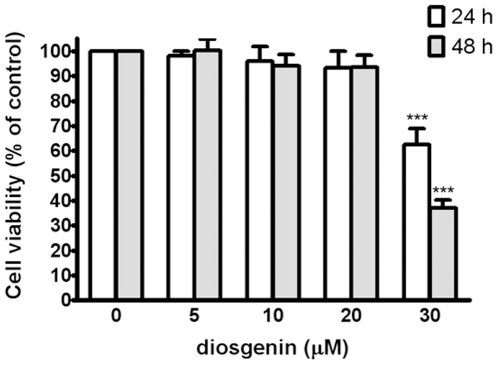
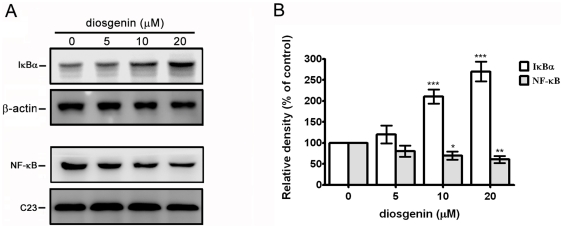
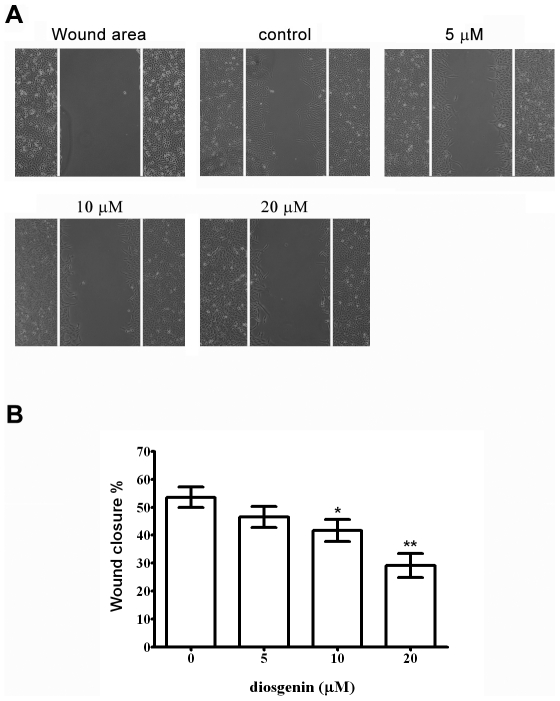
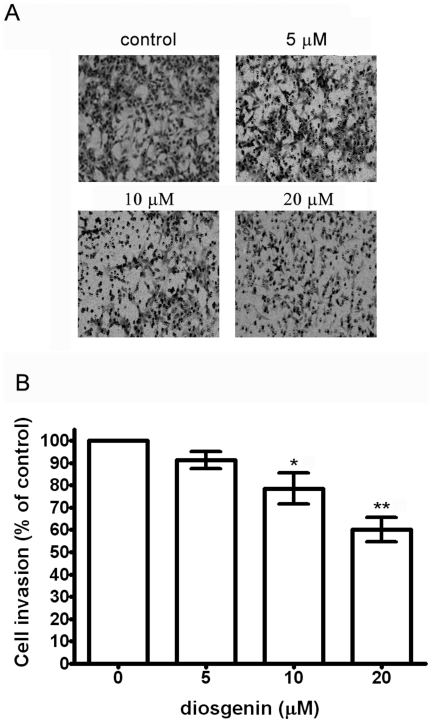
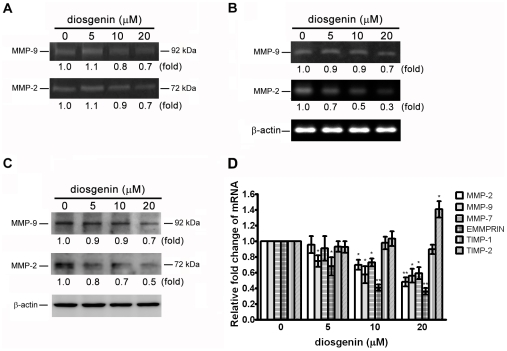
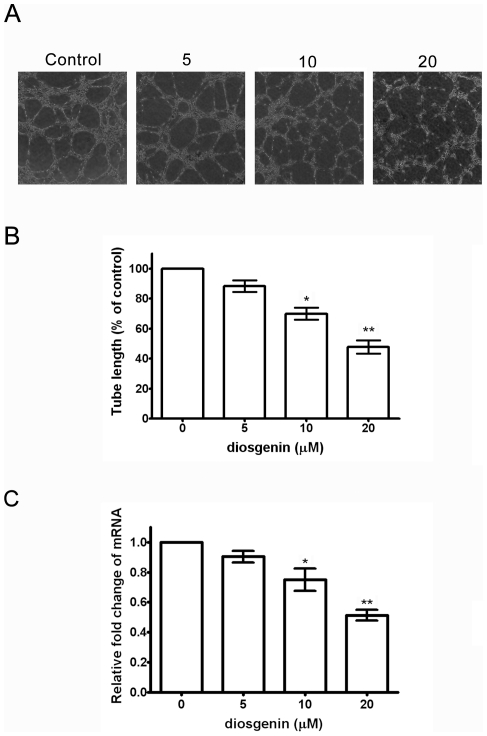
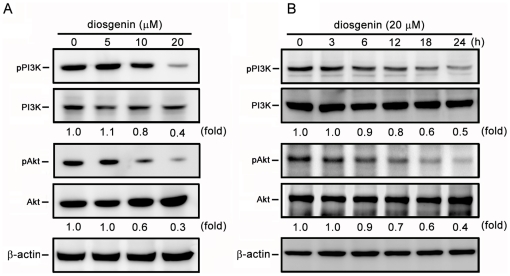
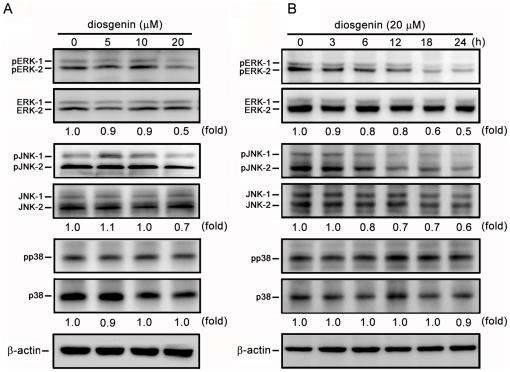
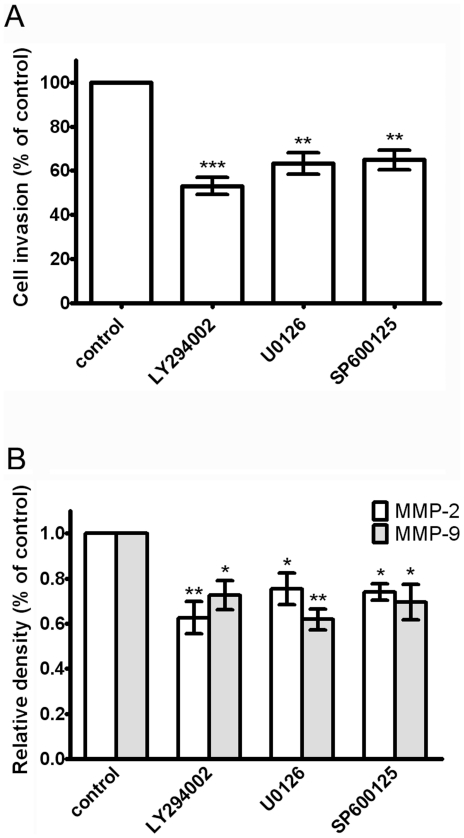
Diosgenin inhibited proliferation of PC-3 cells in a dose-dependent manner. When treated with non-toxic doses of diosgenin, cell migration and invasion were markedly suppressed by in vitro wound healing assay and Boyden chamber invasion assay, respectively. Furthermore, diosgenin reduced the activities of matrix metalloproteinase-2 (MMP-2) and MMP-9 by gelatin zymography assay. The mRNA level of MMP-2, -9, -7 and extracellular inducer of matrix metalloproteinase (EMMPRIN) were also suppressed while tissue inhibitor of metalloproteinase-2 (TIMP-2) was increased by diosgenin. In addition, diosgenin abolished the expression of vascular endothelial growth factor (VEGF) in PC-3 cells and tube formation of endothelial cells. Our immunoblotting assays indicated that diosgenin potently suppressed the phosphorylation of phosphatidylinositide-3 kinase (PI3K), Akt, extracellular signal regulating kinase (ERK) and c-Jun N-terminal kinase (JNK). In addition, diosgenin significantly decreased the nuclear level of nuclear factor kappa B (NF-κB), suggesting that diosgenin inhibited NF-κB activity.
CONCLUSION/SIGNIFICANCE: The results suggested that diosgenin inhibited migration and invasion of PC-3 cells by reducing MMPs expression. It also inhibited ERK, JNK and PI3K/Akt signaling pathways as well as NF-κB activity. These findings reveal new therapeutic potential for diosgenin in anti-metastatic therapy.
薯蓣皂苷元是从胡芦巴(Trigonella foenum graecum)中提取的甾体皂苷,已被发现具有抗癌特性,例如抑制多种肿瘤细胞的增殖和诱导细胞凋亡。然而,薯蓣皂苷元对癌症转移的影响尚不清楚。本研究旨在探讨薯蓣皂苷元对人前列腺癌 PC-3 细胞迁移和侵袭的影响。
薯蓣皂苷元呈剂量依赖性抑制 PC-3 细胞增殖。用无毒剂量的薯蓣皂苷元处理时,体外划痕愈合试验和 Boyden 室侵袭试验分别明显抑制细胞迁移和侵袭。此外,薯蓣皂苷元通过明胶酶谱法降低基质金属蛋白酶-2(MMP-2)和 MMP-9 的活性。薯蓣皂苷元还降低了 MMP-2、-9、-7 和细胞外基质金属蛋白酶诱导因子(EMMPRIN)的 mRNA 水平,同时增加了基质金属蛋白酶抑制剂-2(TIMP-2)的水平。此外,薯蓣皂苷元消除了 PC-3 细胞中血管内皮生长因子(VEGF)的表达和内皮细胞的管形成。我们的免疫印迹分析表明,薯蓣皂苷元能强烈抑制磷脂酰肌醇-3 激酶(PI3K)、Akt、细胞外信号调节激酶(ERK)和 c-Jun N-末端激酶(JNK)的磷酸化。此外,薯蓣皂苷元显著降低了核因子 kappa B(NF-κB)的核水平,表明薯蓣皂苷元抑制了 NF-κB 活性。
结论/意义:结果表明,薯蓣皂苷元通过降低 MMPs 的表达抑制 PC-3 细胞的迁移和侵袭。它还抑制了 ERK、JNK 和 PI3K/Akt 信号通路以及 NF-κB 活性。这些发现揭示了薯蓣皂苷元在抗转移治疗中的新治疗潜力。