Hegoburu Chloé, Shionoya Kiseko, Garcia Samuel, Messaoudi Belkacem, Thévenet Marc, Mouly Anne-Marie
Team "Olfaction: From Coding to Memory", Lyon Neuroscience Research Center, INSERM U1028, CNRS UMR5292 Lyon, France.
Front Behav Neurosci. 2011 May 19;5:25. doi: 10.3389/fnbeh.2011.00025. eCollection 2011.
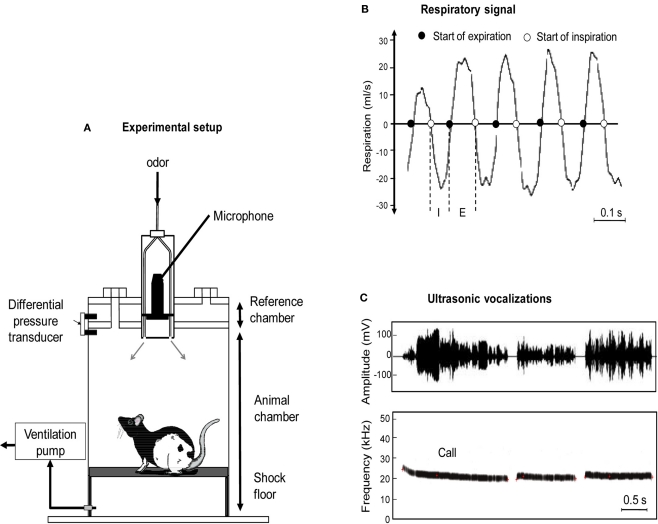
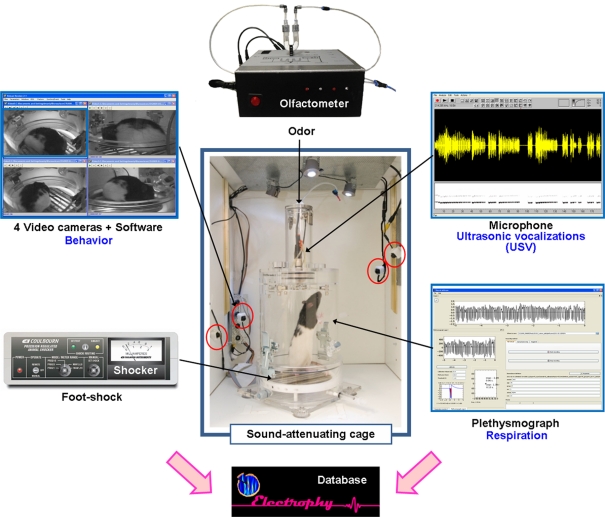
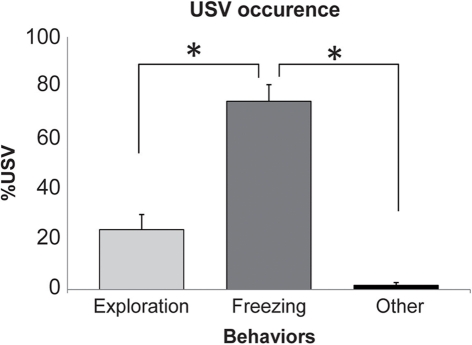
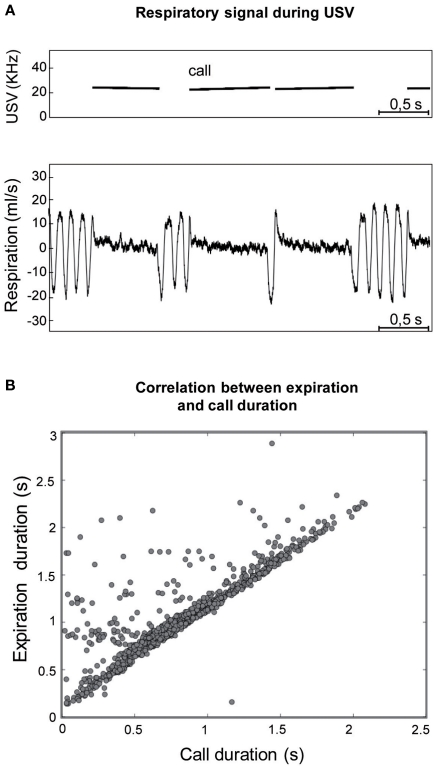
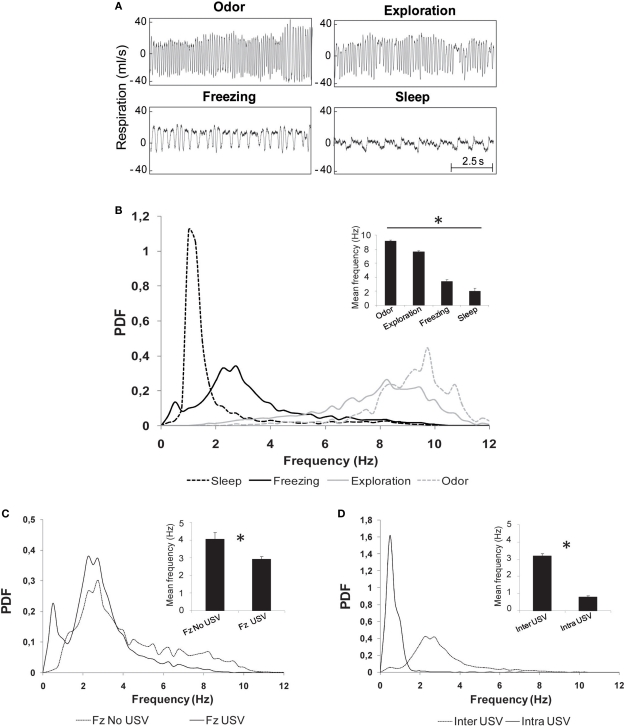
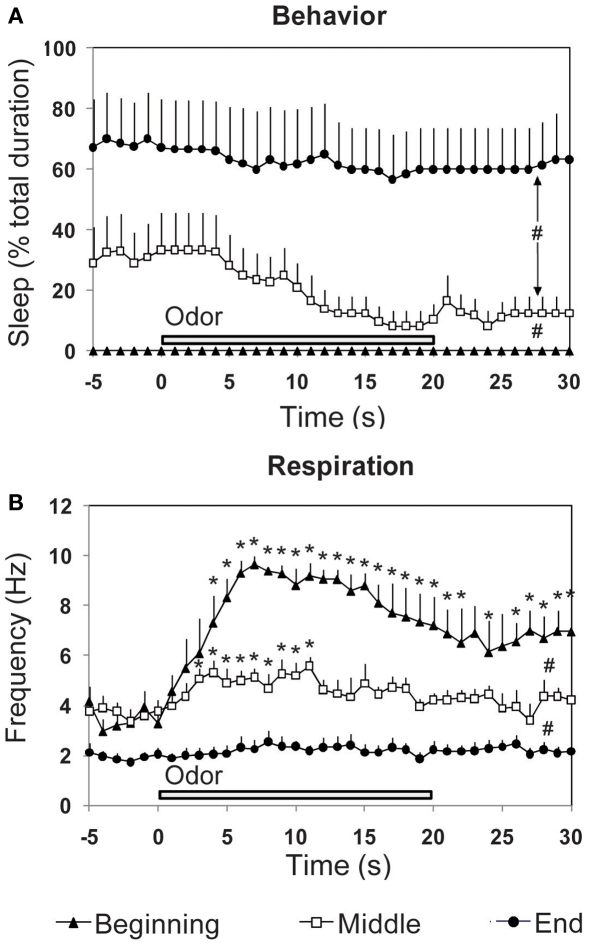
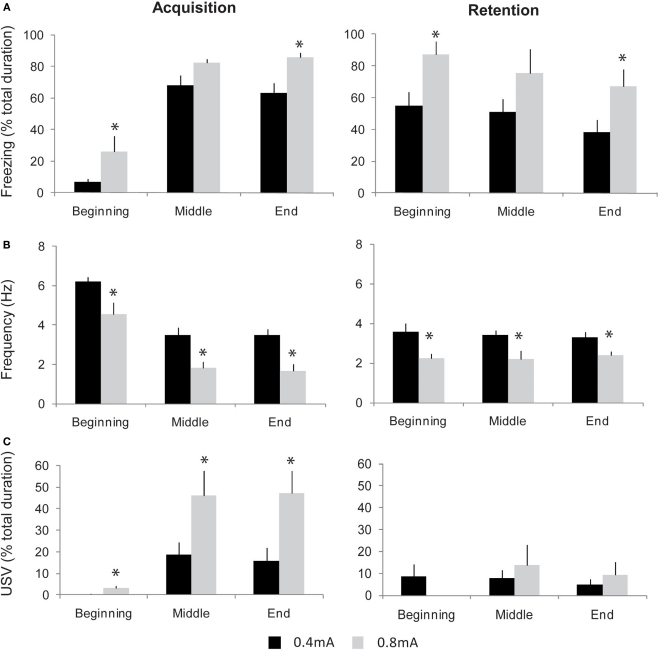
In animals, emotional memory is classically assessed through pavlovian fear conditioning in which a neutral novel stimulus (conditioned stimulus) is paired with an aversive unconditioned stimulus. After conditioning, the conditioned stimulus elicits a fear response characterized by a wide range of behavioral and physiological responses. Despite the existence of this large repertoire of responses, freezing behavior is often the sole parameter used for quantifying fear response, thus limiting emotional memory appraisal to this unique index. Interestingly, respiratory changes and ultrasonic vocalizations (USV) can occur during fear response, yet very few studies investigated the link between these different parameters and freezing. The aim of the present study was to design an experimental setup allowing the simultaneous recording of respiration, USV, and behavior (RUB cage), and the offline synchronization of the collected data for fine-grain second by second analysis. The setup consisted of a customized plethysmograph for respiration monitoring, equipped with a microphone capturing USV, and with four video cameras for behavior recording. In addition, the bottom of the plethysmograph was equipped with a shock-floor allowing foot-shock delivery, and the top received tubing for odor presentations. Using this experimental setup we first described the characteristics of respiration and USV in different behaviors and emotional states. Then we monitored these parameters during contextual fear conditioning and showed that they bring complementary information about the animal's anxiety state and the strength of aversive memory. The present setup may be valuable in providing a clearer appraisal of the physiological and behavioral changes that occur during acquisition as well as retrieval of emotional memory.
在动物中,情绪记忆经典地通过巴甫洛夫恐惧条件反射来评估,其中一个中性的新刺激(条件刺激)与一个厌恶的非条件刺激配对。条件反射后,条件刺激引发以广泛的行为和生理反应为特征的恐惧反应。尽管存在大量这样的反应,但僵住行为通常是用于量化恐惧反应的唯一参数,从而将情绪记忆评估局限于这个独特的指标。有趣的是,恐惧反应期间会出现呼吸变化和超声波发声(USV),然而很少有研究调查这些不同参数与僵住之间的联系。本研究的目的是设计一种实验装置,允许同时记录呼吸、USV和行为(RUB笼),并对收集的数据进行离线同步以便进行逐秒的精细分析。该装置包括一个定制的用于呼吸监测的体积描记器,配备一个捕捉USV的麦克风,以及四个用于行为记录的摄像机。此外,体积描记器的底部配备有一个电击地板用于施加足部电击,顶部有用于气味呈现的管道。使用这个实验装置,我们首先描述了不同行为和情绪状态下呼吸和USV的特征。然后我们在情境恐惧条件反射期间监测这些参数,并表明它们带来了关于动物焦虑状态和厌恶记忆强度的补充信息。本装置在更清晰地评估情绪记忆获取和检索过程中发生的生理和行为变化方面可能具有价值。