Center for Alcohol and Addiction Studies, Brown University, Box G-S121-5, Providence, RI 02912, USA.
Drug Alcohol Depend. 2011 Nov 1;118(2-3):391-9. doi: 10.1016/j.drugalcdep.2011.04.023. Epub 2011 Jun 12.
Contingency management (CM) has not been thoroughly evaluated as a treatment for alcohol abuse or dependence, in part because verification of alcohol use reduction requires frequent in-person breath tests. Transdermal alcohol sensors detect alcohol regularly throughout the day, providing remote monitoring and allowing for rapid reinforcement of reductions in use.
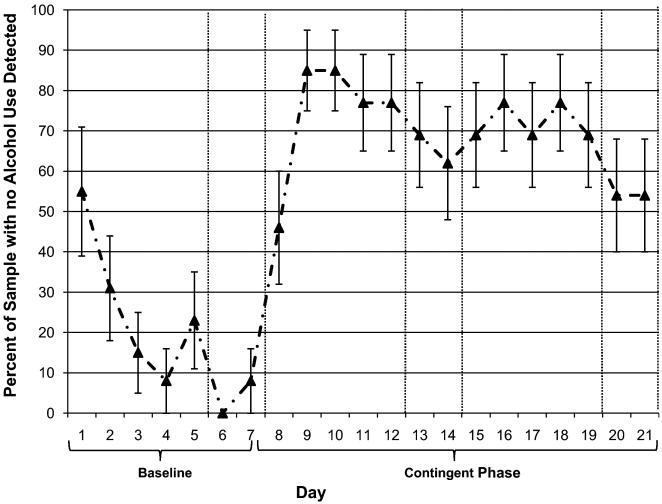
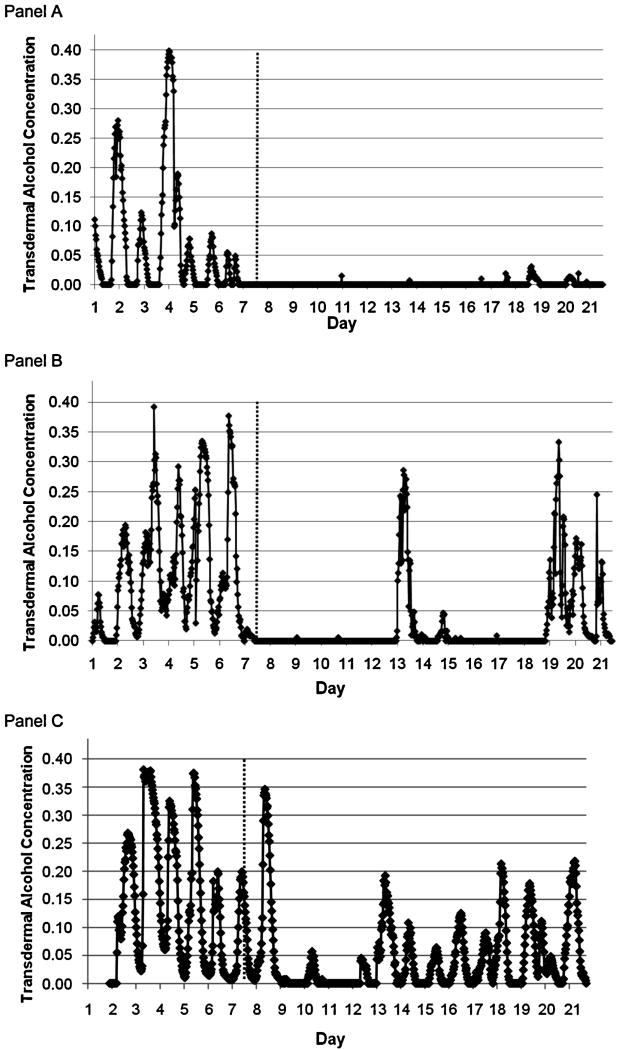
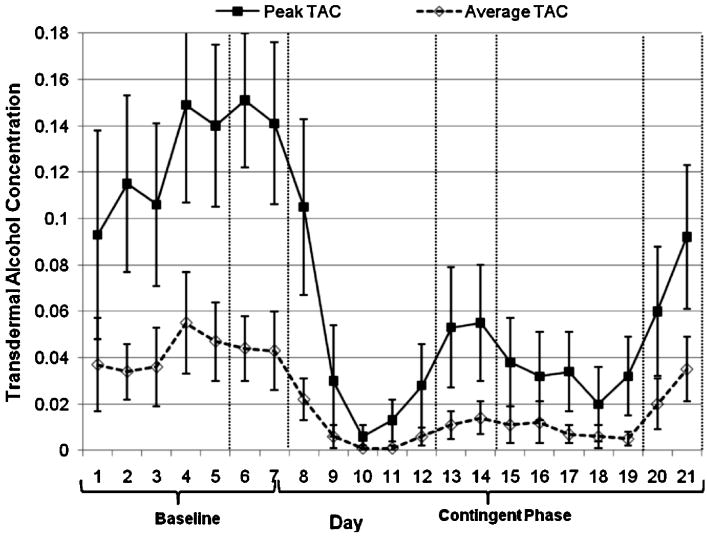
The purpose of this study was to evaluate the efficacy of CM for reduction in alcohol use, using a transdermal alcohol sensor to provide a continuous measure of alcohol use. Participants were 13 heavy drinking adults who wore the Secure Continuous Remote Alcohol Monitoring (SCRAM) bracelet for three weeks and provided reports of alcohol and drug use using daily web-based surveys. In Week 1, participants were asked to drink as usual; in Weeks 2 and 3, they were reinforced on an escalating schedule with values ranging from $5 to $17 per day on days when alcohol use was not reported or detected by the SCRAM.
Self-reports of percent days abstinent and drinks per week, and transdermal measures of average and peak transdermal alcohol concentration and area under the curve declined significantly in Weeks 2-3. A nonsignificant but large effect size for reduction in days of tobacco use also was found. An adjustment to the SCRAM criteria for detecting alcohol use provided an accurate but less conservative method for use with non-mandated clients.
Results support the efficacy of CM for alcohol use reductions and the feasibility of using transdermal monitoring of alcohol use for clinical purposes.
由于验证酒精使用减少需要频繁的现场呼气测试,因此,应急管理(CM)尚未作为治疗酒精滥用或依赖的方法进行彻底评估。透皮酒精传感器可全天定期检测酒精,提供远程监测并允许快速强化使用减少。
本研究旨在评估使用透皮酒精传感器提供的连续酒精使用测量值,通过 CM 减少酒精使用的效果。参与者为 13 名重度饮酒成年人,他们佩戴了安全持续远程酒精监测(SCRAM)手镯 3 周,并使用每日基于网络的调查报告酒精和药物使用情况。在第 1 周,要求参与者照常饮酒;在第 2 和第 3 周,当 SCRAM 未检测到或报告酒精使用时,根据递增的时间表,每天给予 5 至 17 美元的奖励。
第 2-3 周,自我报告的戒酒天数百分比、每周饮酒量以及平均和峰值透皮酒精浓度和透皮酒精浓度曲线下面积的透皮测量值显著下降。还发现吸烟天数减少的非显著但大的效应量。对 SCRAM 检测酒精使用标准的调整提供了一种准确但不太保守的方法,可用于非强制性客户。
结果支持 CM 减少酒精使用的效果,以及使用透皮酒精监测进行临床目的的可行性。