The Children's Hospital of Philadelphia, PA 19104, USA.
J Sch Health. 2011 Jul;81(7):424-9. doi: 10.1111/j.1746-1561.2011.00611.x.
To enhance the impact of school nutrition programs on children's health, more information is needed on the associations between healthy and unhealthy food offerings during school lunch periods and children's eating behavior. The purpose of this study is to evaluate the contributions of food offerings and participation in school lunch programs on children's overall (both in- and out-of-school) eating behavior.
A cross-sectional observational study was conducted in which 2039 students in 12 elementary and 10 middle schools reported their eating behavior and the frequencies with which they purchased meals and à la carte items in the school cafeteria. Food service managers from each school provided information on the availability of foods and beverages during school lunch periods. Multilevel regression analyses were conducted to identify school- and student-level predictors of children's eating behavior.
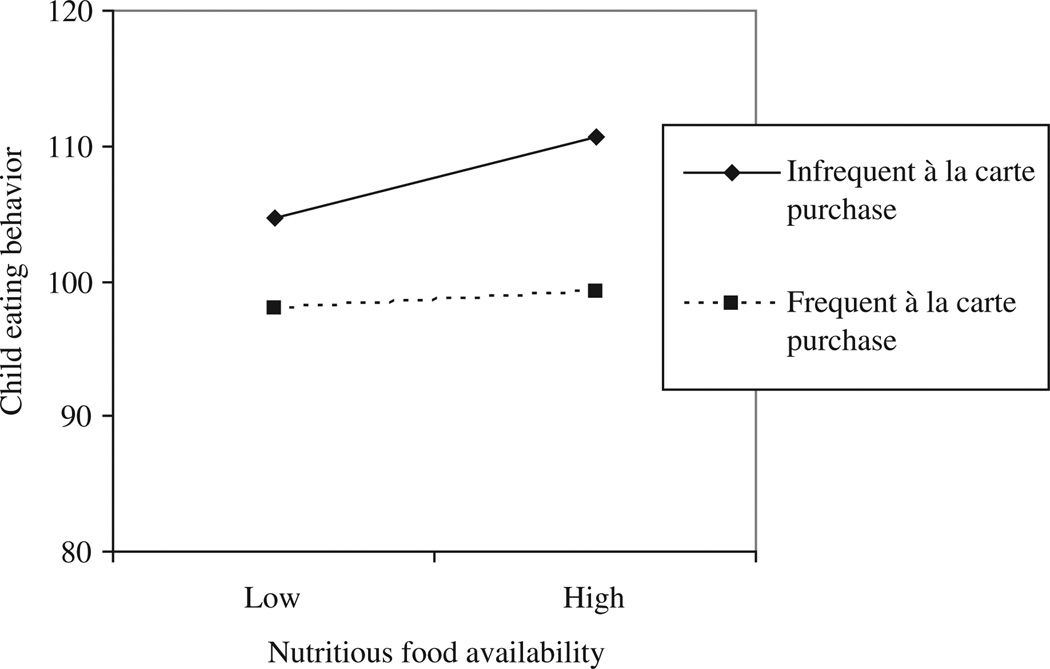
The availability of nutritious foods during school lunch periods was associated with healthier eating behavior among students. However, this effect was observed only among children who infrequently purchased à la carte food items, and not among those who were frequent purchasers.
Increased availability of fruits, vegetables, whole grains, and low-fat dairy products as components of school meals may be an effective strategy to promote healthy eating behaviors among children. Improving the nutrition standards for foods offered in competition with federally reimbursable school meals may enhance the positive effects of school meal programs on student eating behavior.
为了提高学校营养计划对儿童健康的影响,我们需要更多关于学校午餐期间提供健康和不健康食品与儿童饮食行为之间关联的信息。本研究旨在评估食品供应和参与学校午餐计划对儿童整体(校内外)饮食行为的贡献。
本研究采用横断面观察性研究,共有 2039 名 12 所小学和 10 所中学的学生报告了他们的饮食行为以及在学校自助餐厅购买餐食和单点食品的频率。来自每所学校的餐饮服务经理提供了学校午餐期间供应食品和饮料的信息。采用多水平回归分析确定儿童饮食行为的学校和学生层面预测因素。
学校午餐期间提供营养食品与学生更健康的饮食行为相关。然而,这种影响仅在很少购买单点食品的儿童中观察到,而在经常购买单点食品的儿童中则没有观察到。
增加学校餐食中水果、蔬菜、全谷物和低脂奶制品等成分的供应可能是促进儿童健康饮食行为的有效策略。提高与联邦补贴学校餐竞争的食品的营养标准可能会增强学校餐计划对学生饮食行为的积极影响。