Harvard-MIT Division of Health Sciences and Technology, Massachusetts Institute of Technology, 77 Massachusetts Avenue, Cambridge, Massachusetts 02139, USA.
Nat Mater. 2011 Jun 19;10(7):545-52. doi: 10.1038/nmat3049.
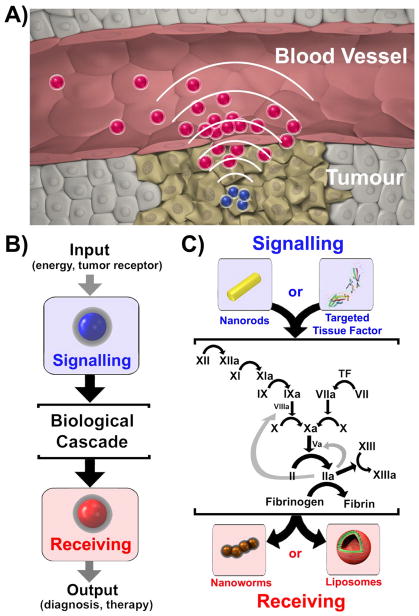
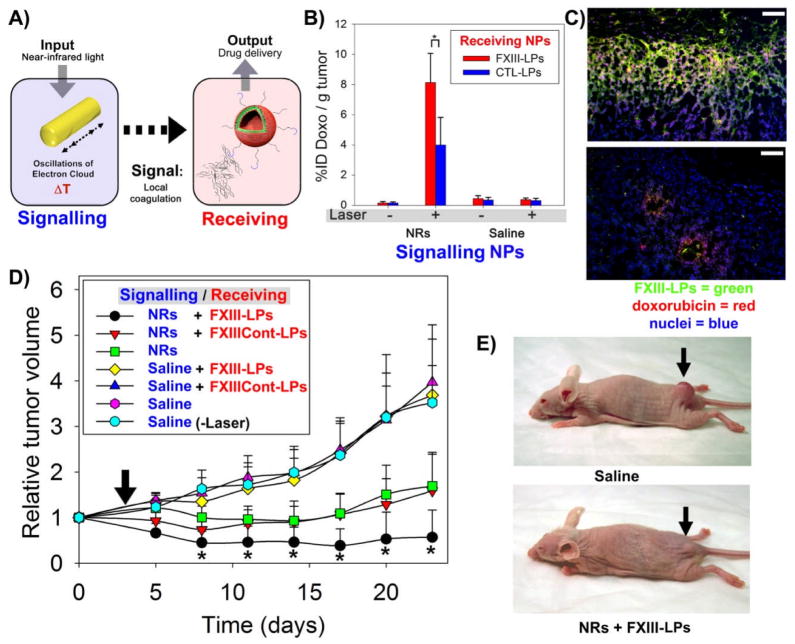
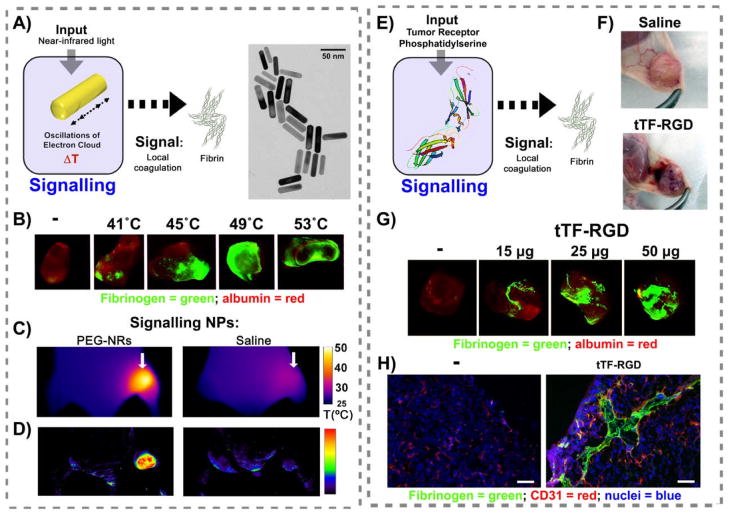
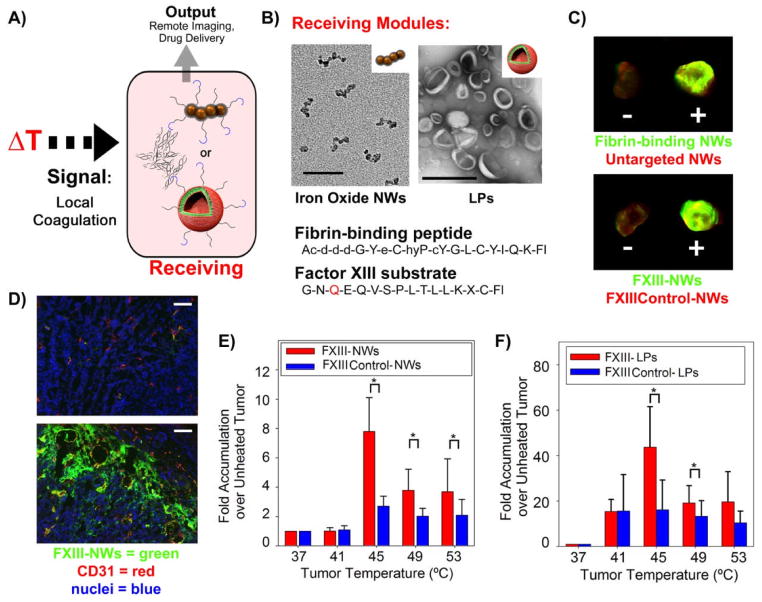
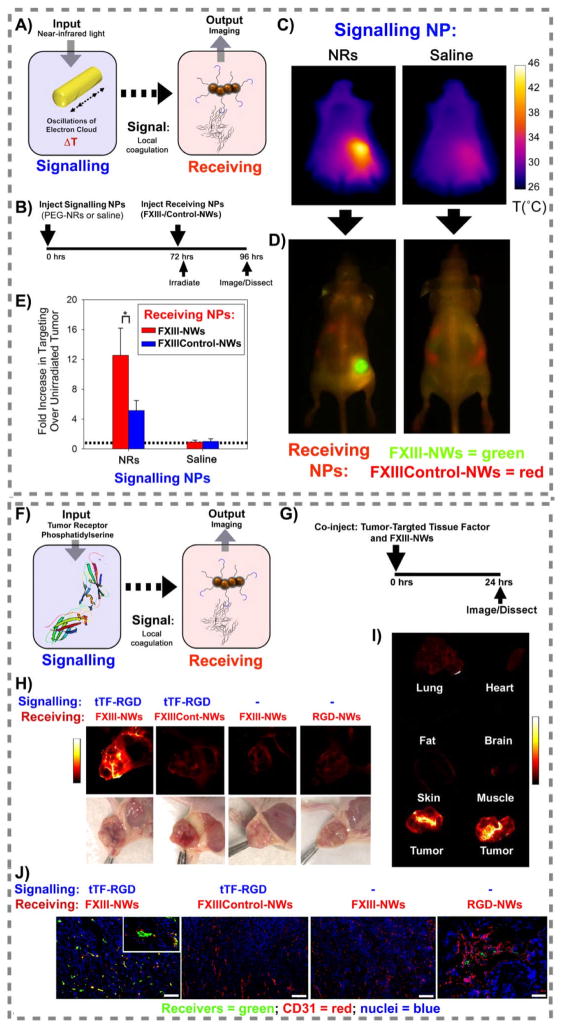
Nanomedicines have enormous potential to improve the precision of cancer therapy, yet our ability to efficiently home these materials to regions of disease in vivo remains very limited. Inspired by the ability of communication to improve targeting in biological systems, such as inflammatory-cell recruitment to sites of disease, we construct systems where synthetic biological and nanotechnological components communicate to amplify disease targeting in vivo. These systems are composed of 'signalling' modules (nanoparticles or engineered proteins) that target tumours and then locally activate the coagulation cascade to broadcast tumour location to clot-targeted 'receiving' nanoparticles in circulation that carry a diagnostic or therapeutic cargo, thereby amplifying their delivery. We show that communicating nanoparticle systems can be composed of multiple types of signalling and receiving modules, can transmit information through multiple molecular pathways in coagulation, can operate autonomously and can target over 40 times higher doses of chemotherapeutics to tumours than non-communicating controls.
纳米医学在提高癌症治疗的精准度方面具有巨大潜力,但我们将这些材料有效递送到体内疾病部位的能力仍然非常有限。受通讯能够改善生物系统靶向性(例如炎性细胞募集到疾病部位)的启发,我们构建了这样的系统,其中合成生物学和纳米技术组件进行通信,以在体内放大疾病靶向性。这些系统由“信号”模块(纳米颗粒或工程蛋白)组成,这些模块靶向肿瘤,然后局部激活凝血级联反应,将肿瘤位置广播到循环中的凝血靶向“接收”纳米颗粒,这些颗粒携带诊断或治疗货物,从而放大它们的递送。我们表明,通信纳米颗粒系统可以由多种类型的信号和接收模块组成,可以通过凝血中的多个分子途径传递信息,可以自主运行,并且可以将化疗药物的剂量提高 40 多倍,靶向肿瘤,而非通信对照。