Institute of Health and Society, Newcastle University, Baddiley Clark Building, Richardson Road, Newcastle Upon Tyne NE2 4AX, UK.
Alcohol Alcohol. 2011 Sep-Oct;46(5):570-7. doi: 10.1093/alcalc/agr067. Epub 2011 Jun 20.
To ascertain the views of general practitioners (GPs) regarding the prevention and management of alcohol-related problems in practice, together with perceived barriers and incentives for this work; to compare our findings with a comparable survey conducted 10 years earlier.
In total, 282 (73%) of 419 GPs surveyed in East Midlands, UK, completed a postal questionnaire, measuring practices and attitudes, including the Shortened Alcohol and Alcohol Problems Perception Questionnaire (SAAPPQ).
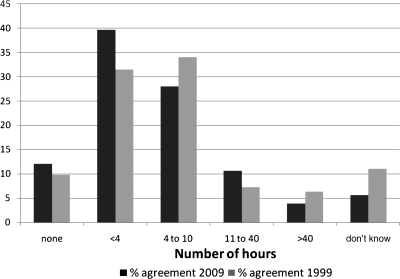
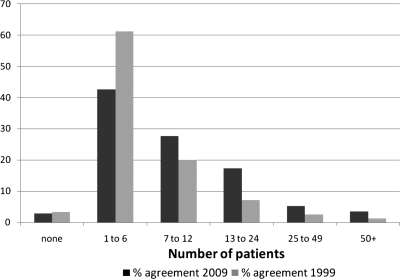
GPs reported lower levels of post-graduate education or training on alcohol-related issues (<4 h for the majority) than in 1999 but not significantly so (P = 0.031). In the last year, GPs had most commonly requested more than 12 blood tests and managed 1-6 patients for alcohol. Reports of these preventive practices were significantly increased from 1999 (P < 0.001). Most felt that problem or dependent drinkers' alcohol issues could be legitimately (88%, 87%) and adequately (78%, 69%) addressed by GPs. However, they had low levels of motivation (42%, 35%), task-related self-esteem (53%, 49%) and job satisfaction (15%, 12%) for this. Busyness (63%) and lack of training (57%) or contractual incentives (48%) were key barriers. Endorsement for government policies on alcohol was very low.
Among GPs, there still appears to be a gap between actual practice and potential for preventive work relating to alcohol problems; they report little specific training and a lack of support. Translational work on understanding the evidence-base supporting screening and brief intervention could incentivize intervention against excessive drinking and embedding it into everyday primary care practice.
确定全科医生(GP)对实践中预防和管理与酒精相关问题的看法,以及对这项工作的感知障碍和激励因素;将我们的发现与 10 年前进行的一项可比调查进行比较。
在英国东米德兰兹地区,共调查了 419 名全科医生,其中 282 名(73%)完成了一份衡量实践和态度的邮寄问卷,包括缩短的酒精和酒精问题感知问卷(SAAPPQ)。
与 1999 年相比,GP 报告的关于酒精相关问题的研究生教育或培训水平较低(大多数人少于 4 小时),但差异不显著(P = 0.031)。在过去的一年中,GP 最常要求进行超过 12 次血液检查,并管理 1-6 名酒精患者。与 1999 年相比,这些预防措施的报告明显增加(P < 0.001)。大多数人认为,问题或依赖饮酒者的酒精问题可以由 GP 合理(88%,87%)和充分(78%,69%)解决。然而,他们的动机(42%,35%)、与任务相关的自尊(53%,49%)和工作满意度(15%,12%)都很低。忙碌(63%)、缺乏培训(57%)或合同激励(48%)是主要障碍。对政府关于酒精的政策的认可非常低。
在全科医生中,实际实践与预防酒精问题相关工作的潜力之间似乎仍然存在差距;他们报告的具体培训很少,缺乏支持。关于支持筛查和简短干预的证据基础的转化工作可以激励针对过度饮酒的干预,并将其纳入日常初级保健实践中。