Bondareff W, Wischik C M, Novak M, Amos W B, Klug A, Roth M
Department of Psychiatry and Biological Sciences, University of Southern California, Los Angeles 90033.
Am J Pathol. 1990 Sep;137(3):711-23.
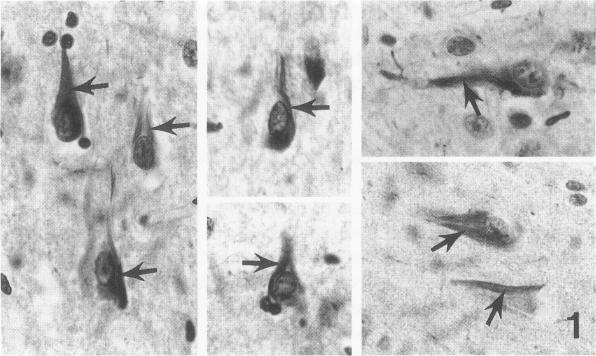
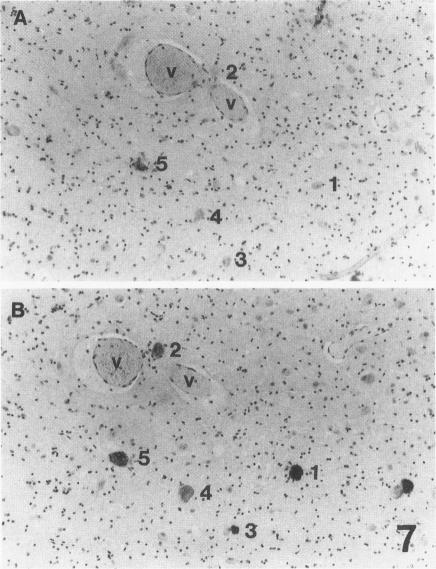
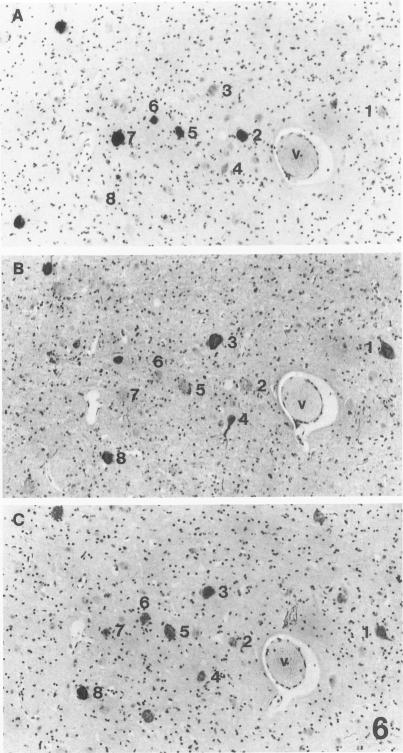
Antibodies directed against three regions of tau, ubiquitin, and B-amyloid were used in a histologic study of neurofibrillary degeneration in Alzheimer's disease to distinguish two populations of neurofibrillary tangles. Intracellular tangles were immunolabeled exclusively by two antibodies raised against antigens in the fuzzy coat of the paired helical filament (PHF). Extracellular tangles were distinguished by selective immunolabeling with a monoclonal antibody raised against antigens in the PHF core. This was associated with removal of the fuzzy coat and exposure of PHF-core epitopes. In the transition from intracellular to extracellular compartments in vivo, tangles appeared to undergo changes similar to protease digestion in vitro. The transition was associated with the appearance of amyloid immunoreactivity. These findings suggest that tangle degradation occurs in a series of distinct stages, including ubiquitination of some unknown molecule, a change in tau immunoreactivity, and partial proteolysis of tangle-bound tau in extracellular tangles.
针对tau、泛素和β-淀粉样蛋白三个区域的抗体被用于阿尔茨海默病神经原纤维变性的组织学研究,以区分两种神经原纤维缠结。细胞内缠结仅由两种针对双螺旋丝(PHF)模糊外层抗原产生的抗体进行免疫标记。细胞外缠结通过用一种针对PHF核心抗原产生的单克隆抗体进行选择性免疫标记来区分。这与模糊外层的去除和PHF核心表位的暴露有关。在体内从细胞内隔室向细胞外隔室的转变过程中,缠结似乎经历了类似于体外蛋白酶消化的变化。这种转变与淀粉样蛋白免疫反应性的出现有关。这些发现表明,缠结降解发生在一系列不同阶段,包括一些未知分子的泛素化、tau免疫反应性的变化以及细胞外缠结中与缠结结合的tau的部分蛋白水解。