The Whitney Laboratory and Department of Neuroscience, University of Florida, St. Augustine, FL 32080, USA.
Prog Neurobiol. 2011 Sep 1;94(4):307-46. doi: 10.1016/j.pneurobio.2011.06.001. Epub 2011 Jun 17.
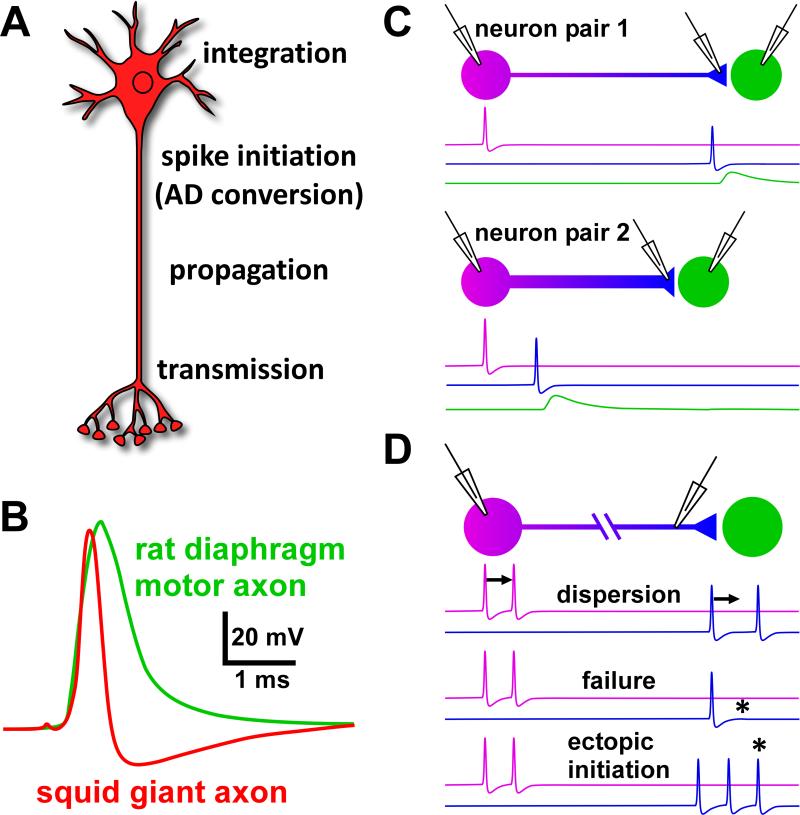
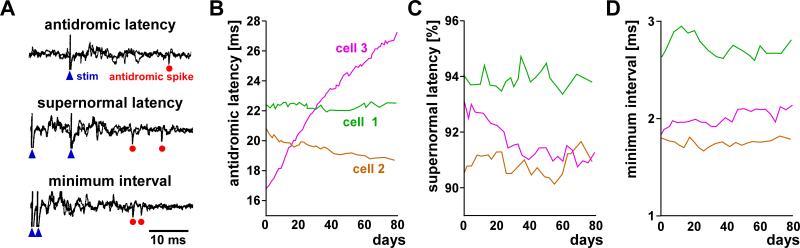
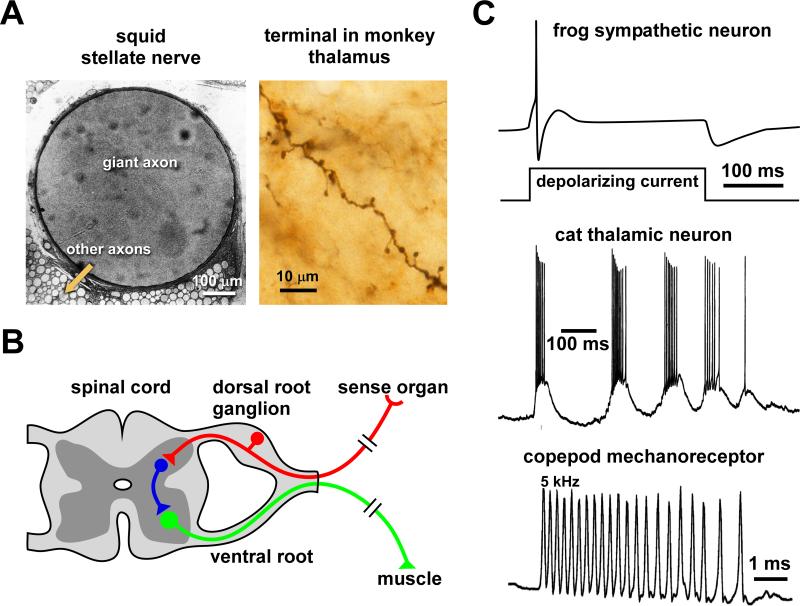
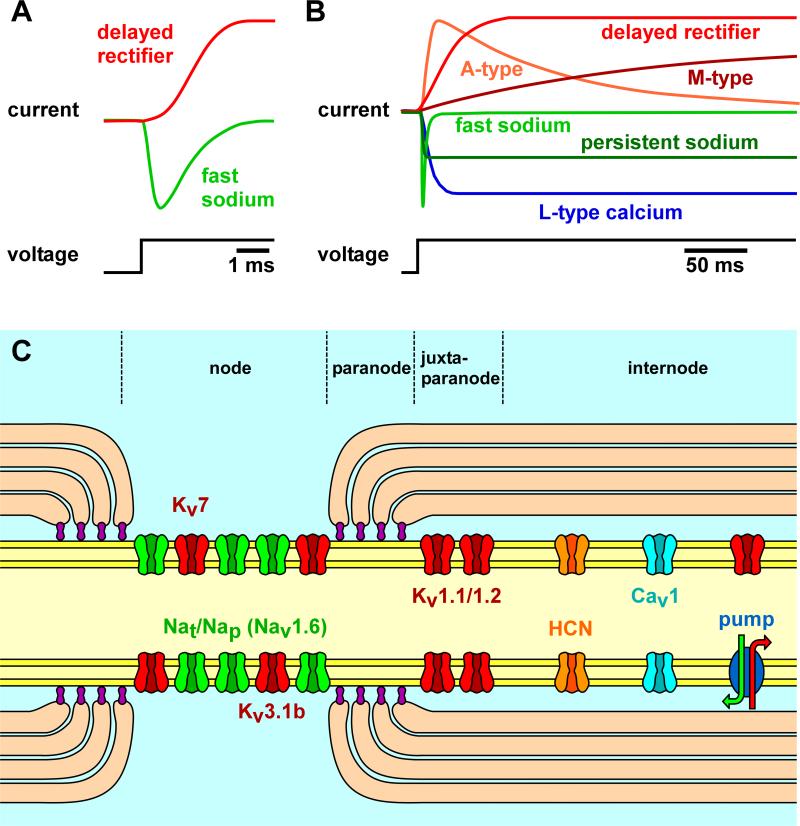
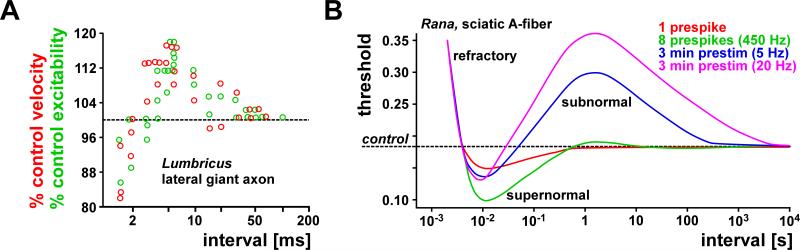
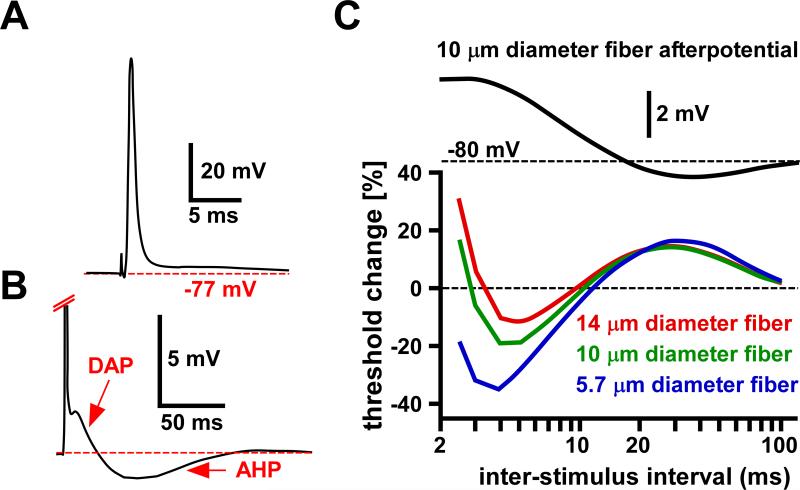
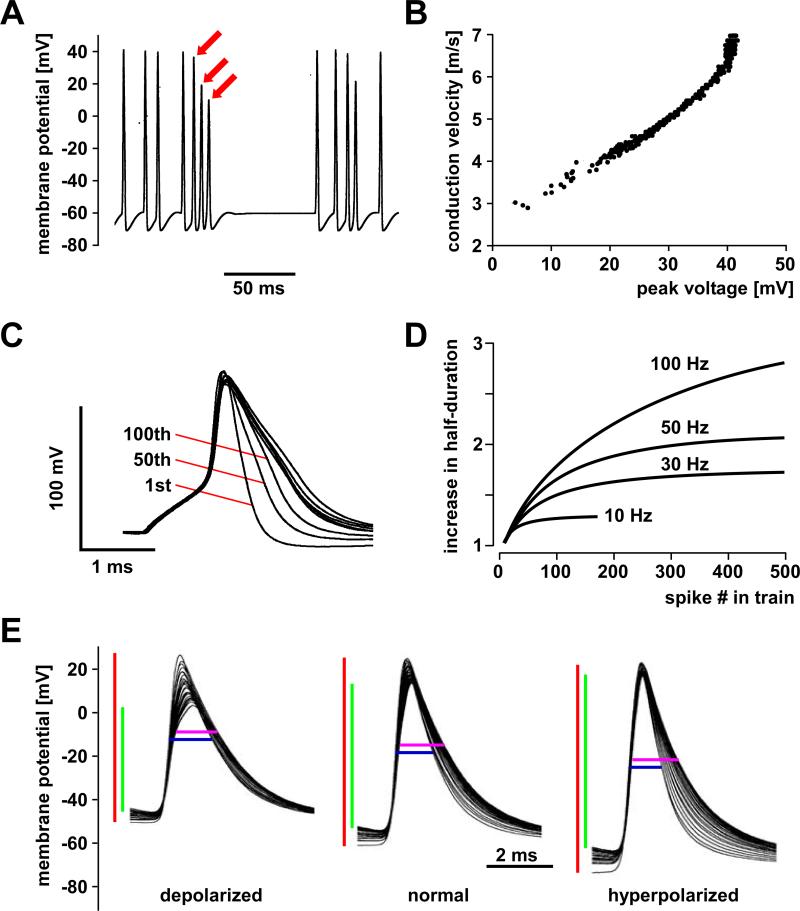
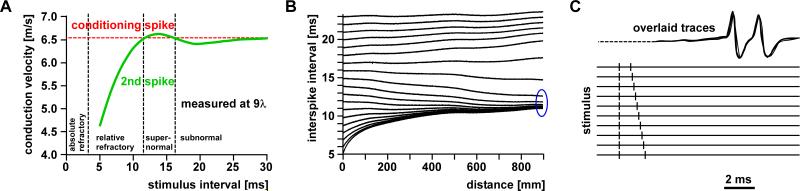
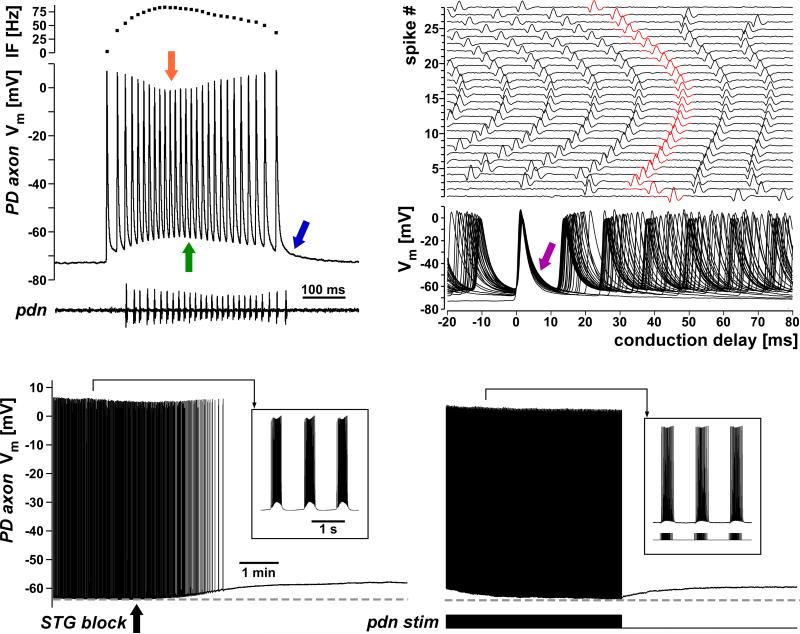
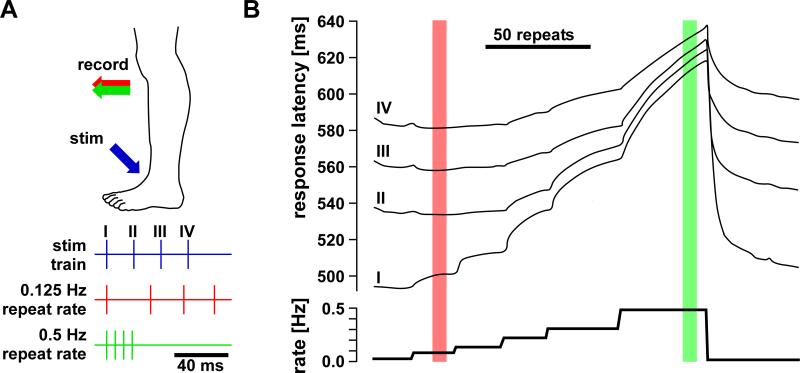
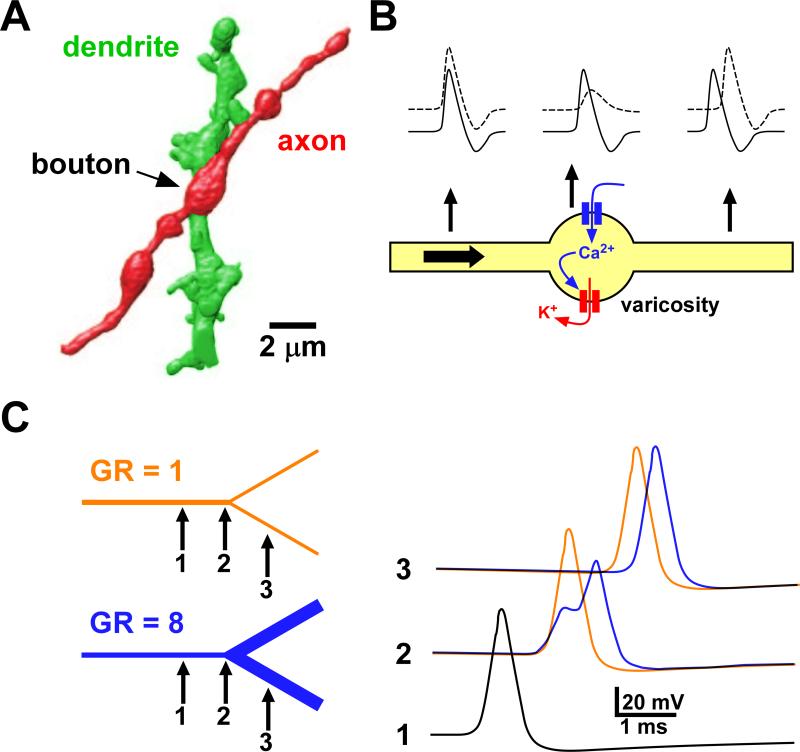
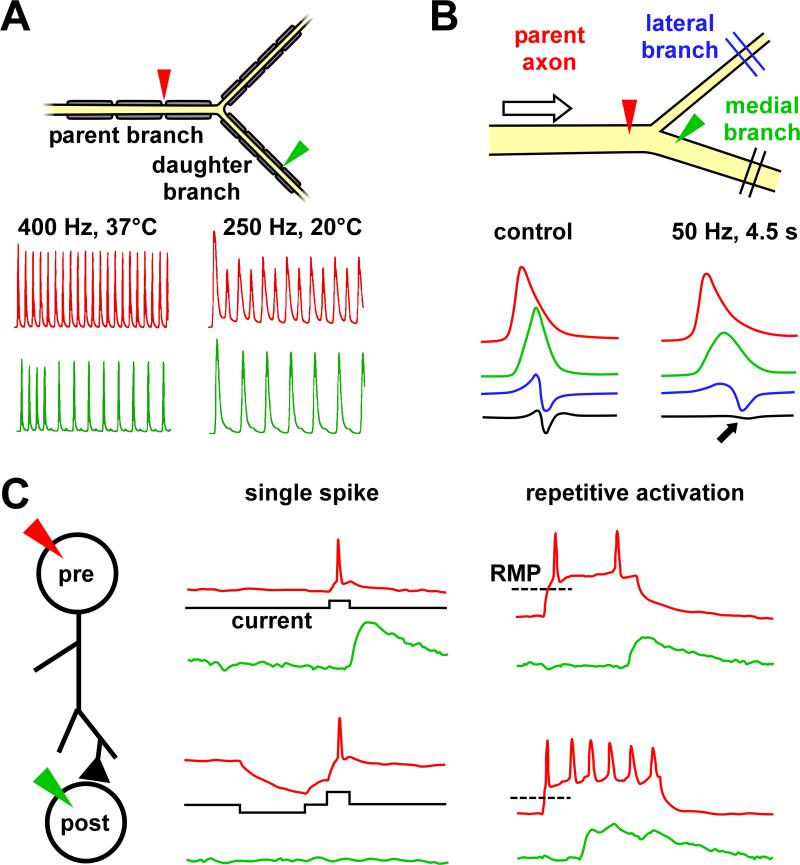
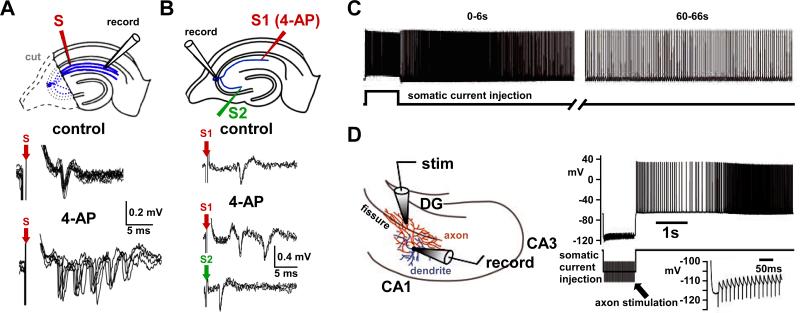
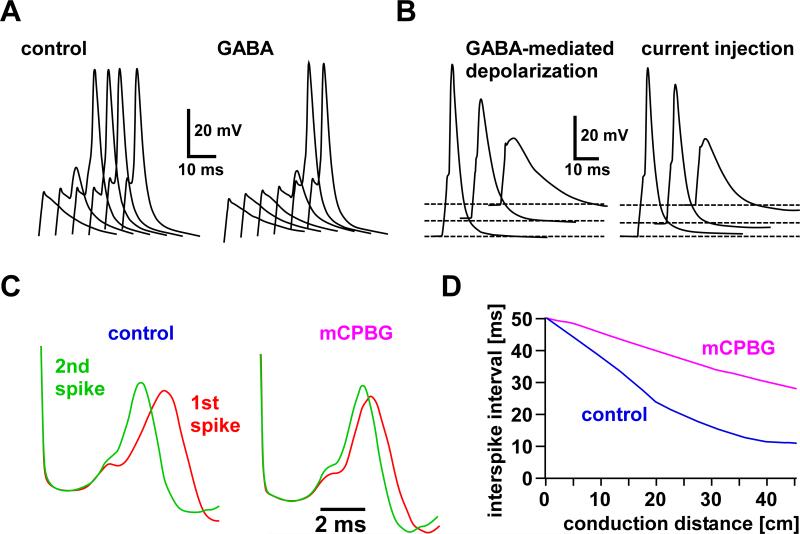
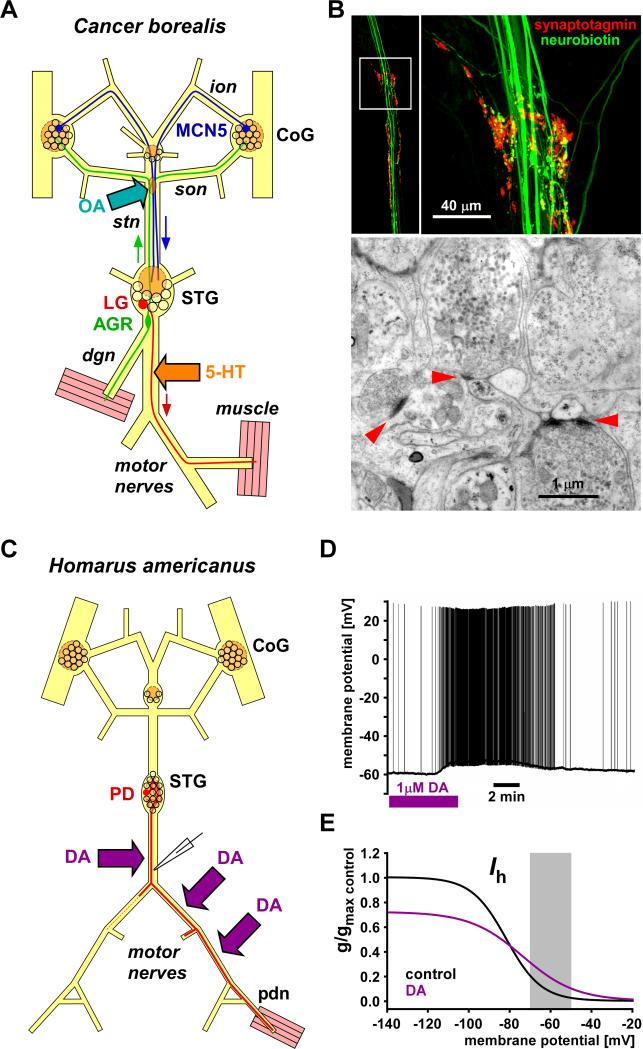
Most spiking neurons are divided into functional compartments: a dendritic input region, a soma, a site of action potential initiation, an axon trunk and its collaterals for propagation of action potentials, and distal arborizations and terminals carrying the output synapses. The axon trunk and lower order branches are probably the most neglected and are often assumed to do nothing more than faithfully conducting action potentials. Nevertheless, there are numerous reports of complex membrane properties in non-synaptic axonal regions, owing to the presence of a multitude of different ion channels. Many different types of sodium and potassium channels have been described in axons, as well as calcium transients and hyperpolarization-activated inward currents. The complex time- and voltage-dependence resulting from the properties of ion channels can lead to activity-dependent changes in spike shape and resting potential, affecting the temporal fidelity of spike conduction. Neural coding can be altered by activity-dependent changes in conduction velocity, spike failures, and ectopic spike initiation. This is true under normal physiological conditions, and relevant for a number of neuropathies that lead to abnormal excitability. In addition, a growing number of studies show that the axon trunk can express receptors to glutamate, GABA, acetylcholine or biogenic amines, changing the relative contribution of some channels to axonal excitability and therefore rendering the contribution of this compartment to neural coding conditional on the presence of neuromodulators. Long-term regulatory processes, both during development and in the context of activity-dependent plasticity may also affect axonal properties to an underappreciated extent.
树突输入区、胞体、动作电位起始部位、轴突干及其分支用于传播动作电位,以及远端树突分支和末梢携带输出突触。轴突干和较低阶分支可能是最被忽视的部分,通常被认为只是忠实地传导动作电位。然而,由于存在多种不同的离子通道,非突触轴突区域存在许多复杂的膜特性的报告。在轴突中已经描述了许多不同类型的钠和钾通道,以及钙瞬变和超极化激活内向电流。离子通道的特性导致的复杂时间和电压依赖性可导致尖峰形状和静息电位的活动依赖性变化,从而影响尖峰传导的时间保真度。神经编码可以通过传导速度、尖峰失败和异位尖峰起始的活动依赖性变化而改变。这在正常生理条件下是如此,并且与导致异常兴奋性的许多神经病变有关。此外,越来越多的研究表明,轴突干可以表达谷氨酸、GABA、乙酰胆碱或生物胺的受体,改变某些通道对轴突兴奋性的相对贡献,从而使该区域对神经编码的贡献取决于神经调质的存在。在发育过程中和活动依赖性可塑性的背景下,长期的调节过程也可能在一定程度上影响轴突特性。