Department of Cardiology, Tongji Hospital, Tongji University School of Medicine, Shanghai, China.
Med Sci Monit. 2011 Jul;17(7):PH60-4. doi: 10.12659/msm.881836.
The university environment poses a high risk of spreading infectious diseases, particularly the 2009 pandemic influenza H1N1, as it is a mass gathering place for youth. This study aimed to evaluate the predictors of stress symptoms among Chinese university students during the 2009 H1N1 influenza pandemic.
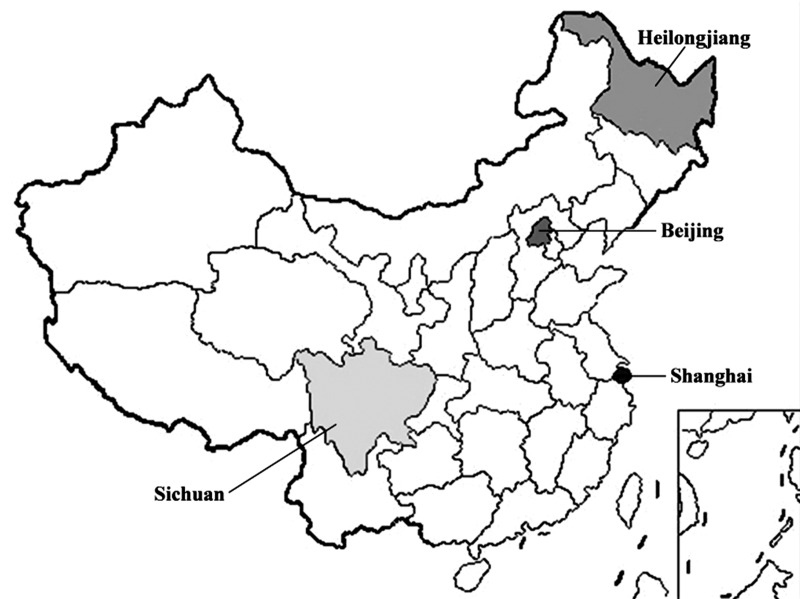
MATERIAL/METHODS: We used a self-reported questionnaire, the PTSD (posttraumatic stress disorder) Checklist-Civilian Version (PCL-C) to evaluate the stress symptoms among Chinese university students from Heilongjiang (n=455), Beijing (n=106), Shanghai (n=419) and Sichuan (n=102). We then analyzed the predictors of stress symptoms.
The proportion of university students enrolled in this study who met symptomatic criteria for PTSD was 2% (22 students). The mean PCL-C total score in the sample was 22.09 ± 8.01. The correlational analyses revealed a significant positive relationship between the PCL-C total score and area, and university grade (P<0.01). Moreover, a negative relationship was found between the PCL-C total score and gender, having H1N1 influenza, having family members, friends or acquaintances having H1N1 influenza, and being afraid of H1N1 influenza (P<0.01). The regression analyses showed that in North China, female gender, having H1N1 influenza, having family members or acquaintances with H1N1 influenza, and being afraid of H1N1 influenza were significant predictors of the stress symptoms.
In North China, female gender, having H1N1 influenza, having family members, friends, or acquaintances with H1N1 influenza, and being afraid of H1N1 influenza were significant predictors of the stress symptoms.
大学环境具有很高的传染病传播风险,尤其是在 2009 年大流行的甲型 H1N1 流感时期,因为它是青年人群的聚集地。本研究旨在评估 2009 年甲型 H1N1 流感大流行期间中国大学生的应激症状的预测因子。
材料/方法:我们使用自我报告问卷,创伤后应激障碍检查表-平民版(PCL-C)评估来自黑龙江(n=455)、北京(n=106)、上海(n=419)和四川(n=102)的中国大学生的应激症状。然后,我们分析了应激症状的预测因子。
符合创伤后应激障碍症状标准的大学生比例为 2%(22 名学生)。样本的 PCL-C 总分均值为 22.09±8.01。相关分析显示,PCL-C 总分与地区和年级呈显著正相关(P<0.01)。此外,PCL-C 总分与性别、感染 H1N1 流感、有家庭成员、朋友或熟人感染 H1N1 流感以及害怕感染 H1N1 流感呈显著负相关(P<0.01)。回归分析显示,在中国北方,女性、感染 H1N1 流感、有家庭成员或熟人感染 H1N1 流感以及害怕感染 H1N1 流感是应激症状的显著预测因子。
在中国北方,女性、感染 H1N1 流感、有家庭成员、朋友或熟人感染 H1N1 流感以及害怕感染 H1N1 流感是应激症状的显著预测因子。