Shea Charles H, Kovacs Attila J, Panzer Stefan
Human Performance Laboratories, Department of Health and Kinesiology, Texas A&M University College Station, TX, USA.
Front Psychol. 2011 Apr 8;2:52. doi: 10.3389/fpsyg.2011.00052. eCollection 2011.
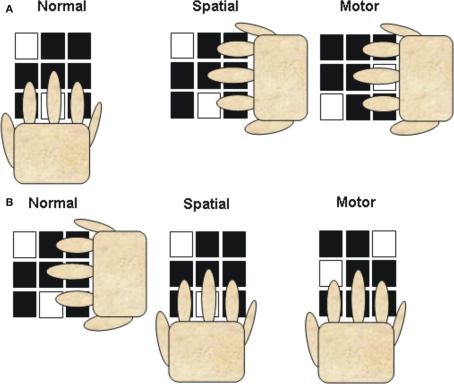
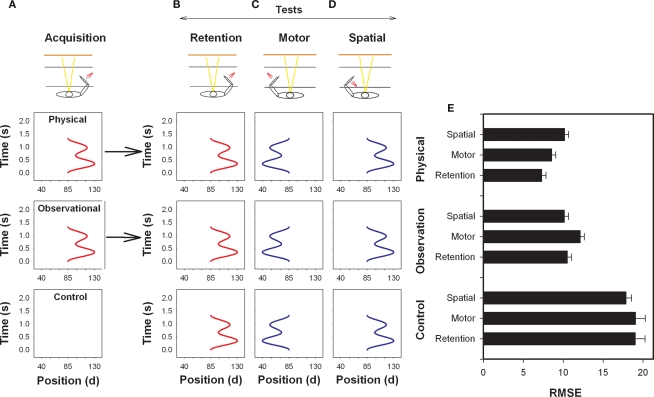
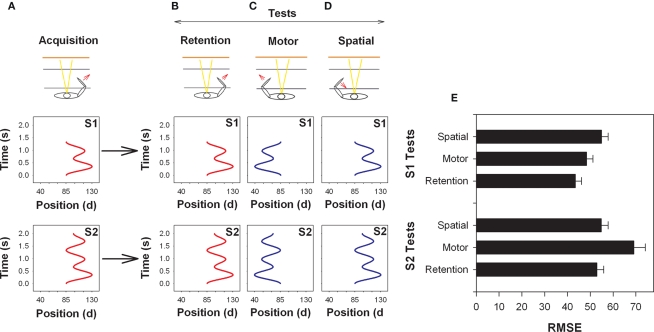
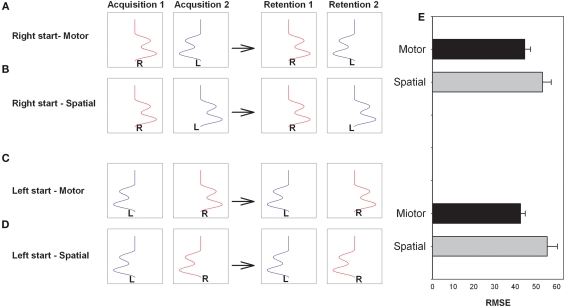
The manuscript reviews recent experiments that use inter-manual transfer and inter-manual practice paradigms to determine the coordinate system (visual-spatial or motor) used in the coding of movement sequences during physical and observational practice. The results indicated that multi-element movement sequences are more effectively coded in visual-spatial coordinates even following extended practice, while very early in practice movement sequences with only a few movement elements and relatively short durations are coded in motor coordinates. Likewise, inter-manual practice of relatively simple movement sequences show benefits of right and left limb practice that involves the same motor coordinates while the opposite is true for more complex sequences. The results suggest that the coordinate system used to code the sequence information is linked to both the task characteristics and the control processes used to produce the sequence. These findings have the potential to greatly enhance our understanding of why in some conditions participants following practice with one limb or observation of one limb practice can effectively perform the task with the contralateral limb while in other (often similar) conditions cannot.
该手稿回顾了最近的实验,这些实验使用双手间转移和双手间练习范式来确定在身体练习和观察练习期间运动序列编码中所使用的坐标系(视觉空间或运动)。结果表明,即使经过长时间练习,多元素运动序列在视觉空间坐标系中仍能更有效地编码,而在练习初期,只有少数运动元素且持续时间相对较短的运动序列则在运动坐标系中编码。同样,相对简单运动序列的双手间练习显示出左右肢体练习的益处,涉及相同的运动坐标系,而对于更复杂的序列则相反。结果表明,用于编码序列信息的坐标系与任务特征以及用于产生序列的控制过程都有关联。这些发现有可能极大地增进我们对于为何在某些情况下,参与者在单肢练习或观察单肢练习后能够有效地用对侧肢体执行任务,而在其他(通常相似)情况下却不能的理解。