Center for Epigenetics, Johns Hopkins University School of Medicine, Baltimore, Maryland, USA.
Nat Struct Mol Biol. 2011 Jul 3;18(8):867-74. doi: 10.1038/nsmb.2084.
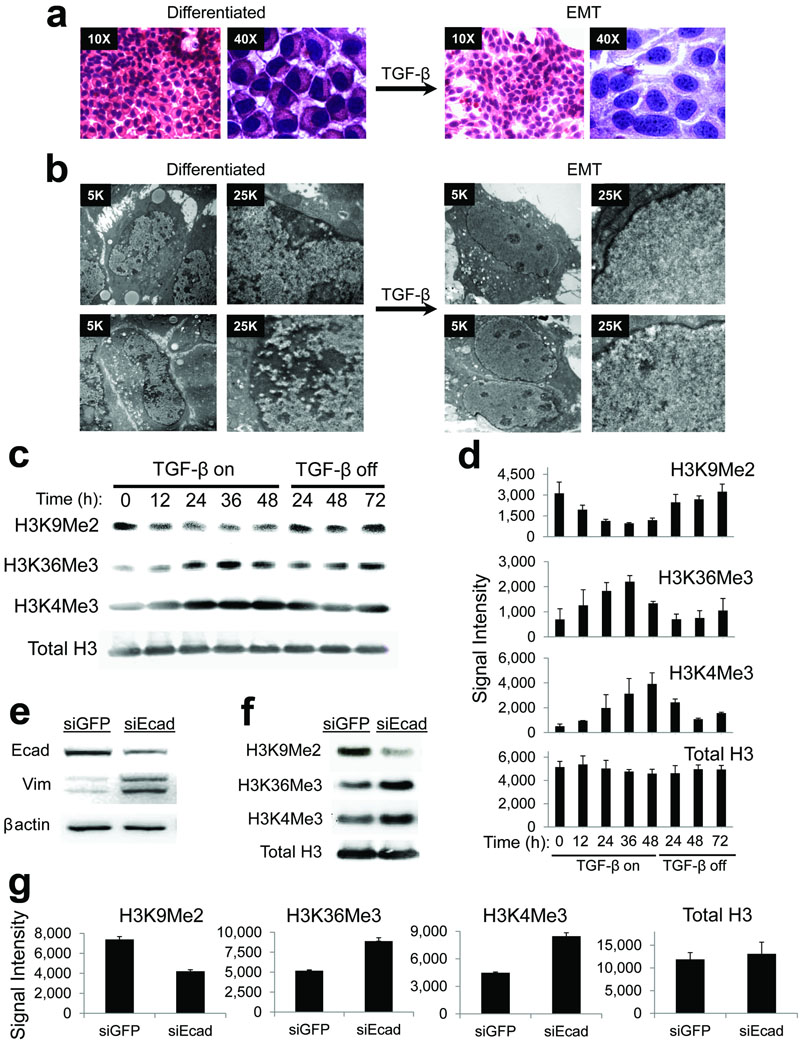
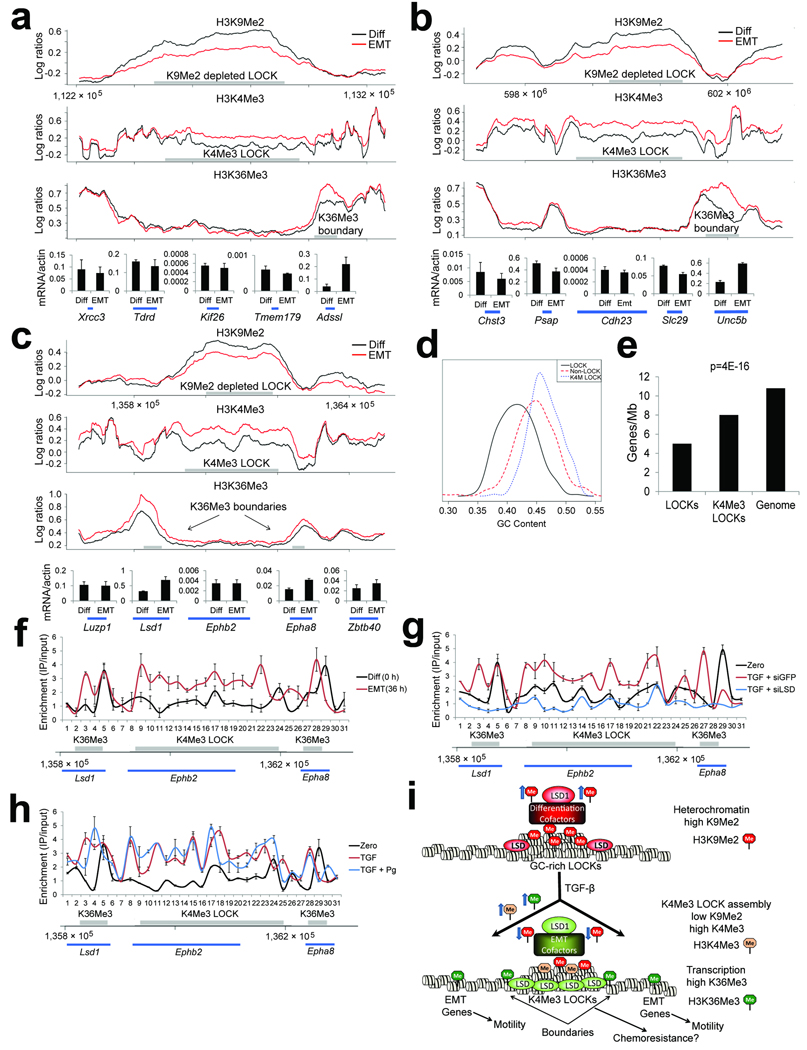
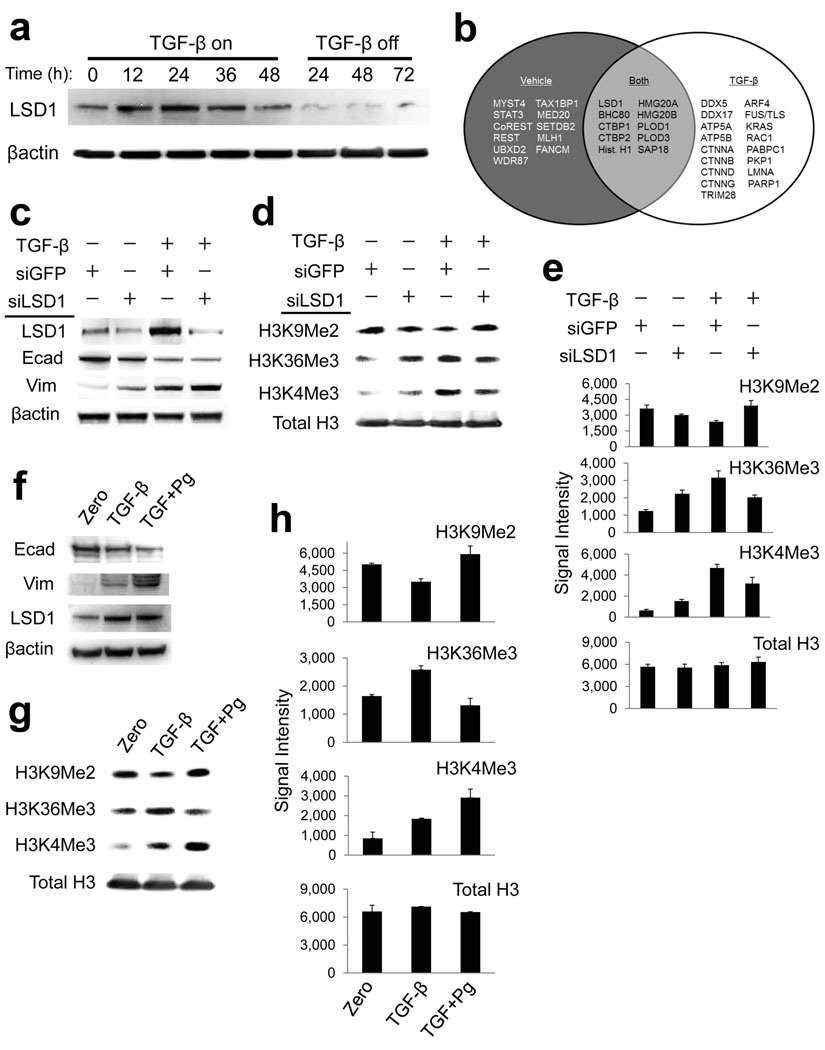
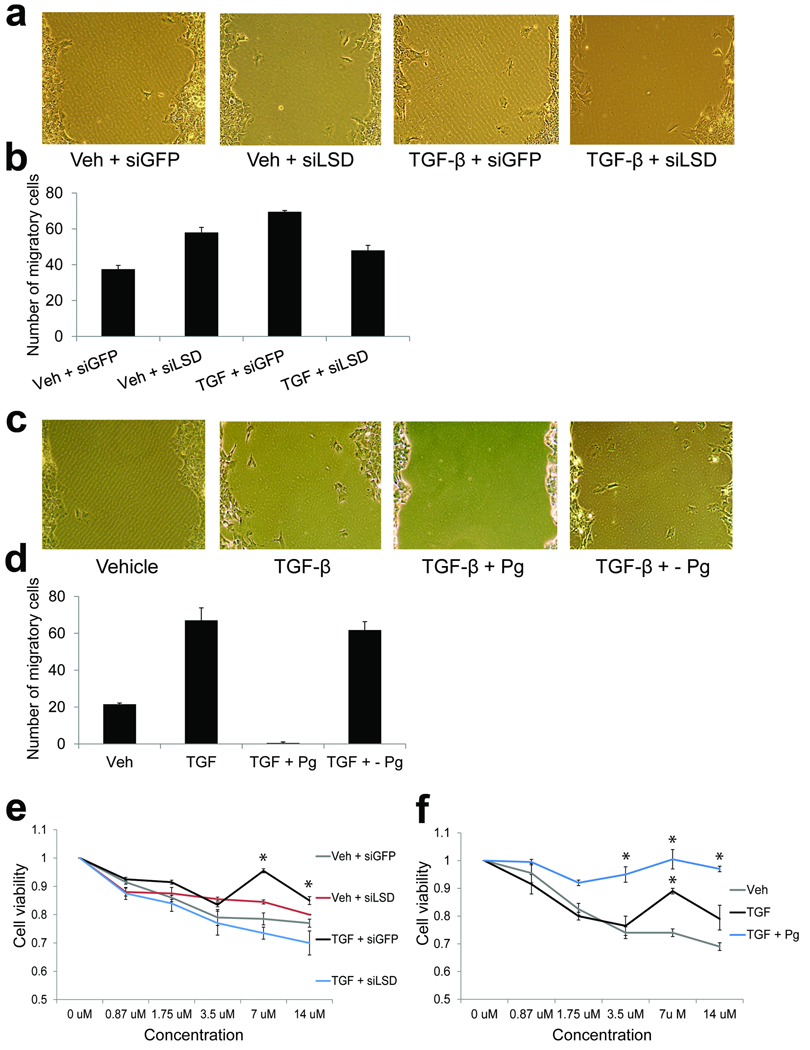
Epithelial-to-mesenchymal transition (EMT) is an extreme example of cell plasticity that is important for normal development, injury repair and malignant progression. Widespread epigenetic reprogramming occurs during stem cell differentiation and malignant transformation, but EMT-related epigenetic reprogramming is poorly understood. Here we investigated epigenetic modifications during EMT mediated by transforming growth factor beta. Although DNA methylation was unchanged during EMT, we found a global reduction in the heterochromatin mark H3 Lys9 dimethylation (H3K9Me2), an increase in the euchromatin mark H3 Lys4 trimethylation (H3K4Me3) and an increase in the transcriptional mark H3 Lys36 trimethylation (H3K36Me3). These changes depended largely on lysine-specific demethylase-1 (Lsd1), and loss of Lsd1 function had marked effects on EMT-driven cell migration and chemoresistance. Genome-scale mapping showed that chromatin changes were mainly specific to large organized heterochromatin K9 modifications (LOCKs), which suggests that EMT is characterized by reprogramming of specific chromatin domains across the genome.
上皮-间充质转化 (EMT) 是细胞可塑性的一个极端例子,对于正常发育、损伤修复和恶性进展非常重要。在干细胞分化和恶性转化过程中会发生广泛的表观遗传重编程,但 EMT 相关的表观遗传重编程知之甚少。在这里,我们研究了转化生长因子 β 介导的 EMT 过程中的表观遗传修饰。虽然 EMT 过程中 DNA 甲基化没有改变,但我们发现组蛋白 H3 赖氨酸 9 二甲基化 (H3K9Me2) 的异染色质标记整体减少,组蛋白 H3 赖氨酸 4 三甲基化 (H3K4Me3) 的常染色质标记增加,转录标记 H3 赖氨酸 36 三甲基化 (H3K36Me3) 增加。这些变化在很大程度上取决于赖氨酸特异性去甲基化酶 1 (Lsd1),并且 Lsd1 功能的丧失对 EMT 驱动的细胞迁移和化疗耐药性有显著影响。全基因组图谱显示,染色质变化主要是特定的大型组织化异染色质 K9 修饰 (LOCKs) 的特异性,这表明 EMT 的特征是整个基因组中特定染色质结构域的重编程。