Whittemore L A, Maniatis T
Department of Biochemistry and Molecular Biology, Harvard University, Cambridge, MA 02138.
Proc Natl Acad Sci U S A. 1990 Oct;87(20):7799-803. doi: 10.1073/pnas.87.20.7799.
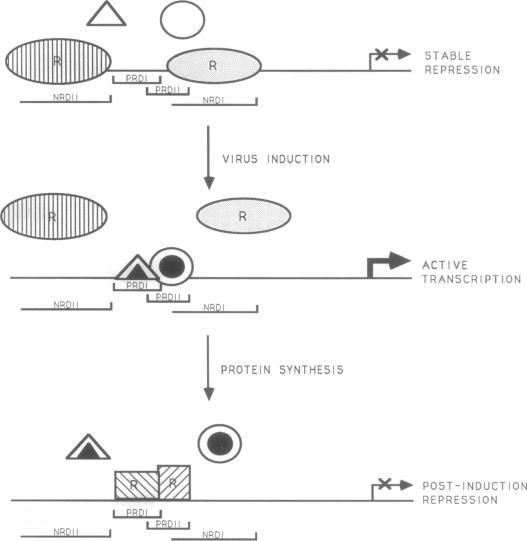
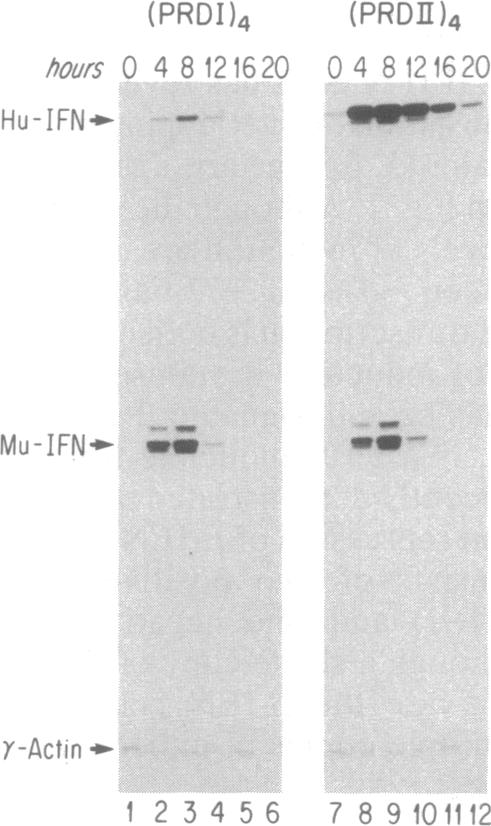
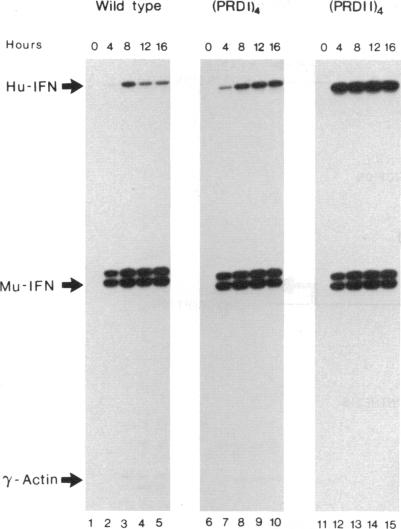
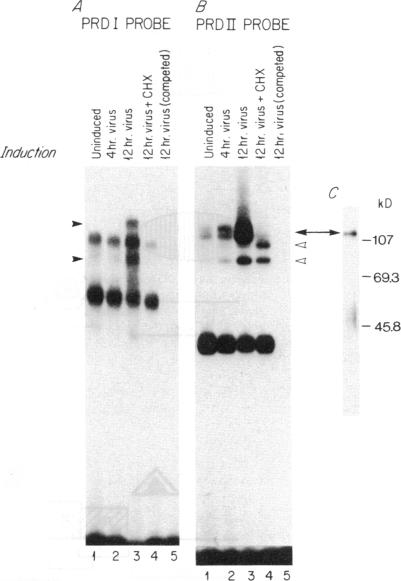
Virus induction of the human beta-interferon (beta-IFN) gene results in an increase in the rate of beta-IFN mRNA synthesis, followed by a rapid postinduction decrease. In this paper, we show that two beta-IFN promoter elements, positive regulatory domains I and II (PRDI and PRDII), which are required for virus induction of the beta-IFN gene are also required for the postinduction turnoff. Although protein synthesis is not necessary for activation, it is necessary for repression of these promoter elements. Examination of nuclear extracts from cells infected with virus reveals the presence of virus-inducible, cycloheximide-sensitive, DNA-binding activities that interact specifically with PRDI or PRDII. We propose that the postinduction repression of beta-IFN gene transcription involves virus-inducible repressors that either bind directly to the positive regulatory elements of the beta-IFN promoter or inactivate the positive regulatory factors bound to PRDI and PRDII.
病毒诱导人β-干扰素(β-IFN)基因会导致β-IFN mRNA合成速率增加,随后在诱导后迅速下降。在本文中,我们表明,β-IFN基因病毒诱导所需的两个β-IFN启动子元件,即正调控域I和II(PRDI和PRDII),在诱导后关闭过程中也是必需的。虽然蛋白质合成对于激活不是必需的,但对于这些启动子元件的抑制是必需的。对感染病毒的细胞的核提取物进行检查,发现存在病毒诱导的、对放线菌酮敏感的、与PRDI或PRDII特异性相互作用的DNA结合活性。我们提出,β-IFN基因转录的诱导后抑制涉及病毒诱导的阻遏物,这些阻遏物要么直接与β-IFN启动子的正调控元件结合,要么使与PRDI和PRDII结合的正调控因子失活。