Department of Pharmacology, Alma Mater Studiorum, University of Bologna, Bologna, Italy.
PLoS One. 2011;6(6):e21544. doi: 10.1371/journal.pone.0021544. Epub 2011 Jun 28.
Although cancers are characterized by the deregulation of multiple signalling pathways, most current anticancer therapies involve the modulation of a single target. Because of the enormous biological diversity of cancer, strategic combination of agents targeted against the most critical of those alterations is needed. Due to their complex nature, plant products interact with numerous targets and influence several biochemical and molecular cascades. The interest in further development of botanical drugs has been increasing steadily and the FDA recently approved the first new botanical prescription drug. The present study is designed to explore the potential antileukemic properties of Hemidesmus indicus with a view to contributing to further development of botanical drugs. Hemidesmus was submitted to an extensive in vitro preclinical evaluation.
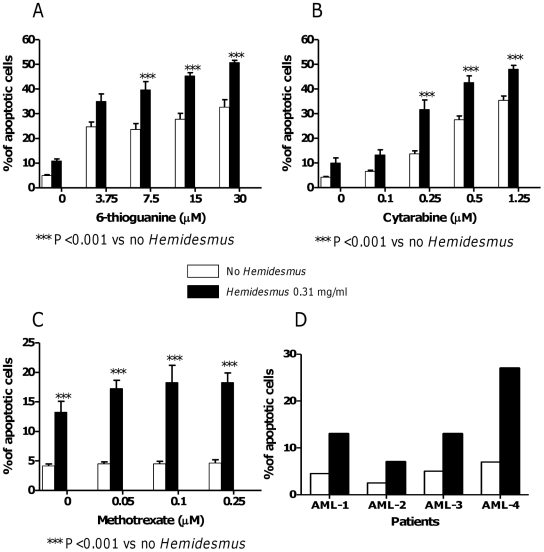
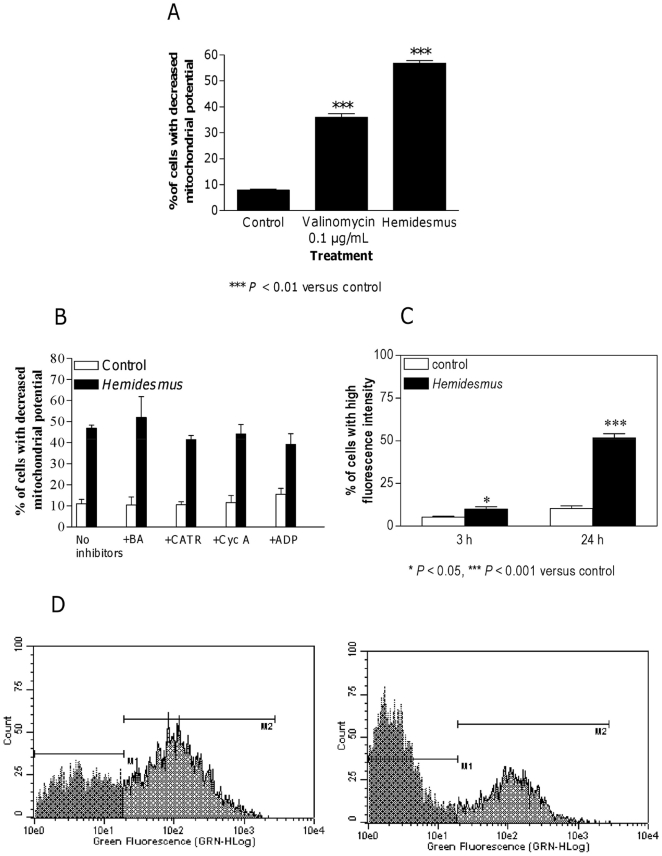
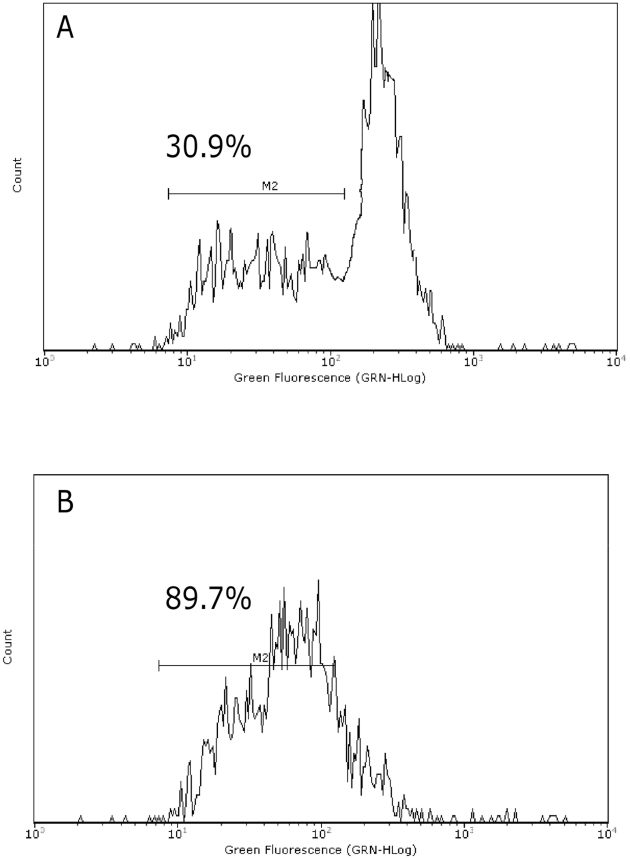
METHODOLOGY/PRINCIPAL FINDINGS: A variety of cellular assays and flow cytometry, as well as a phytochemical screening, were performed on different leukemic cell lines. We have demonstrated that Hemidesmus modulated many components of intracellular signaling pathways involved in cell viability and proliferation and altered the protein expression, eventually leading to tumor cell death, mediated by a loss of mitochondrial transmembrane potential and increased Bax/Bcl-2 ratio. ADP, adenine nucleotide translocator and mitochondrial permeability transition pore inhibitors did not reverse Hemidesmus-induced mitochondrial depolarization. Hemidesmus induced a significant Ca(2+) raise through the mobilization of intracellular Ca(2+) stores. Moreover, Hemidesmus significantly enhanced the antitumor activity of three commonly used chemotherapeutic drugs (methotrexate, 6-thioguanine, cytarabine). A clinically relevant observation is that its cytotoxic activity was also recorded in primary cells from acute myeloid leukemic patients.
CONCLUSIONS/SIGNIFICANCE: These results indicate the molecular basis of the antileukemic effects of Hemidesmus and identify the mitochondrial pathways and Ca(2+) as crucial actors in its anticancer activity. On these bases, we conclude that Hemidesmus can represent a valuable tool in the anticancer pharmacology, and should be considered for further investigations.
尽管癌症的特征是多种信号通路的失调,但大多数当前的抗癌疗法都涉及单一靶标的调节。由于癌症具有巨大的生物学多样性,需要针对这些改变中最关键的部分进行药物联合治疗。由于其复杂的性质,植物产品与许多靶标相互作用,并影响多个生化和分子级联。人们对进一步开发植物药的兴趣一直在稳步增加,美国食品和药物管理局最近批准了第一种新的植物处方药。本研究旨在探索印度土槿皮的潜在抗白血病特性,以期为植物药的进一步开发做出贡献。土槿皮进行了广泛的体外临床前评估。
方法/主要发现:对不同的白血病细胞系进行了各种细胞测定和流式细胞术以及植物化学筛选。我们已经证明,土槿皮调节了许多与细胞活力和增殖有关的细胞内信号通路的成分,并通过线粒体跨膜电位的丧失和 Bax/Bcl-2 比率的增加,改变了蛋白质表达,最终导致肿瘤细胞死亡。ADP、腺嘌呤核苷酸转运蛋白和线粒体通透性转换孔抑制剂不能逆转土槿皮诱导的线粒体去极化。土槿皮通过动员细胞内 Ca(2+)储存来引起显著的Ca(2+)升高。此外,土槿皮显著增强了三种常用化疗药物(甲氨蝶呤、6-硫鸟嘌呤、阿糖胞苷)的抗肿瘤活性。一个临床相关的观察是,它的细胞毒性活性也记录在急性髓系白血病患者的原代细胞中。
结论/意义:这些结果表明了土槿皮抗白血病作用的分子基础,并确定了线粒体途径和Ca(2+)是其抗癌活性的关键因素。基于这些结果,我们得出结论,土槿皮可以作为抗癌药理学的有价值工具,应进一步研究。