Hendra Rudi, Ahmad Syahida, Sukari Aspollah, Shukor M Yunus, Oskoueian Ehsan
Department of Biochemistry, Faculty of Biotechnology and Biomolecular Sciences, Universiti Putra Malaysia (UPM), 43400 UPM Serdang, Selangor, Malaysia; E-Mails:
Int J Mol Sci. 2011;12(6):3422-31. doi: 10.3390/ijms12063422. Epub 2011 May 27.
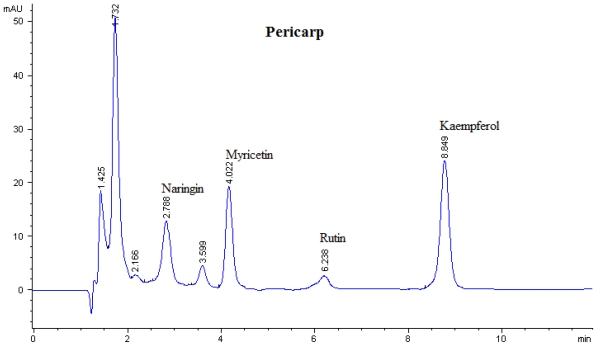
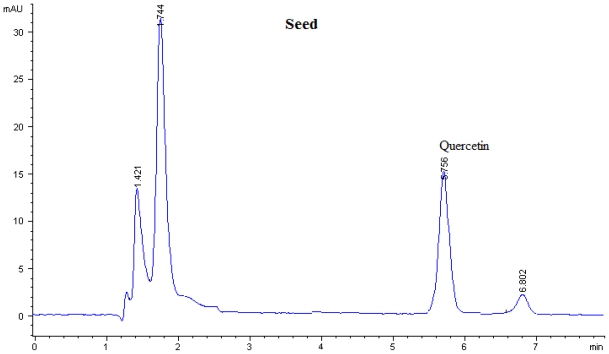
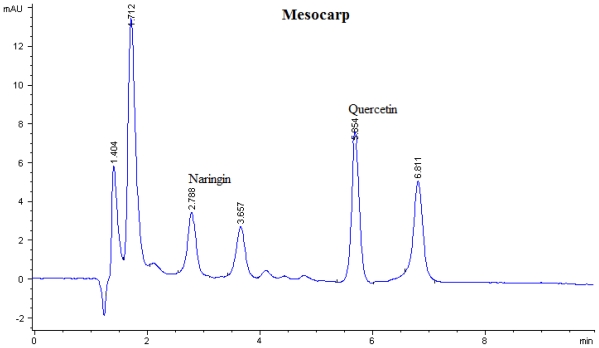
Phaleria macrocarpa (Scheff.) Boerl (Thymelaceae) is commonly known as 'Crown of God', 'Mahkota Dewa', and 'Pau'. It originates from Papua Island, Indonesia and it grows in tropical areas. Empirically, it is potent in treating the hypertensive, diabetic, cancer and diuretic patients. It has a long history of ethnopharmacological usage, and the lack of information about its biological activities led us to investigate the possible biological activities by characterisation of flavonoids and antimicrobial activity of various part of P. macrocarpa against pathogenic bacteria and fungi. The results showed that kaempferol, myricetin, naringin, and rutin were the major flavonoids present in the pericarp while naringin and quercetin were found in the mesocarp and seed. Furthermore, the antibacterial activity of different parts of P. macrocarpa fruit showed a weak ability to moderate antibacterial activity against pathogenic tested bacteria (inhibition range: 0.93-2.17 cm) at concentration of 0.3 mg/disc. The anti fungi activity was only found in seed extract against Aspergillus niger (1.87 cm) at concentration of 0.3 mg/well. From the results obtained, P. macrocarpa fruit could be considered as a natural antimicrobial source due to the presence of flavonoid compounds.
大果木竹子(Phaleria macrocarpa (Scheff.) Boerl,瑞香科)通常被称为“上帝之冠”“Mahkota Dewa”和“Pau”。它原产于印度尼西亚的巴布亚岛,生长在热带地区。根据经验,它对高血压、糖尿病、癌症和利尿患者有显著疗效。它有着悠久的民族药理学使用历史,由于缺乏关于其生物活性的信息,我们通过对大果木竹子各部分黄酮类化合物的表征以及对病原菌和真菌的抗菌活性研究,来探究其可能的生物活性。结果表明,山奈酚、杨梅素、柚皮苷和芦丁是果皮中的主要黄酮类化合物,而柚皮苷和槲皮素则存在于中果皮和种子中。此外,大果木竹子果实不同部位的抗菌活性在浓度为0.3mg/圆片时,对受试病原菌表现出较弱至中等的抗菌活性(抑菌范围:0.93 - 2.17cm)。抗真菌活性仅在种子提取物中发现,对黑曲霉在浓度为0.3mg/孔时抑菌圈为1.87cm。从所得结果来看,由于黄酮类化合物的存在,大果木竹子果实可被视为一种天然抗菌来源。