The Wellcome Trust Laboratory for MEG Studies, School of Life and Health Sciences, Aston University, Birmingham, UK.
Eur J Neurosci. 2011 Aug;34(4):652-61. doi: 10.1111/j.1460-9568.2011.07777.x. Epub 2011 Jul 12.
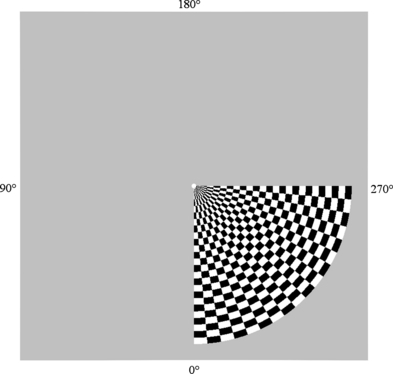
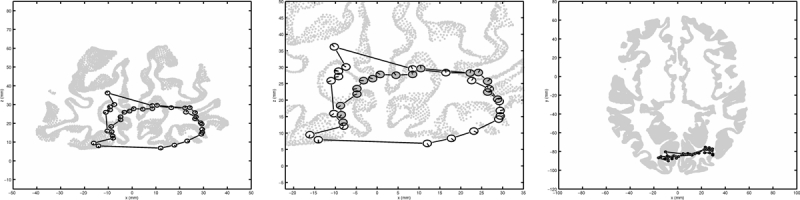
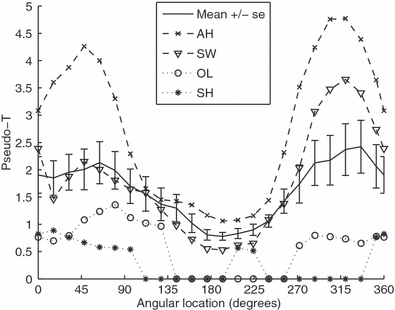
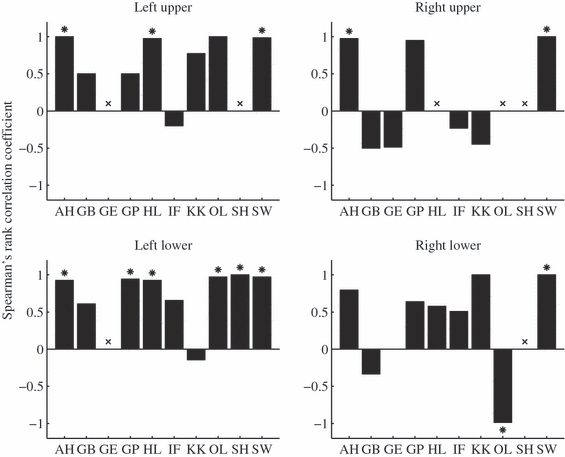
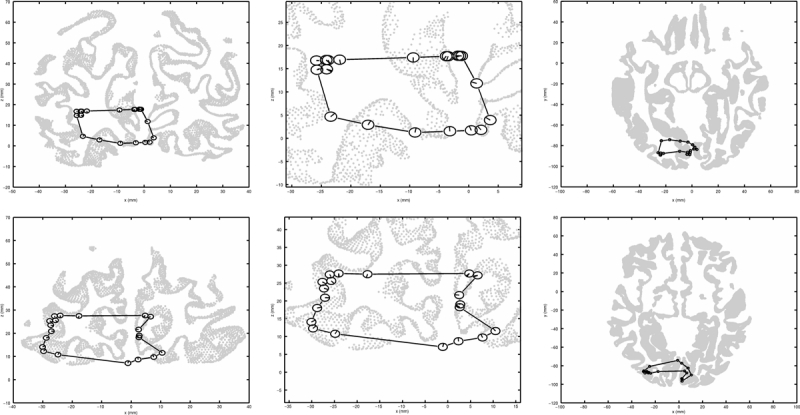
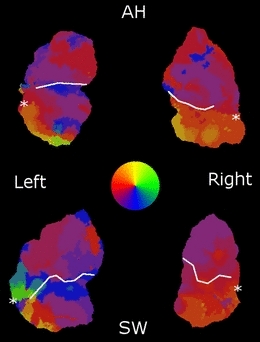
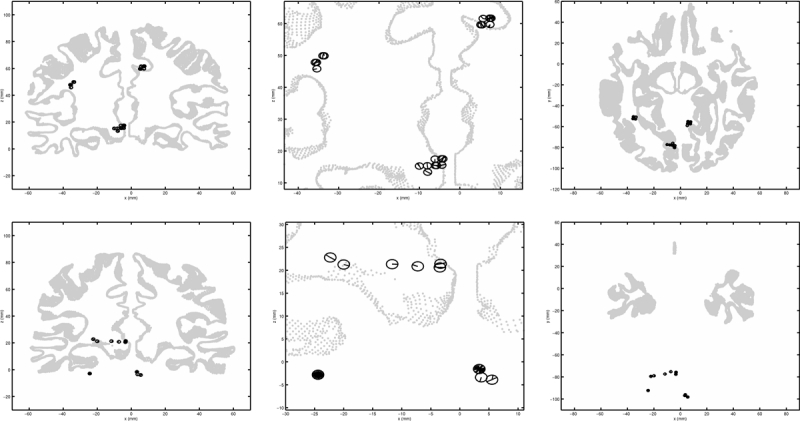
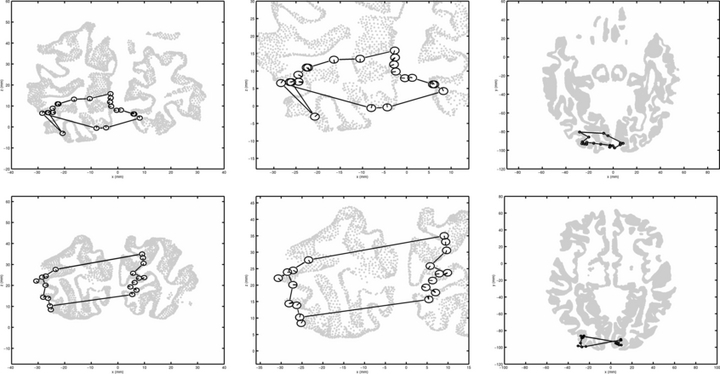
Magnetoencephalography (MEG) can be used to reconstruct neuronal activity with high spatial and temporal resolution. However, this reconstruction problem is ill-posed, and requires the use of prior constraints in order to produce a unique solution. At present there are a multitude of inversion algorithms, each employing different assumptions, but one major problem when comparing the accuracy of these different approaches is that often the true underlying electrical state of the brain is unknown. In this study, we explore one paradigm, retinotopic mapping in the primary visual cortex (V1), for which the ground truth is known to a reasonable degree of accuracy, enabling the comparison of MEG source reconstructions with the true electrical state of the brain. Specifically, we attempted to localize, using a beanforming method, the induced responses in the visual cortex generated by a high contrast, retinotopically varying stimulus. Although well described in primate studies, it has been an open question whether the induced gamma power in humans due to high contrast gratings derives from V1 rather than the prestriate cortex (V2). We show that the beanformer source estimate in the gamma and theta bands does vary in a manner consistent with the known retinotopy of V1. However, these peak locations, although retinotopically organized, did not accurately localize to the cortical surface. We considered possible causes for this discrepancy and suggest that improved MEG/magnetic resonance imaging co-registration and the use of more accurate source models that take into account the spatial extent and shape of the active cortex may, in future, improve the accuracy of the source reconstructions.
脑磁图(MEG)可用于以高空间和时间分辨率重建神经元活动。然而,这种重建问题是不适定的,需要使用先验约束才能产生唯一的解决方案。目前有许多反演算法,每种算法都采用不同的假设,但在比较这些不同方法的准确性时,一个主要问题是,大脑的真实潜在电状态通常是未知的。在这项研究中,我们探索了一种范式,即初级视觉皮层(V1)的视网膜映射,对于这种范式,大脑的真实电状态在一定程度上是已知的,这使得可以将 MEG 源重建与大脑的真实电状态进行比较。具体来说,我们试图使用 beanforming 方法定位由高对比度、视网膜变化刺激在视觉皮层中产生的诱发反应。虽然在灵长类动物研究中得到了很好的描述,但一个悬而未决的问题是,由于高对比度光栅而在人类中产生的诱导伽马功率是否来自 V1 而不是前纹状皮层(V2)。我们表明,在伽马和 theta 波段的 beanformer 源估计值以与 V1 的已知视网膜图相一致的方式变化。然而,这些峰值位置虽然具有视网膜组织,但并没有准确地定位到皮质表面。我们考虑了这种差异的可能原因,并提出,改进 MEG/磁共振成像配准以及使用更准确的源模型,这些模型考虑到活跃皮层的空间范围和形状,可能会在未来提高源重建的准确性。