Mahidol University, Bangkok, Thailand.
Emerg Infect Dis. 2011 Jul;17(7):1174-80. doi: 10.3201/eid1707.101433.
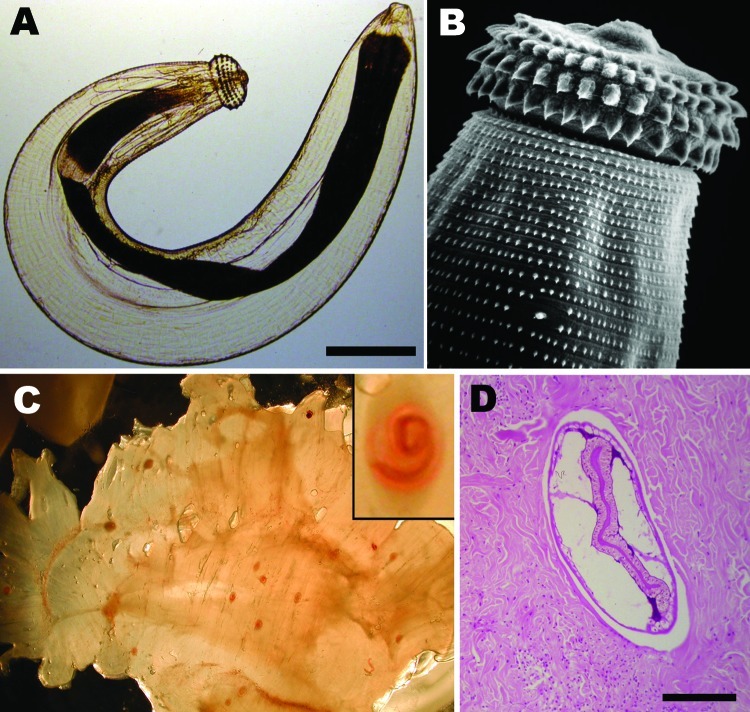
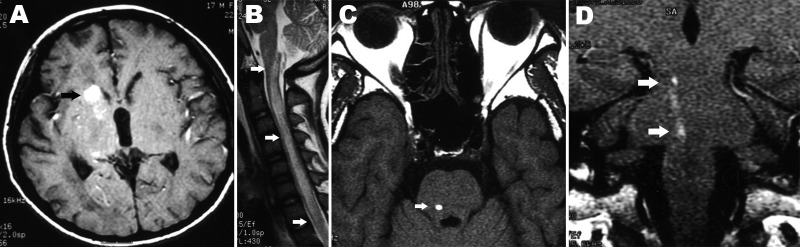
Gnathostomiasis is a foodborne zoonotic helminthic infection caused by the third-stage larvae of Gnathostoma spp. nematodes. The most severe manifestation involves infection of the central nervous system, neurognathostomiasis. Although gnathostomiasis is endemic to Asia and Latin America, almost all neurognathostomiasis cases are reported from Thailand. Despite high rates of illness and death, neurognathostomiasis has received less attention than the more common cutaneous form of gnathostomiasis, possibly because of the apparent geographic confinement of the neurologic infection to 1 country. Recently, however, the disease has been reported in returned travelers in Europe. We reviewed the English-language literature on neurognathostomiasis and analyzed epidemiology and geographic distribution, mode of central nervous system invasion, pathophysiology, clinical features, neuroimaging data, and treatment options. On the basis of epidemiologic data, clinical signs, neuroimaging, and laboratory findings, we propose diagnostic criteria for neurognathostomiasis.
颚口线虫病是一种食源性人畜共患的寄生虫感染,由颚口线虫属的第三期幼虫引起。最严重的表现是感染中枢神经系统,即神经颚口线虫病。尽管颚口线虫病在亚洲和拉丁美洲流行,但几乎所有的神经颚口线虫病病例都来自泰国。尽管发病率和死亡率很高,但神经颚口线虫病的关注度低于更为常见的皮肤型颚口线虫病,这可能是因为这种神经系统感染明显局限于一个国家。然而,最近这种疾病在欧洲的旅行者中也有报道。我们回顾了关于神经颚口线虫病的英文文献,并分析了其流行病学和地理分布、中枢神经系统入侵方式、病理生理学、临床特征、神经影像学数据和治疗选择。根据流行病学数据、临床症状、神经影像学和实验室发现,我们提出了神经颚口线虫病的诊断标准。