Hunan Provincial Key Laboratory of Protein Engineering in Animal Vaccines, College of Veterinary Medicine, Hunan Agricultural University, Changsha, 410128, Hunan, People's Republic of China.
State Key Laboratory of Veterinary Etiological Biology, Key Laboratory of Veterinary Parasitology of Gansu Province, Lanzhou Veterinary Research Institute, Chinese Academy of Agricultural Sciences, Lanzhou, 730046, Gansu, People's Republic of China.
Parasit Vectors. 2020 Dec 9;13(1):616. doi: 10.1186/s13071-020-04494-4.
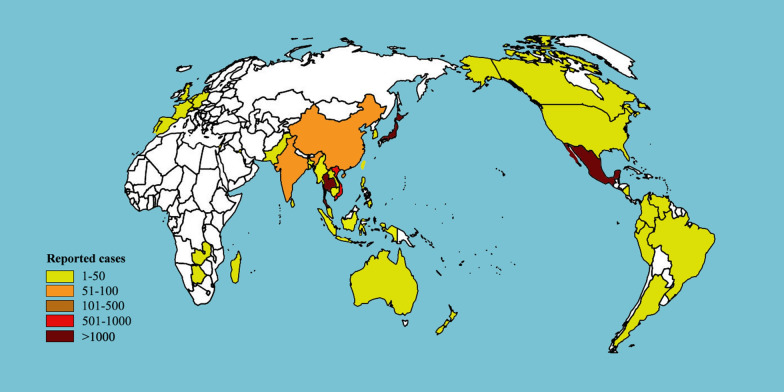
Human gnathostomiasis is a food-borne zoonosis. Its etiological agents are the third-stage larvae of Gnathostoma spp. Human gnathostomiasis is often reported in developing countries, but it is also an emerging disease in developed countries in non-endemic areas. The recent surge in cases of human gnathostomiasis is mainly due to the increasing consumption of raw freshwater fish, amphibians, and reptiles.
This article reviews the literature on Gnathostoma spp. and the disease that these parasites cause in humans. We review the literature on the life cycle and pathogenesis of these parasites, the clinical features, epidemiology, diagnosis, treatment, control, and new molecular findings on human gnathostomiasis, and social-ecological factors related to the transmission of this disease.
The information presented provides an impetus for studying the parasite biology and host immunity. It is urgently needed to develop a quick and sensitive diagnosis and to develop an effective regimen for the management and control of human gnathostomiasis.
食源性人兽共患旋毛虫病的病原体是旋毛虫属的第三期幼虫。人兽共患旋毛虫病常发生在发展中国家,但在非流行地区的发达国家也是一种新出现的疾病。最近人兽共患旋毛虫病病例的激增主要是由于人们越来越多地食用生淡水鱼、两栖动物和爬行动物。
本文综述了旋毛虫属及这些寄生虫引起的人类疾病的文献。我们回顾了这些寄生虫的生活史和发病机制、临床特征、流行病学、诊断、治疗、控制以及人兽共患旋毛虫病的新分子发现,以及与该疾病传播相关的社会生态因素。
所提供的信息为研究寄生虫生物学和宿主免疫提供了动力。迫切需要开发一种快速和敏感的诊断方法,并制定有效的方案来管理和控制人兽共患旋毛虫病。