Research Institute for Microbial Diseases, Osaka University Suita, Japan.
Front Microbiol. 2011 Jul 4;2:145. doi: 10.3389/fmicb.2011.00145. eCollection 2011.
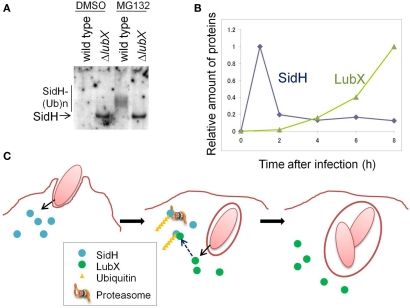
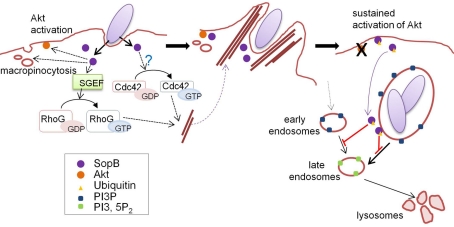
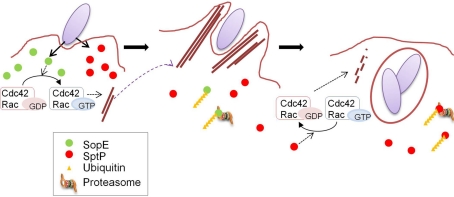
Ubiquitination is one of the most conserved post-translational modifications of proteins, and is involved in essential eukaryotic cellular processes. These include protein degradation, transcriptional regulation, cell-cycle progression, and signaling. Microbial pathogens have evolved sophisticated systems to hijack host cellular functions for their own benefit. Central to these systems are protein transport machineries; many pathogenic bacteria inject "effector proteins" to modulate host cellular processes including the ubiquitin pathway. Numerous bacterial pathogens have been found to modulate the host ubiquitin system in various ways. In this review, we focus on three examples of temporal and spatial regulation of bacterial effectors, which are mediated by the host ubiquitin system. Subversion of the host ubiquitin system must be a widespread strategy among pathogenic bacteria to accomplish successful infection.
泛素化是蛋白质最保守的翻译后修饰之一,参与真核细胞的基本过程。这些过程包括蛋白质降解、转录调控、细胞周期进展和信号转导。微生物病原体已经进化出复杂的系统来劫持宿主细胞的功能为己所用。这些系统的核心是蛋白质运输机械;许多致病菌注射“效应蛋白”来调节宿主细胞过程,包括泛素途径。已经发现许多细菌病原体以各种方式调节宿主的泛素系统。在这篇综述中,我们重点介绍了三个细菌效应子的时间和空间调节的例子,这些调节是由宿主泛素系统介导的。宿主泛素系统的颠覆必须是致病菌完成成功感染的广泛策略。