Department of Molecular Biology, Max Planck Institute for Developmental Biology, Tübingen, Germany.
PLoS Genet. 2011 Jul;7(7):e1002164. doi: 10.1371/journal.pgen.1002164. Epub 2011 Jul 14.
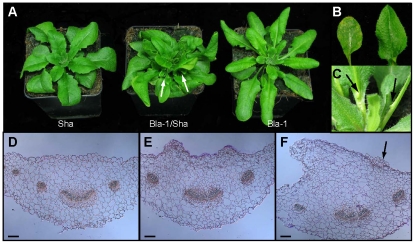
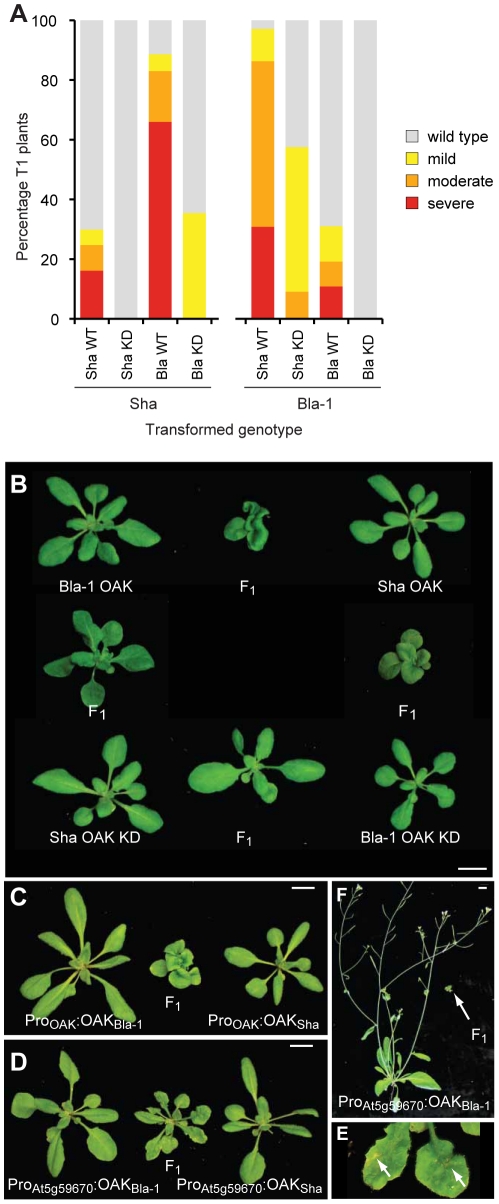
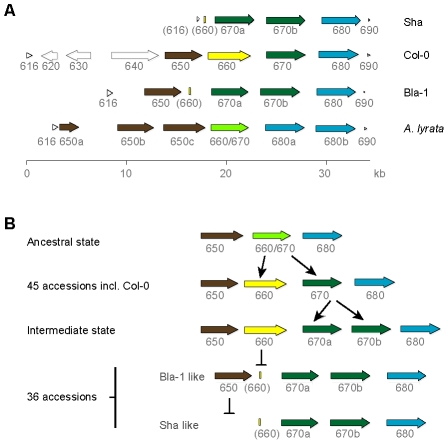
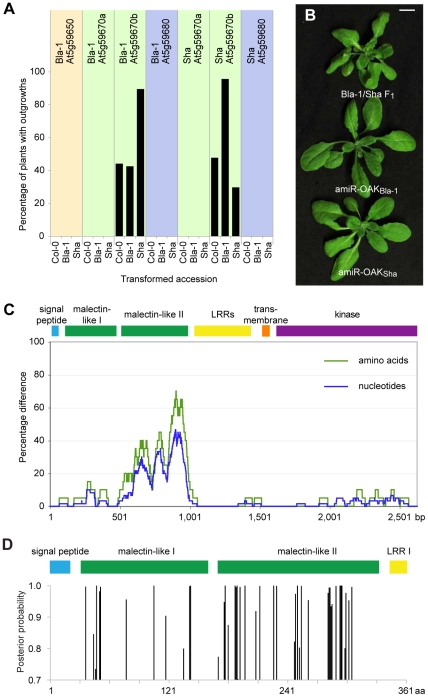
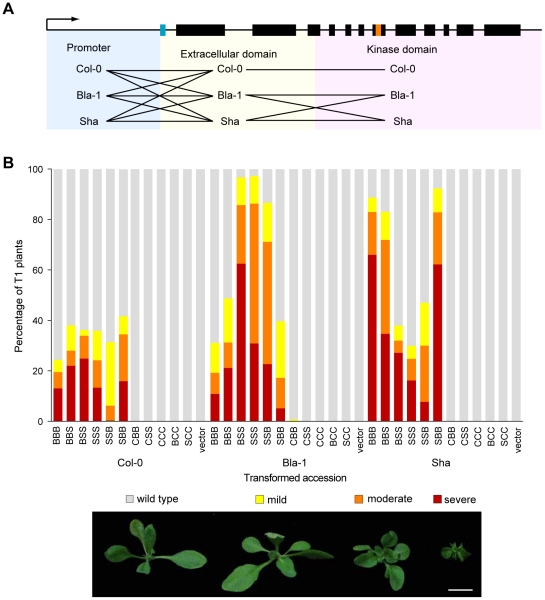
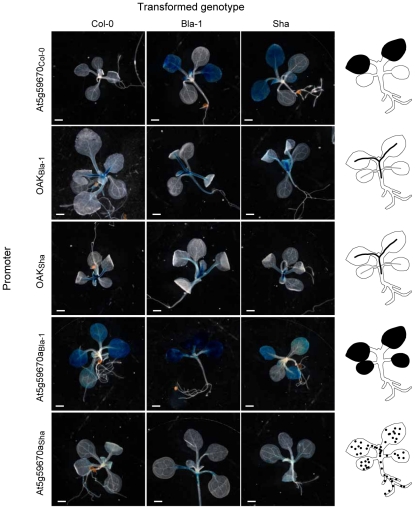
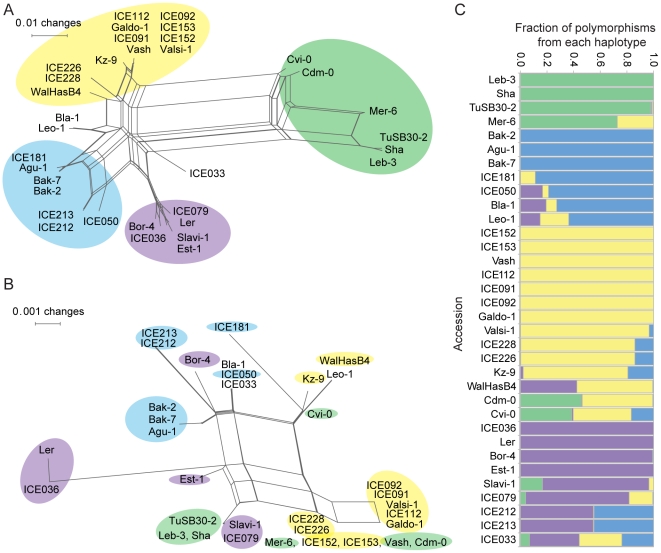
Non-additive interactions between genomes have important implications, not only for practical applications such as breeding, but also for understanding evolution. In extreme cases, genes from different genomic backgrounds may be incompatible and compromise normal development or physiology. Of particular interest are non-additive interactions of alleles at the same locus. For example, overdominant behavior of alleles, with respect to plant fitness, has been proposed as an important component of hybrid vigor, while underdominance may lead to reproductive isolation. Despite their importance, only a few cases of genetic over- or underdominance affecting plant growth or fitness are understood at the level of individual genes. Moreover, the relationship between biochemical and fitness effects may be complex: genetic overdominance, that is, increased or novel activity of a gene may lead to evolutionary underdominance expressed as hybrid weakness. Here, we describe a non-additive interaction between alleles at the Arabidopsis thaliana OAK (OUTGROWTH-ASSOCIATED PROTEIN KINASE) gene. OAK alleles from two different accessions interact in F(1) hybrids to cause a variety of aberrant growth phenotypes that depend on a recently acquired promoter with a novel expression pattern. The OAK gene, which is located in a highly variable tandem array encoding closely related receptor-like kinases, is found in one third of A. thaliana accessions, but not in the reference accession Col-0. Besides recruitment of exons from nearby genes as promoter sequences, key events in OAK evolution include gene duplication and divergence of a potential ligand-binding domain. OAK kinase activity is required for the aberrant phenotypes, indicating it is not recognition of an aberrant protein, but rather a true gain of function, or overdominance for gene activity, that leads to this underdominance for fitness. Our work provides insights into how tandem arrays, which are particularly prone to frequent, complex rearrangements, can produce genetic novelty.
基因组之间的非加性相互作用具有重要意义,不仅对育种等实际应用具有重要意义,而且对理解进化也具有重要意义。在极端情况下,来自不同基因组背景的基因可能不兼容,并损害正常的发育或生理功能。特别有趣的是同一基因座等位基因的非加性相互作用。例如,相对于植物的适应性,等位基因的超显性行为已被提议为杂种优势的一个重要组成部分,而亚显性可能导致生殖隔离。尽管它们很重要,但在个体基因水平上,只有少数影响植物生长或适应性的遗传超显性或亚显性的情况得到了解。此外,生化和适应性效应之间的关系可能很复杂:遗传超显性,即基因的活性增加或出现新的活性,可能导致进化亚显性,表现为杂种劣势。在这里,我们描述了拟南芥 OAK(OUTGROWTH-ASSOCIATED PROTEIN KINASE)基因等位基因之间的非加性相互作用。来自两个不同品系的 OAK 等位基因在 F1 杂种中相互作用,导致各种异常生长表型,这些表型依赖于最近获得的具有新表达模式的启动子。OAK 基因位于一个高度可变的串联阵列中,编码密切相关的受体样激酶,存在于三分之一的拟南芥品系中,但不存在于参考品系 Col-0 中。除了招募附近基因的外显子作为启动子序列外,OAK 进化的关键事件还包括基因复制和潜在配体结合域的分化。异常表型需要 OAK 激酶活性,表明这不是对异常蛋白的识别,而是基因活性的真正获得功能,或超显性,导致适应性的亚显性。我们的工作为了解串联阵列如何产生遗传新颖性提供了深入的了解,串联阵列特别容易发生频繁、复杂的重排。