Cigana Cristina, Lorè Nicola Ivan, Bernardini Maria Lina, Bragonzi Alessandra
Infections and Cystic Fibrosis Unit, Division of Immunology, Transplantation and Infectious Diseases, San Raffaele Scientific Institute, 20132 Milano, Italy.
J Biomed Biotechnol. 2011;2011:852513. doi: 10.1155/2011/852513. Epub 2011 Jul 14.
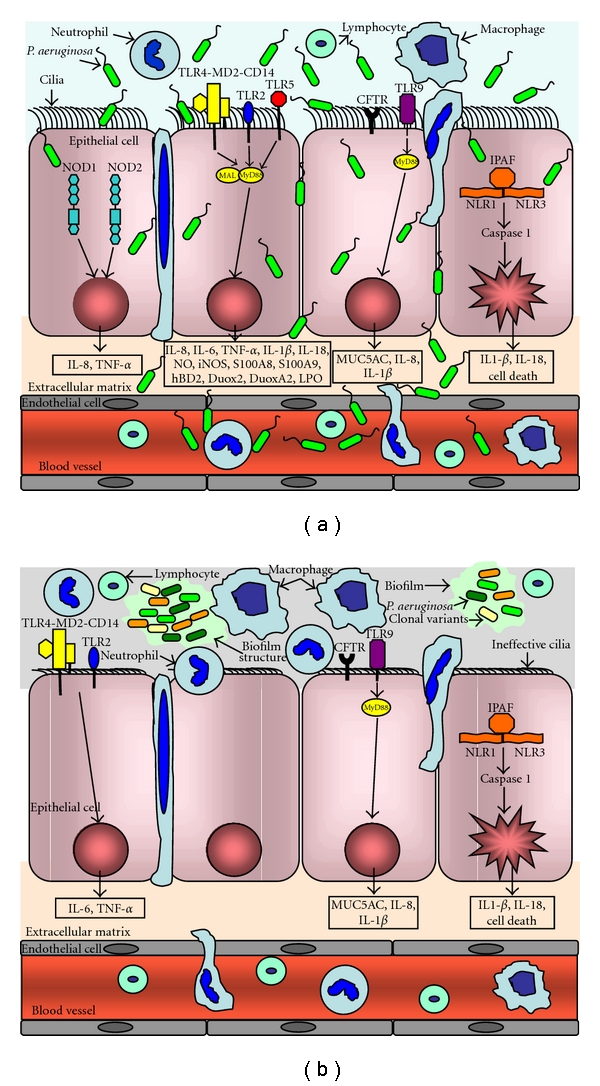
Pseudomonas aeruginosa is an opportunistic pathogen and causes a wide range of acute and chronic infections. P. aeruginosa infections are kept in check by an effective immune surveillance in the healthy host, while any imbalance or defect in the normal immune response can manifest in disease. Invasive acute infection in the immunocompromised patients is mediated by potent extracellular and cell bound bacterial virulence factors. Life-threatening chronic infection in cystic fibrosis patients is maintained by pathogenic variants that contribute to evade detection and clearance by the immune system. Here, we reviewed the molecular basis of receptor-mediated recognition of P. aeruginosa and their role in initiating inflammation and the colonization. In addition, the consequence of the P. aeruginosa genetic adaptation for the antibacterial defence and the maintaining of chronic infection are discussed.
铜绿假单胞菌是一种机会致病菌,可引发多种急慢性感染。在健康宿主中,有效的免疫监视可控制铜绿假单胞菌感染,而正常免疫反应中的任何失衡或缺陷都可能引发疾病。免疫功能低下患者的侵袭性急性感染由强大的细胞外和细胞结合细菌毒力因子介导。囊性纤维化患者危及生命的慢性感染由有助于逃避免疫系统检测和清除的致病变体维持。在此,我们综述了受体介导的铜绿假单胞菌识别的分子基础及其在引发炎症和定植中的作用。此外,还讨论了铜绿假单胞菌基因适应性对抗菌防御和慢性感染维持的影响。