CBS-KNAW Fungal Biodiversity Centre, Uppsalalaan 8, 3584 CT, Utrecht, The Netherlands.
Appl Microbiol Biotechnol. 2011 Sep;91(6):1477-92. doi: 10.1007/s00253-011-3473-2. Epub 2011 Jul 23.
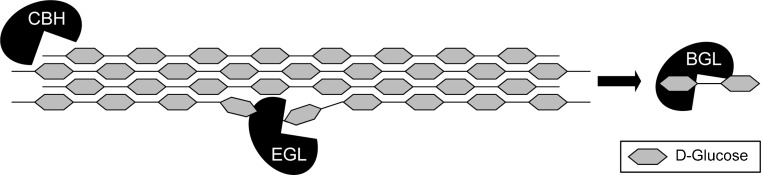
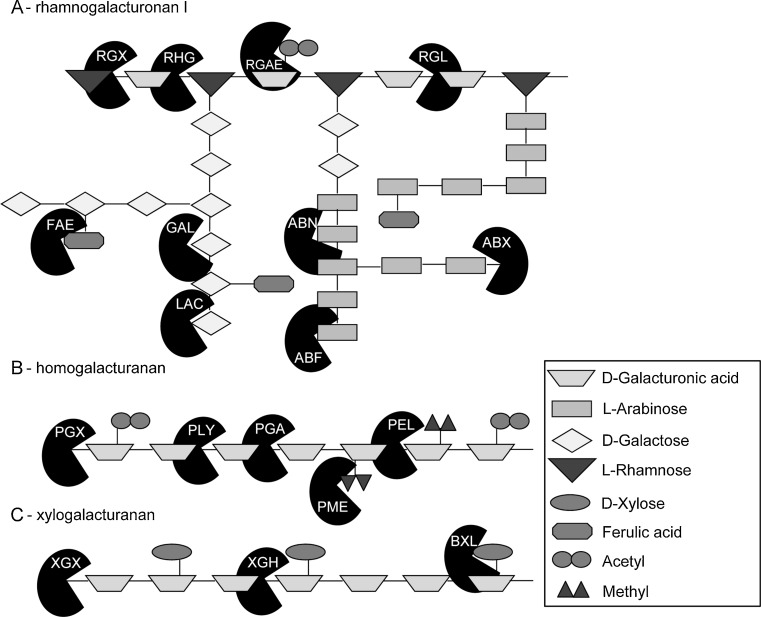
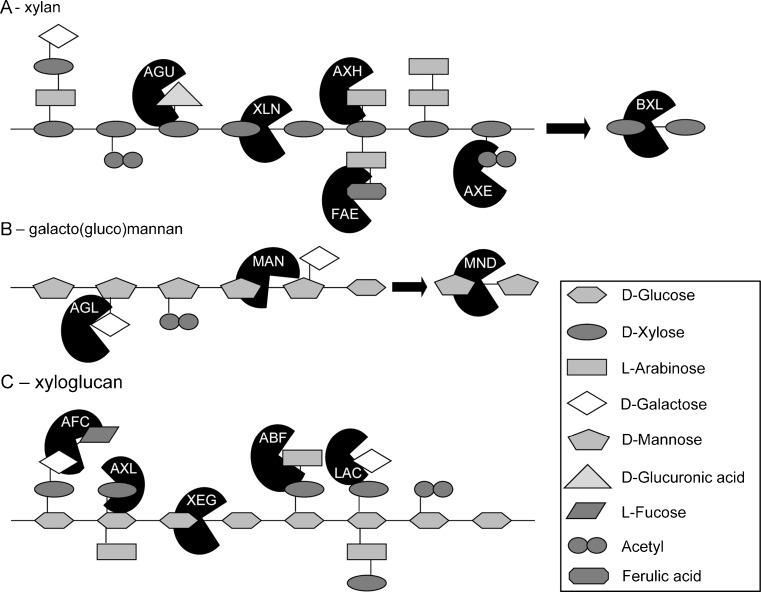
Enzymatic degradation of plant polysaccharides has many industrial applications, such as within the paper, food, and feed industry and for sustainable production of fuels and chemicals. Cellulose, hemicelluloses, and pectins are the main components of plant cell wall polysaccharides. These polysaccharides are often tightly packed, contain many different sugar residues, and are branched with a diversity of structures. To enable efficient degradation of these polysaccharides, fungi produce an extensive set of carbohydrate-active enzymes. The variety of the enzyme set differs between fungi and often corresponds to the requirements of its habitat. Carbohydrate-active enzymes can be organized in different families based on the amino acid sequence of the structurally related catalytic modules. Fungal enzymes involved in plant polysaccharide degradation are assigned to at least 35 glycoside hydrolase families, three carbohydrate esterase families and six polysaccharide lyase families. This mini-review will discuss the enzymes needed for complete degradation of plant polysaccharides and will give an overview of the latest developments concerning fungal carbohydrate-active enzymes and their corresponding families.
植物多糖的酶解在许多工业应用中具有重要意义,例如在造纸、食品和饲料工业中,以及可持续生产燃料和化学品方面。纤维素、半纤维素和果胶是植物细胞壁多糖的主要成分。这些多糖通常紧密堆积,含有许多不同的糖残基,并具有多样性的结构分支。为了实现这些多糖的有效降解,真菌产生了广泛的碳水化合物活性酶。酶的种类在真菌之间存在差异,通常与其栖息地的要求相对应。碳水化合物活性酶可以根据结构相关催化模块的氨基酸序列组织在不同的家族中。参与植物多糖降解的真菌酶至少被分配到 35 个糖苷水解酶家族、3 个碳水化合物酯酶家族和 6 个多糖裂解酶家族。这篇迷你综述将讨论完全降解植物多糖所需的酶,并概述真菌碳水化合物活性酶及其相应家族的最新进展。