HIV-1 Immunopathogenesis Laboratory, the Wistar Institute, Philadelphia, PA, USA.
School of Public Health and Health Sciences, University of Massachusetts, Amherst, USA.
J Int AIDS Soc. 2011 Jul 29;14:37. doi: 10.1186/1758-2652-14-37.
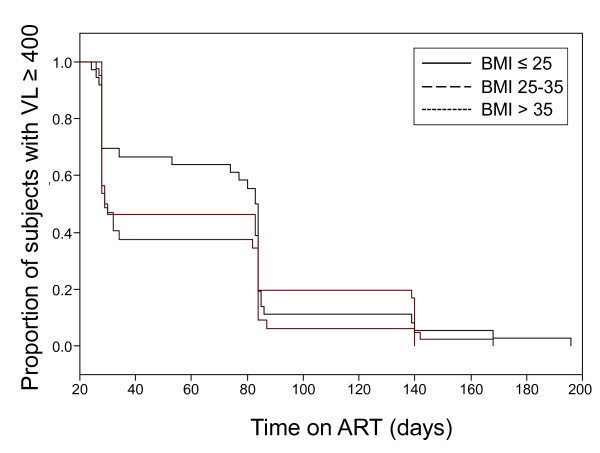
The degree of immune reconstitution achieved in response to suppressive ART is associated with baseline individual characteristics, such as pre-treatment CD4 count, levels of viral replication, cellular activation, choice of treatment regimen and gender. However, the combined effect of these variables on long-term CD4 recovery remains elusive, and no single variable predicts treatment response. We sought to determine if adiposity and molecules associated with lipid metabolism may affect the response to ART and the degree of subsequent immune reconstitution, and to assess their ability to predict CD4 recovery.
We studied a cohort of 69 (48 females and 21 males) HIV-infected, treatment-naïve South African subjects initiating antiretroviral treatment (d4T, 3Tc and lopinavir/ritonavir). We collected information at baseline and six months after viral suppression, assessing anthropometric parameters, dual energy X-ray absorptiometry and magnetic resonance imaging scans, serum-based clinical laboratory tests and whole blood-based flow cytometry, and determined their role in predicting the increase in CD4 count in response to ART.
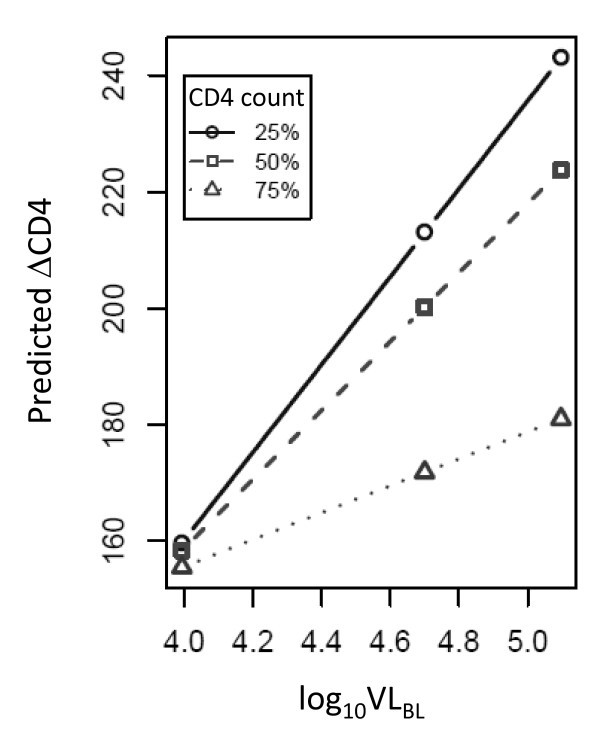
We present evidence that baseline CD4+ T cell count, viral load, CD8+ T cell activation (CD95 expression) and metabolic and anthropometric parameters linked to adiposity (LDL/HDL cholesterol ratio and waist/hip ratio) significantly contribute to variability in the extent of CD4 reconstitution (ΔCD4) after six months of continuous ART.
Our final model accounts for 44% of the variability in CD4+ T cell recovery in virally suppressed individuals, representing a workable predictive model of immune reconstitution.
抑制性 ART 治疗所达到的免疫重建程度与个体的基线特征相关,如治疗前 CD4 计数、病毒复制水平、细胞激活、治疗方案选择和性别等。然而,这些变量对长期 CD4 恢复的综合影响仍难以捉摸,没有单一变量可以预测治疗反应。我们试图确定肥胖和与脂质代谢相关的分子是否会影响 ART 反应和随后的免疫重建程度,并评估它们预测 CD4 恢复的能力。
我们研究了 69 名(48 名女性和 21 名男性)南非初治 HIV 感染者的队列,他们开始接受抗逆转录病毒治疗(d4T、3Tc 和洛匹那韦/利托那韦)。我们在病毒抑制后 6 个月收集基线和信息,评估人体测量参数、双能 X 射线吸收仪和磁共振成像扫描、基于血清的临床实验室测试和全血流式细胞术,并确定它们在预测 CD4 计数对 ART 反应的增加中的作用。
我们提出了证据,表明基线 CD4+T 细胞计数、病毒载量、CD8+T 细胞激活(CD95 表达)和与肥胖相关的代谢和人体测量参数(LDL/HDL 胆固醇比值和腰臀比)显著影响 CD4 重建(ΔCD4)在连续 ART 治疗 6 个月后的程度。
我们的最终模型解释了病毒抑制个体中 CD4+T 细胞恢复的 44%的可变性,代表了免疫重建的可行预测模型。