Pediatric Dengue Vaccine Initiative, International Vaccine Institute, Seoul National University Research Park, Kwanak-gu, Seoul, South Korea.
Emerg Infect Dis. 2011 Aug;17(8):1349-54. doi: 10.3201/eid1708.101515.
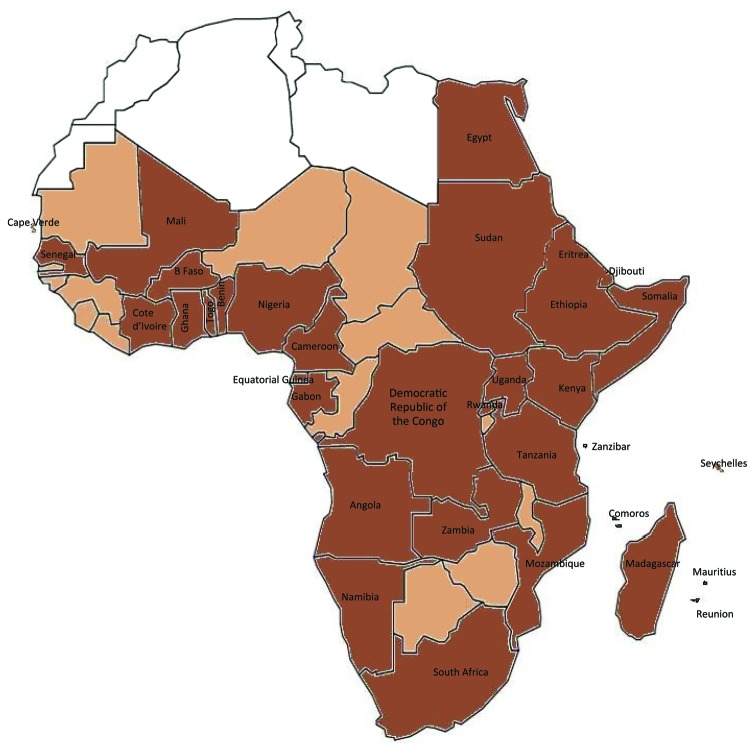
Reported incidence of dengue has increased worldwide in recent decades, but little is known about its incidence in Africa. During 1960-2010, a total of 22 countries in Africa reported sporadic cases or outbreaks of dengue; 12 other countries in Africa reported dengue only in travelers. The presence of disease and high prevalence of antibody to dengue virus in limited serologic surveys suggest endemic dengue virus infection in all or many parts of Africa. Dengue is likely underrecognized and underreported in Africa because of low awareness by health care providers, other prevalent febrile illnesses, and lack of diagnostic testing and systematic surveillance. Other hypotheses to explain low reported numbers of cases include cross-protection from other endemic flavivirus infections, genetic host factors protecting against infection or disease, and low vector competence and transmission efficiency. Population-based studies of febrile illness are needed to determine the epidemiology and true incidence of dengue in Africa.
近几十年来,全球报告的登革热发病率有所增加,但对非洲的发病率知之甚少。1960 年至 2010 年间,非洲共有 22 个国家报告了散发性病例或登革热暴发;其他 12 个非洲国家仅在旅行者中报告了登革热。在有限的血清学调查中发现疾病的存在和高流行率的登革病毒抗体表明,在整个非洲或非洲的许多地区存在地方性登革病毒感染。由于医疗保健提供者认识不足、其他常见的发热性疾病以及缺乏诊断检测和系统监测,非洲的登革热可能未被充分认识和报告。解释报告病例数量低的其他假设包括来自其他地方性黄病毒感染的交叉保护、对感染或疾病具有保护作用的遗传宿主因素以及低载体效能和传播效率。需要开展以人群为基础的发热疾病研究,以确定非洲登革热的流行病学和真实发病率。