National Laboratory of Biomacromolecules, Institute of Biophysics, Chinese Academy of Sciences, Beijing, China.
PLoS Pathog. 2011 Jul;7(7):e1002152. doi: 10.1371/journal.ppat.1002152. Epub 2011 Jul 21.
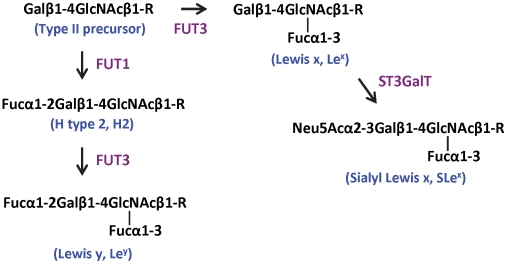
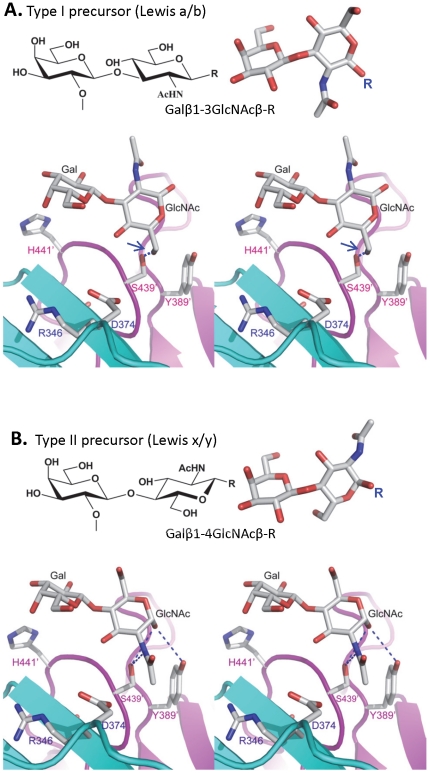
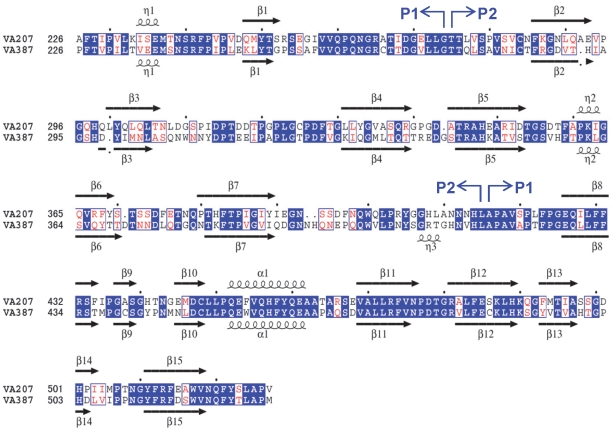
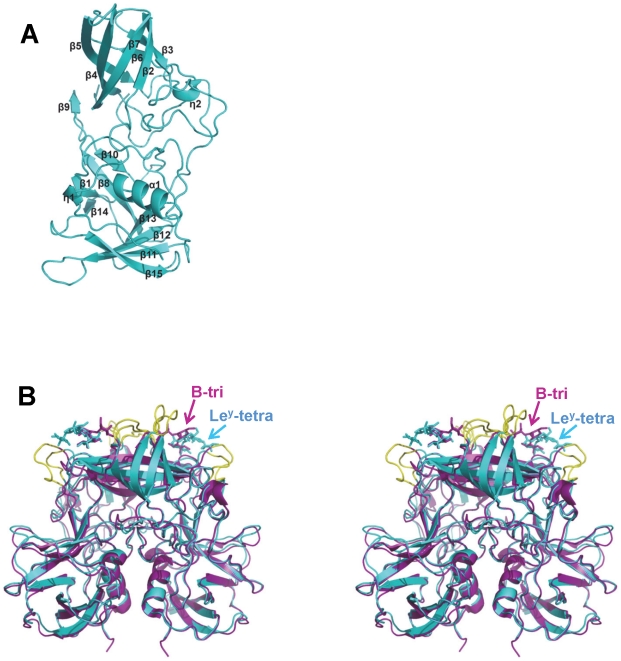
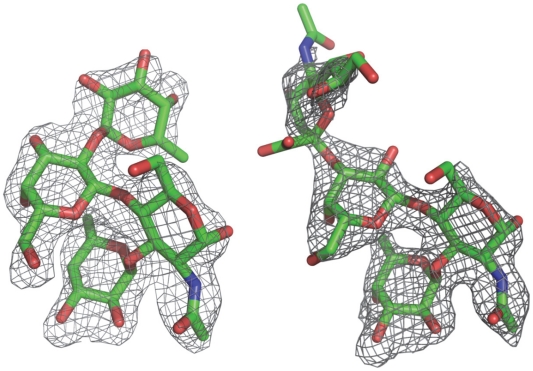
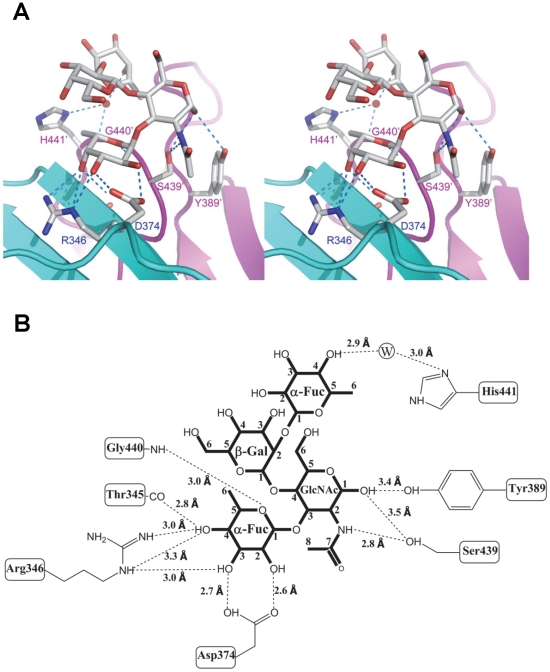
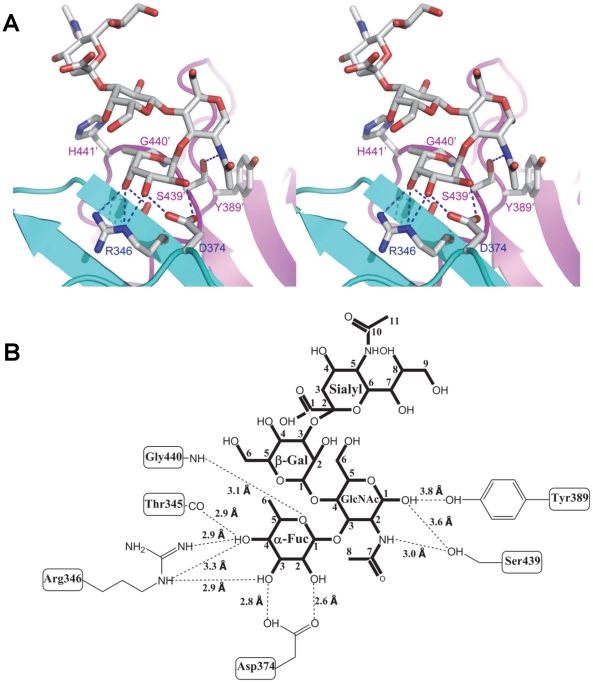
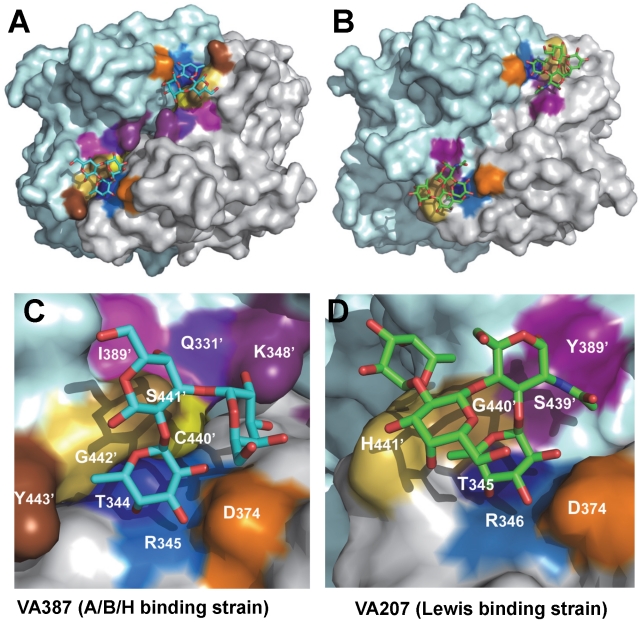
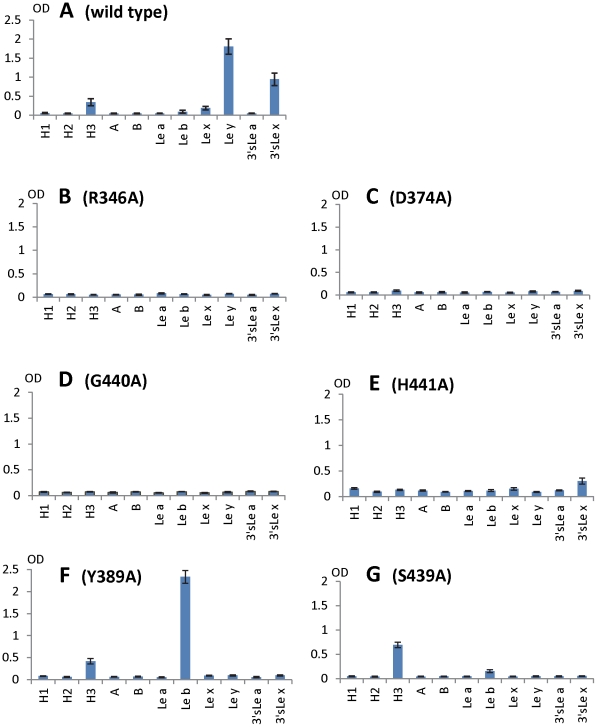
Noroviruses, an important cause of acute gastroenteritis in humans, recognize the histo-blood group antigens (HBGAs) as host susceptible factors in a strain-specific manner. The crystal structures of the HBGA-binding interfaces of two A/B/H-binding noroviruses, the prototype Norwalk virus (GI.1) and a predominant GII.4 strain (VA387), have been elucidated. In this study we determined the crystal structures of the P domain protein of the first Lewis-binding norovirus (VA207, GII.9) that has a distinct binding property from those of Norwalk virus and VA387. Co-crystallization of the VA207 P dimer with Le(y) or sialyl Le(x) tetrasaccharides showed that VA207 interacts with these antigens through a common site found on the VA387 P protein which is highly conserved among most GII noroviruses. However, the HBGA-binding site of VA207 targeted at the Lewis antigens through the α-1, 3 fucose (the Lewis epitope) as major and the β-N-acetyl glucosamine of the precursor as minor interacting sites. This completely differs from the binding mode of VA387 and Norwalk virus that target at the secretor epitopes. Binding pocket of VA207 is formed by seven amino acids, of which five residues build up the core structure that is essential for the basic binding function, while the other two are involved in strain-specificity. Our results elucidate for the first time the genetic and structural basis of strain-specificity by a direct comparison of two genetically related noroviruses in their interaction with different HBGAs. The results provide insight into the complex interaction between the diverse noroviruses and the polymorphic HBGAs and highlight the role of human HBGA as a critical factor in norovirus evolution.
诺如病毒是人类急性肠胃炎的重要病因,它以菌株特异性方式识别组织血型抗原(HBGAs)作为宿主易感性因素。两种 A/B/H 结合诺如病毒(原型诺如病毒(GI.1)和主要的 GII.4 株(VA387))的 HBGA 结合界面的晶体结构已经阐明。在这项研究中,我们确定了第一个 Lewis 结合诺如病毒(VA207,GII.9)的 P 结构域蛋白的晶体结构,它具有与诺如病毒和 VA387 不同的结合特性。VA207 P 二聚体与 Le(y)或唾液酸 Le(x)四糖的共结晶表明,VA207 通过在 VA387 P 蛋白上发现的一个共同位点与这些抗原相互作用,该位点在大多数 GII 诺如病毒中高度保守。然而,VA207 的 HBGA 结合位点通过主要的α-1,3 岩藻糖(Lewis 表位)和前体的β-N-乙酰葡萄糖胺作为次要相互作用位点靶向 Lewis 抗原。这与 VA387 和诺如病毒的结合模式完全不同,后者靶向分泌型表位。VA207 的结合口袋由七个氨基酸组成,其中五个残基构成了基本结合功能所必需的核心结构,而另外两个残基参与了菌株特异性。我们的研究结果首次通过直接比较两种遗传相关的诺如病毒在与不同 HBGAs 相互作用时的基因和结构基础,阐明了菌株特异性的遗传和结构基础。这些结果深入了解了不同诺如病毒与多态性 HBGAs 之间复杂的相互作用,并强调了人类 HBGA 作为诺如病毒进化的关键因素的作用。