Tan Ming, Xia Ming, Chen Yutao, Bu Weiming, Hegde Rashmi S, Meller Jarek, Li Xuemei, Jiang Xi
Division of Infectious Diseases, Cincinnati Children's Hospital Medical Center, Cincinnati, OH, USA.
PLoS One. 2009;4(4):e5058. doi: 10.1371/journal.pone.0005058. Epub 2009 Apr 1.
Human noroviruses are the major viral pathogens of epidemic acute gastroenteritis. These genetically diverse viruses comprise two major genogroups (GI and GII) and approximately 30 genotypes. Noroviruses recognize human histo-blood group antigens (HBGAs) in a diverse, strain-specific manner. Recently the crystal structures of the HBGA-binding interfaces of the GI Norwalk virus and the GII VA387 have been determined, which allows us to examine the genetic and structural relationships of the HBGA-binding interfaces of noroviruses with variable HBGA-binding patterns. Our hypothesis is that, if HBGAs are the viral receptors necessary for norovirus infection and spread, their binding interfaces should be under a selection pressure in the evolution of noroviruses.
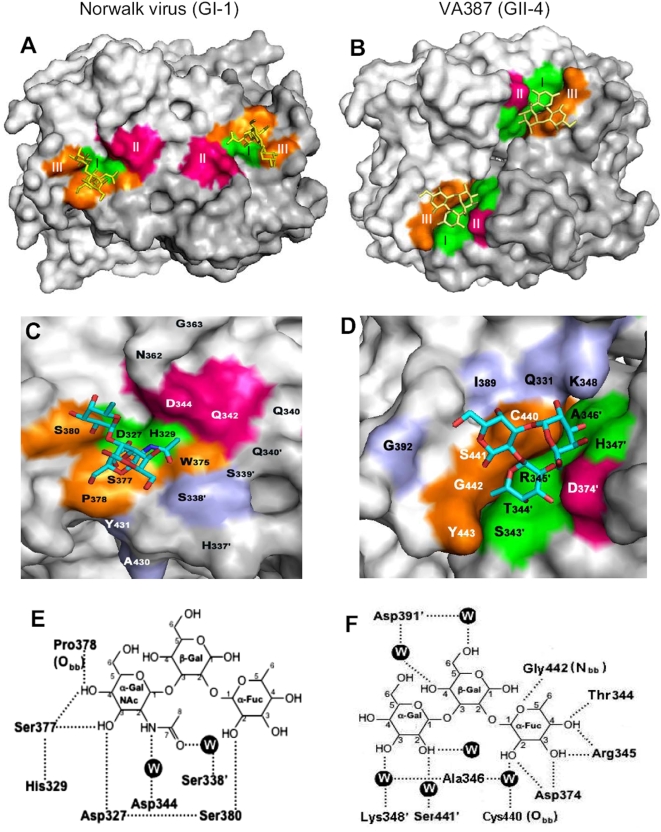
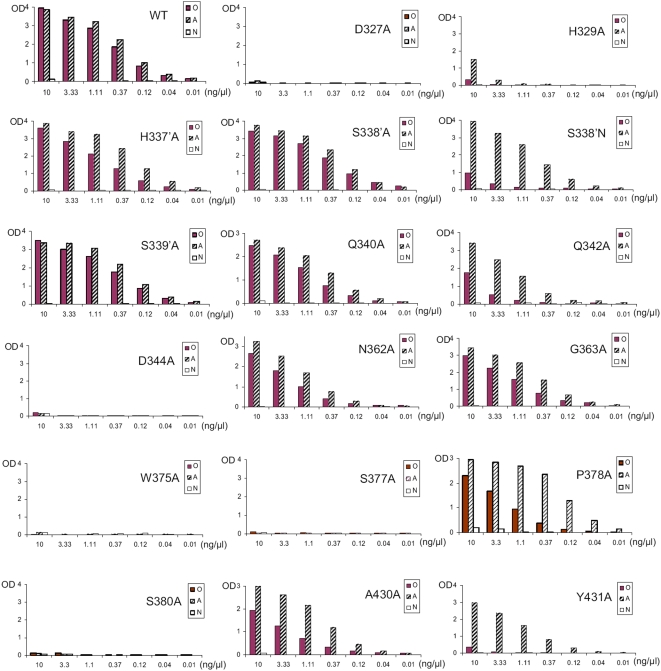
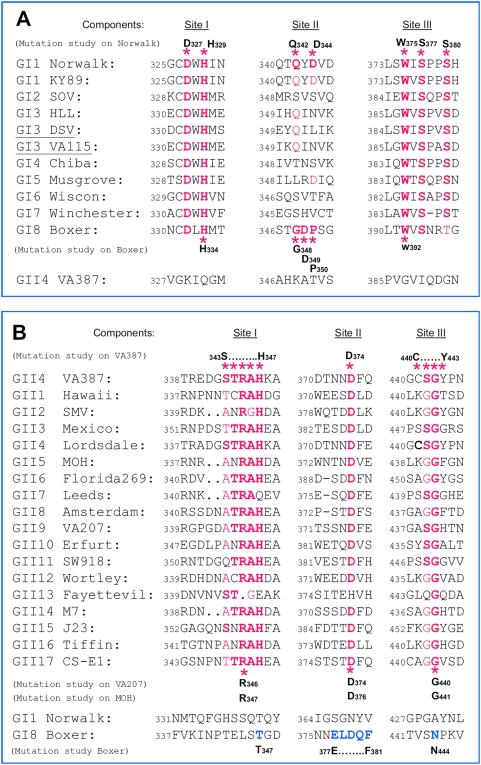
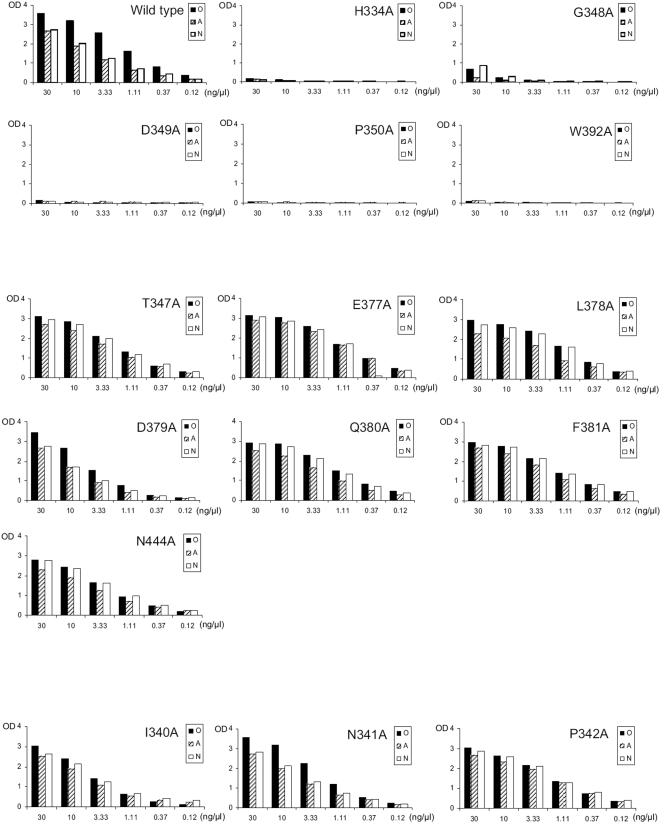
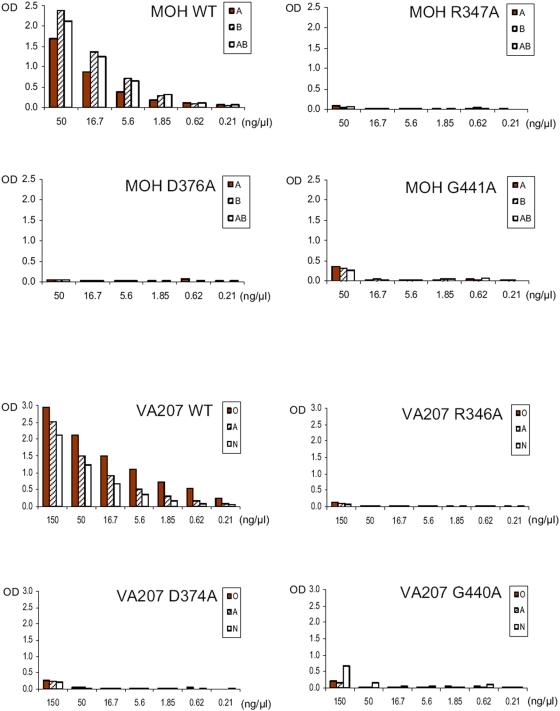
Structural comparison of the HBGA-binding interfaces of the two noroviruses has revealed shared features but significant differences in the location, sequence composition, and HBGA-binding modes. On the other hand, the primary sequences of the HBGA-binding interfaces are highly conserved among strains within each genogroup. The roles of critical residues within the binding sites have been verified by site-directed mutagenesis followed by functional analysis of strains with variable HBGA-binding patterns.
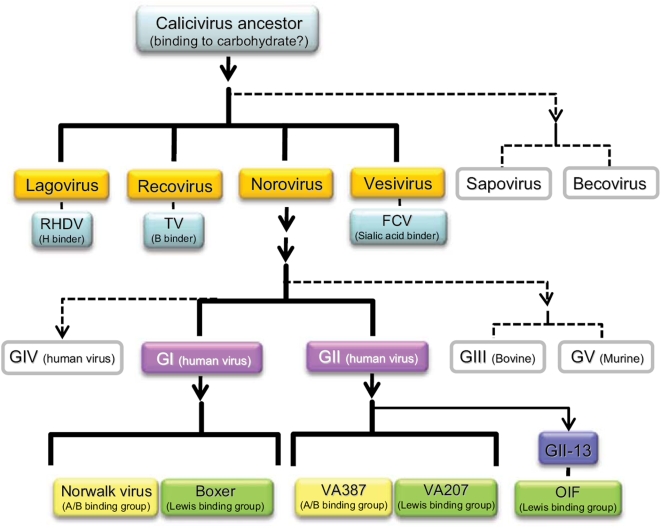
Our data indicate that the human HBGAs are an important factor in norovirus evolution. Each of the two major genogroups represents an evolutionary lineage characterized by distinct genetic traits. Functional convergence of strains with the same HBGA targets subsequently resulted in acquisition of analogous HBGA binding interfaces in the two genogroups that share an overall structural similarity, despite their distinct locations and amino acid compositions. On the other hand, divergent evolution may have contributed to the observed overall differences between and within the two lineages. Thus, both divergent and convergent evolution, as well as the polymorphic human HBGAs, likely contribute to the diversity of noroviruses. The finding of genogroup-specific conservation of HBGA binding interfaces will facilitate the development of rational strategies to control and prevent norovirus-associated gastroenteritis.
人诺如病毒是流行性急性胃肠炎的主要病毒病原体。这些基因多样的病毒包括两个主要基因组(GI和GII)以及大约30个基因型。诺如病毒以多样的、菌株特异性的方式识别人类组织血型抗原(HBGA)。最近,GI型诺沃克病毒和GII型VA387病毒的HBGA结合界面的晶体结构已被确定,这使我们能够研究具有可变HBGA结合模式的诺如病毒的HBGA结合界面的遗传和结构关系。我们的假设是,如果HBGA是诺如病毒感染和传播所必需的病毒受体,那么它们的结合界面在诺如病毒的进化过程中应该受到选择压力。
两种诺如病毒的HBGA结合界面的结构比较揭示了共同特征,但在位置、序列组成和HBGA结合模式上存在显著差异。另一方面,HBGA结合界面的一级序列在每个基因组内的菌株中高度保守。结合位点内关键残基的作用已通过定点诱变并随后对具有可变HBGA结合模式的菌株进行功能分析得到验证。
我们的数据表明,人类HBGA是诺如病毒进化中的一个重要因素。两个主要基因组中的每一个都代表一个以独特遗传特征为特征的进化谱系。具有相同HBGA靶点的菌株的功能趋同随后导致在两个基因组中获得了总体结构相似的类似HBGA结合界面,尽管它们的位置和氨基酸组成不同。另一方面,趋异进化可能导致了两个谱系之间和内部观察到的总体差异。因此,趋异进化和趋同进化以及多态性的人类HBGA可能都导致了诺如病毒的多样性。HBGA结合界面的基因组特异性保守性的发现将有助于制定合理的策略来控制和预防诺如病毒相关的胃肠炎。