Department of Pharmaceutical Sciences, School of Pharmacy, University of Colorado Denver, Anschutz Medical Campus, Aurora, Colorado 80045, USA.
Chem Res Toxicol. 2011 Sep 19;24(9):1411-9. doi: 10.1021/tx200169n. Epub 2011 Aug 18.
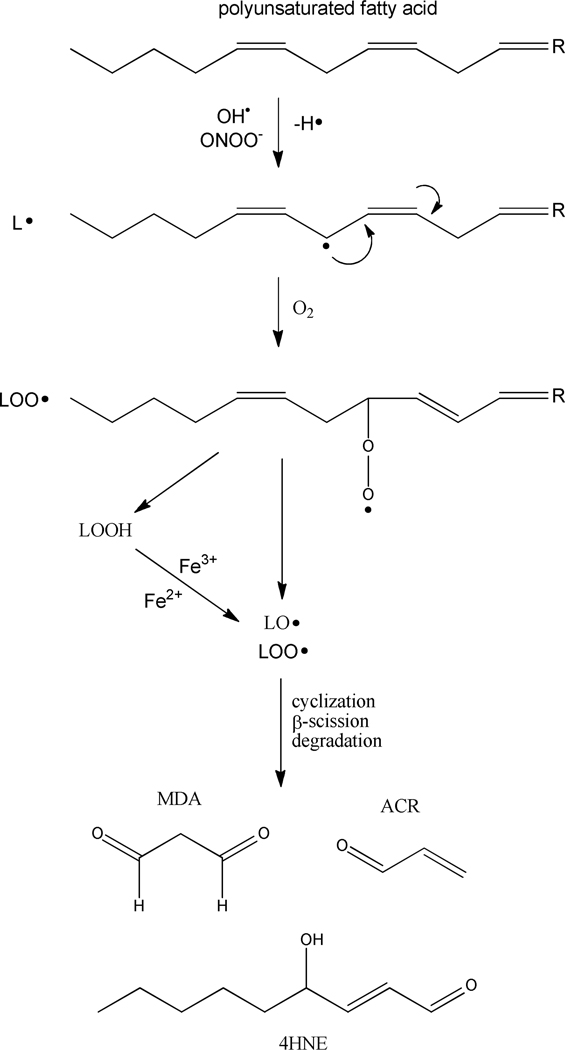
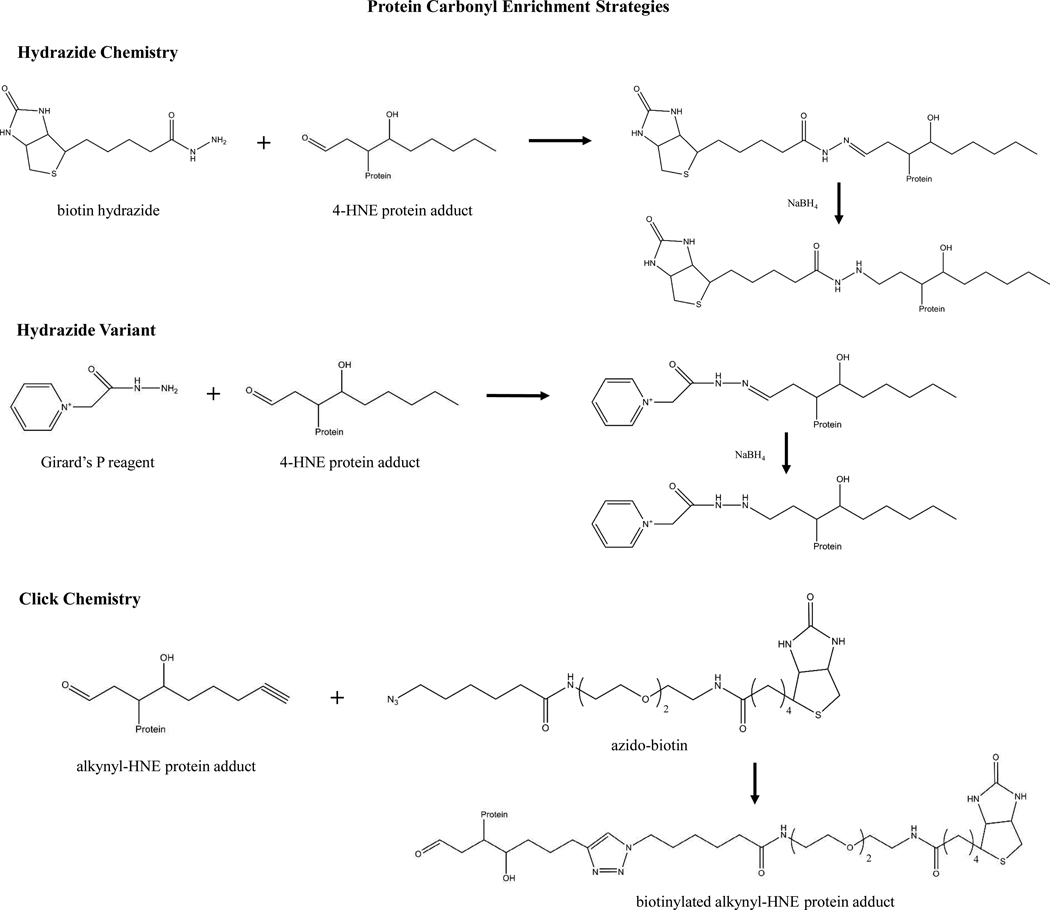
The sustained overproduction of reactive oxygen and nitrogen species results in an imbalance of cellular prooxidant-antioxidant systems and is implicated in numerous disease states, including alcoholic liver disease, cancer, neurological disorders, inflammation, and cardiovascular disease. The accumulation of reactive aldehydes resulting from sustained oxidative stress and lipid peroxidation is an underlying factor in the development of these pathologies. Determining the biochemical factors that elicit cellular responses resulting from protein carbonylation remains a key element to developing therapeutic approaches and ameliorating disease pathologies. This review details our current understanding of the generation of reactive aldehydes via lipid peroxidation resulting in protein carbonylation, focusing on pathophysiologic factors associated with 4-hydroxynonenal-protein modification. Additionally, an overview of in vitro and in vivo model systems used to study the physiologic impact of protein carbonylation is presented. Finally, an update of the methods commonly used in characterizing protein modification by reactive aldehydes provides an overview of isolation techniques, mass spectrometry, and computational biology. It is apparent that research in this area employing state-of-the-art proteomics, mass spectrometry, and computational biology is rapidly evolving, yielding foundational knowledge concerning the molecular mechanisms of protein carbonylation and its relation to a spectrum of diseases associated with oxidative stress.
活性氧和氮物种的持续过度产生导致细胞促氧化剂-抗氧化剂系统失衡,并与许多疾病状态有关,包括酒精性肝病、癌症、神经紊乱、炎症和心血管疾病。持续氧化应激和脂质过氧化导致的反应性醛类的积累是这些病理发展的一个潜在因素。确定引发细胞对蛋白质羰基化反应的生化因素仍然是开发治疗方法和改善疾病病理的关键要素。这篇综述详细介绍了我们目前对通过脂质过氧化产生的反应性醛类导致蛋白质羰基化的理解,重点介绍了与 4-羟基壬烯醛-蛋白质修饰相关的病理生理因素。此外,还介绍了用于研究蛋白质羰基化生理影响的体外和体内模型系统的概述。最后,对常用的反应性醛类修饰蛋白质的方法进行了更新,概述了分离技术、质谱和计算生物学。显然,该领域的研究采用最先进的蛋白质组学、质谱和计算生物学正在迅速发展,为蛋白质羰基化的分子机制及其与与氧化应激相关的一系列疾病的关系提供了基础知识。