Department of Plant Physiology, Swammerdam Institute of Life Sciences, Science Park 904, Amsterdam, The Netherlands.
Plant Mol Biol. 2011 Nov;77(4-5):323-36. doi: 10.1007/s11103-011-9813-x. Epub 2011 Aug 5.
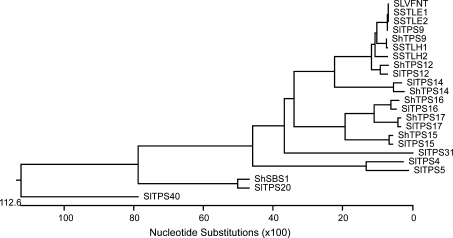
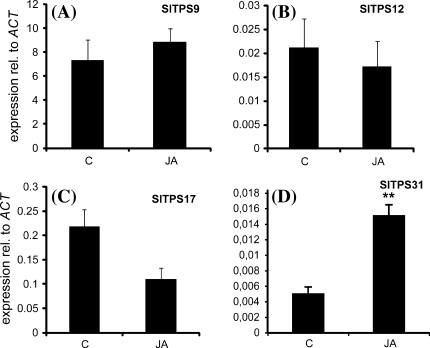
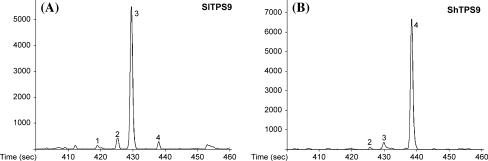
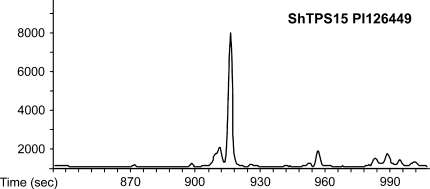
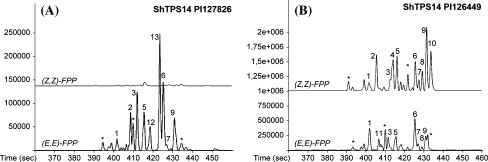
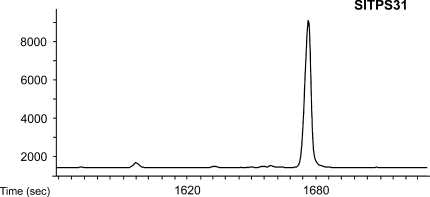
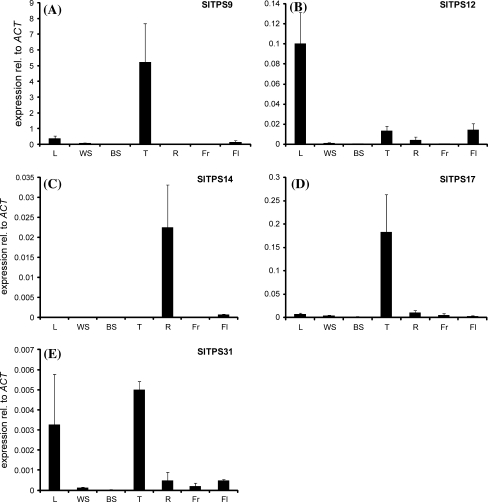
Solanum lycopersicum and Solanum habrochaites (f. typicum) accession PI127826 emit a variety of sesquiterpenes. To identify terpene synthases involved in the production of these volatile sesquiterpenes, we used massive parallel pyrosequencing (RNA-seq) to obtain the transcriptome of the stem trichomes from these plants. This approach resulted initially in the discovery of six sesquiterpene synthase cDNAs from S. lycopersicum and five from S. habrochaites. Searches of other databases and the S. lycopersicum genome resulted in the discovery of two additional sesquiterpene synthases expressed in trichomes. The sesquiterpene synthases from S. lycopersicum and S. habrochaites have high levels of protein identity. Several of them appeared to encode for non-functional proteins. Functional recombinant proteins produced germacrenes, β-caryophyllene/α-humulene, viridiflorene and valencene from (E,E)-farnesyl diphosphate. However, the activities of these enzymes do not completely explain the differences in sesquiterpene production between the two tomato plants. RT-qPCR confirmed high levels of expression of most of the S. lycopersicum sesquiterpene synthases in stem trichomes. In addition, one sesquiterpene synthase was induced by jasmonic acid, while another appeared to be slightly repressed by the treatment. Our data provide a foundation to study the evolution of terpene synthases in cultivated and wild tomato.
番茄(Solanum lycopersicum)和智利番茄(Solanum habrochaites,f. typicum)PI127826 品系发出各种倍半萜。为了鉴定产生这些挥发性倍半萜的萜烯合酶,我们使用大规模平行焦磷酸测序(RNA-seq)获得这些植物茎毛状体的转录组。这种方法最初从番茄中发现了 6 个倍半萜合酶 cDNA,从智利番茄中发现了 5 个。在其他数据库和番茄基因组中的搜索结果表明,还有另外 2 个在毛状体中表达的倍半萜合酶。番茄和智利番茄的倍半萜合酶具有高度的蛋白质同源性。其中几个似乎编码非功能性蛋白质。功能性重组蛋白从(E,E)-法呢基二磷酸产生大根香叶烯、β-石竹烯/α-葎草烯、紫罗兰烯和缬烯。然而,这些酶的活性并不能完全解释这两种番茄植物之间倍半萜产生的差异。RT-qPCR 证实了大多数番茄倍半萜合酶在茎毛状体中高水平表达。此外,一种倍半萜合酶被茉莉酸诱导,而另一种似乎被该处理轻微抑制。我们的数据为研究栽培和野生番茄中萜烯合酶的进化提供了基础。