Wong Rebecca S Y
Division of Human Biology, School of Medical and Health Sciences, International Medical University, No. 126, Jalan Jalil Perkasa 19, Bukit Jalil, 57000 Kuala Lumpur, Malaysia.
J Biomed Biotechnol. 2011;2011:459510. doi: 10.1155/2011/459510. Epub 2011 Jul 24.
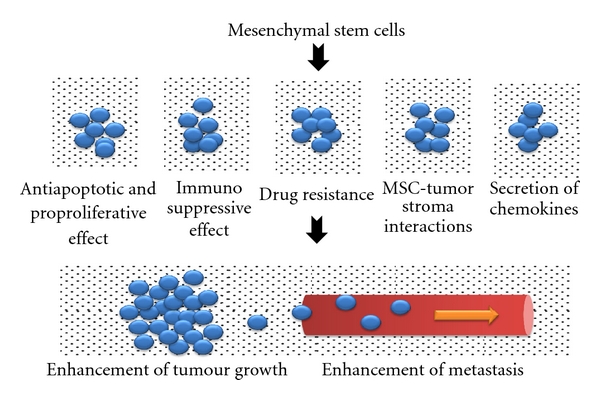
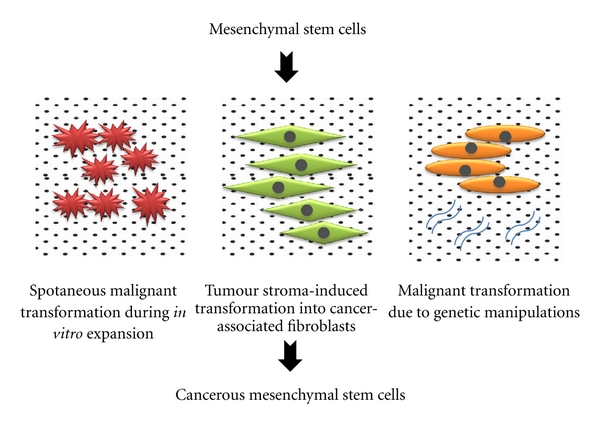
Mesenchymal stem cells (MSCs) have been used in cell-based therapy in various disease conditions such as graft-versus-host and heart diseases, osteogenesis imperfecta, and spinal cord injuries, and the results have been encouraging. However, as MSC therapy gains popularity among practitioners and researchers, there have been reports on the adverse effects of MSCs especially in the context of tumour modulation and malignant transformation. These cells have been found to enhance tumour growth and metastasis in some studies and have been related to anticancer-drug resistance in other instances. In addition, various studies have also reported spontaneous malignant transformation of MSCs. The mechanism of the modulatory behaviour and the tumorigenic potential of MSCs, warrant urgent exploration, and the use of MSCs in patients with cancer awaits further evaluation. However, if MSCs truly play a role in tumour modulation, they can also be potential targets of cancer treatment.
间充质干细胞(MSCs)已被用于多种疾病的细胞治疗,如移植物抗宿主病、心脏病、成骨不全症和脊髓损伤等,且结果令人鼓舞。然而,随着MSCs治疗在从业者和研究人员中越来越受欢迎,已有关于MSCs不良反应的报道,尤其是在肿瘤调节和恶性转化方面。在一些研究中发现这些细胞会促进肿瘤生长和转移,在其他情况下则与抗癌药物耐药性有关。此外,各种研究还报道了MSCs的自发恶性转化。MSCs调节行为和致瘤潜力的机制亟待探索,在癌症患者中使用MSCs也有待进一步评估。然而,如果MSCs真的在肿瘤调节中发挥作用,它们也可能成为癌症治疗的潜在靶点。