Department of Internal Medicine Faculty of Medicine, Padjadjaran University/Hasan Sadikin Hospital, Bandung, Indonesia.
BMC Infect Dis. 2011 Aug 9;11:213. doi: 10.1186/1471-2334-11-213.
Anemia is a common clinical finding in HIV-infected patients and iron deficiency or redistribution may contribute to the development of low hemoglobin levels. Iron overload is associated with a poor prognosis in HIV and Hepatitis C virus infections. Iron redistribution may be caused by inflammation but possibly also by hepatitis C co-infection. We examined the prevalence of anemia and its relation to mortality in a cohort of HIV patients in a setting where injecting drug use (IDU) is a main mode of HIV transmission, and measured serum ferritin and sTfR, in relation to anemia, inflammation, stage of HIV disease, ART and HCV infection.
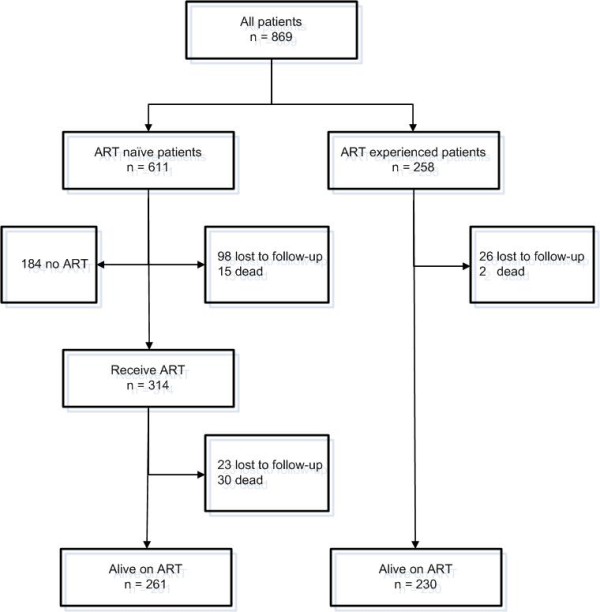
Patient characteristics, ART history and iron parameters were recorded from adult HIV patients presenting between September 2007 and August 2009 in the referral hospital for West Java, Indonesia. Kaplan-Meier estimates and Cox's regression were used to assess factors affecting survival. Logistic regression was used to identity parameters associated with high ferritin concentrations.
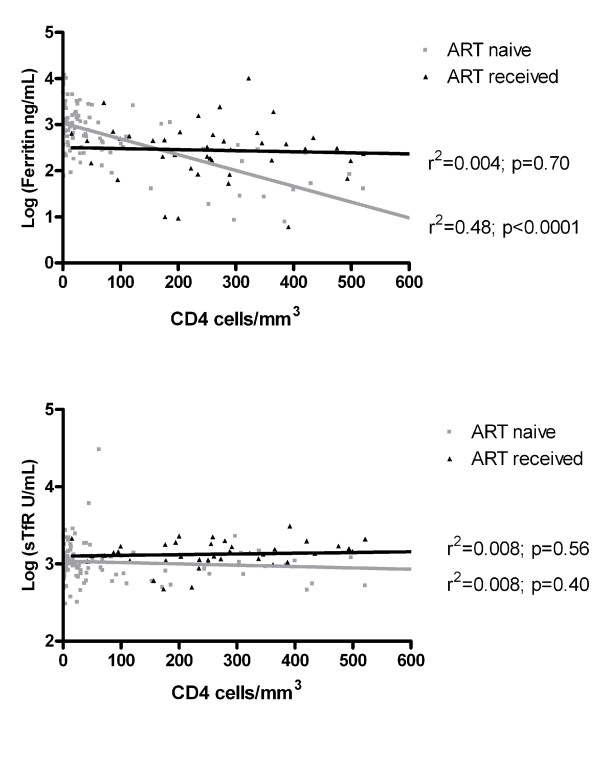
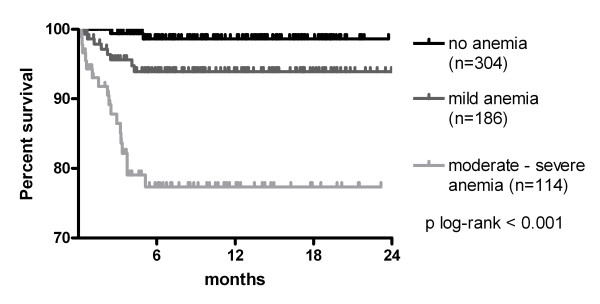
Anemia was found in 49.6% of 611 ART-naïve patients, with mild (Hb 10.5 -12.99 g/dL for men; and 10.5-11.99 g/dL for women) anemia in 62.0%, and moderate to severe anemia (Hb < 10.5 g/dL) in 38.0%. Anemia remained an independent factor associated with death, also after adjustment for CD4 count and ART (p = 0.008). Seroprevalence of HCV did not differ in patients with (56.9%) or without anemia (59.6%). Serum ferritin concentrations were elevated, especially in patients with anemia (p = 0.07) and/or low CD4 counts (p < 0.001), and were not related to hsCRP or HCV infection. Soluble TfR concentrations were low and not related to Hb, CD4, hsCRP or ART.
HIV-associated anemia is common among HIV-infected patients in Indonesia and strongly related to mortality. High ferritin with low sTfR levels suggest that iron redistribution and low erythropoietic activity, rather than iron deficiency, contribute to anemia. Serum ferritin and sTfR should be used cautiously to assess iron status in patients with advanced HIV infection.
贫血是 HIV 感染患者的常见临床发现,铁缺乏或重新分布可能导致血红蛋白水平降低。铁过载与 HIV 和丙型肝炎病毒感染的不良预后相关。铁重新分布可能由炎症引起,但也可能由丙型肝炎合并感染引起。我们在一个注射吸毒(IDU)是 HIV 主要传播方式的环境中,检查了 HIV 患者队列中贫血的患病率及其与死亡率的关系,并测量了血清铁蛋白和可溶性转铁蛋白受体(sTfR)与贫血、炎症、HIV 疾病分期、ART 和 HCV 感染的关系。
从 2007 年 9 月至 2009 年 8 月期间在西爪哇转诊医院就诊的成年 HIV 患者中记录患者特征、ART 史和铁参数。使用 Kaplan-Meier 估计和 Cox 回归评估影响生存的因素。使用逻辑回归识别与高铁蛋白浓度相关的参数。
在 611 名未接受 ART 的患者中,发现贫血占 49.6%,其中轻度贫血(男性 Hb 10.5-12.99 g/dL;女性 10.5-11.99 g/dL)占 62.0%,中度至重度贫血(Hb<10.5 g/dL)占 38.0%。贫血仍然是与死亡相关的独立因素,即使在调整了 CD4 计数和 ART 后也是如此(p=0.008)。HCV 血清阳性率在贫血患者(56.9%)和无贫血患者(59.6%)之间没有差异。血清铁蛋白浓度升高,尤其是在贫血患者(p=0.07)和/或低 CD4 计数患者中(p<0.001),并且与 hsCRP 或 HCV 感染无关。可溶性转铁蛋白受体浓度较低,与 Hb、CD4、hsCRP 或 ART 无关。
印度尼西亚 HIV 感染患者中 HIV 相关贫血很常见,与死亡率密切相关。高铁蛋白伴低 sTfR 水平提示铁重新分布和低红细胞生成活性导致贫血,而不是铁缺乏。在晚期 HIV 感染患者中,应谨慎使用血清铁蛋白和 sTfR 来评估铁状态。