Center for Structural Biology, School of Life Sciences, Ministry of Education Key Laboratory of Protein Sciences, Tsinghua University, Beijing, People's Republic of China.
PLoS Pathog. 2011 Jul;7(7):e1002162. doi: 10.1371/journal.ppat.1002162. Epub 2011 Jul 28.
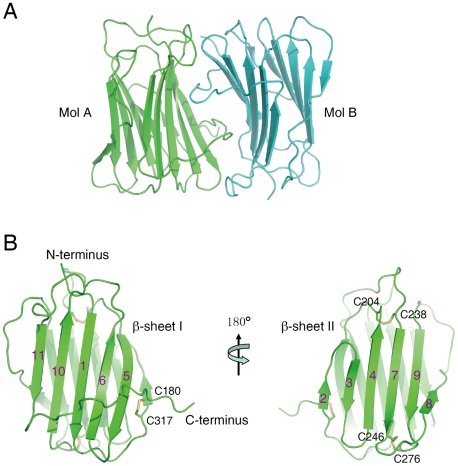
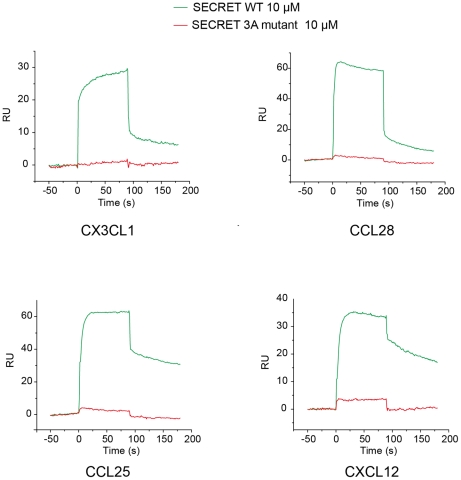
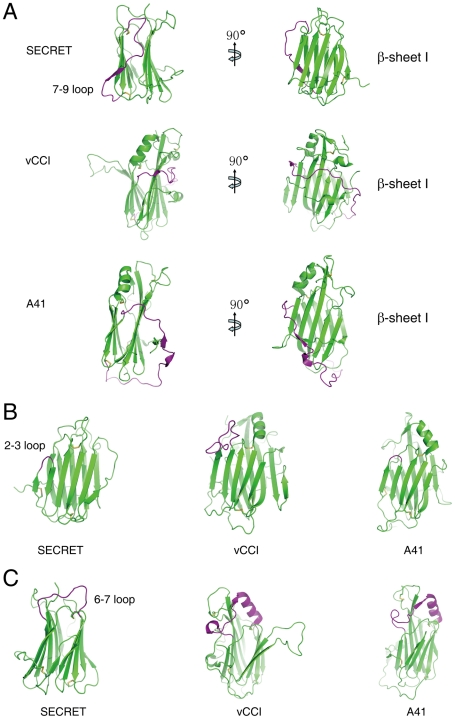
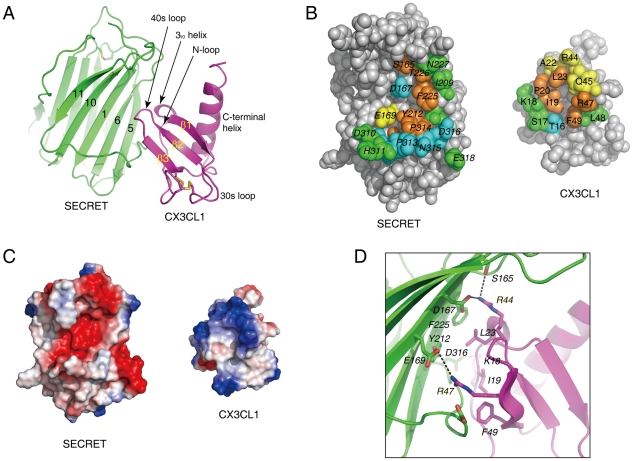
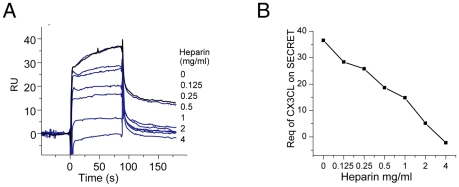
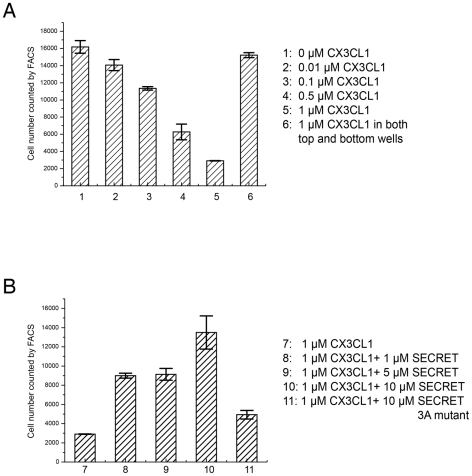
Pathogens have evolved sophisticated mechanisms to evade detection and destruction by the host immune system. Large DNA viruses encode homologues of chemokines and their receptors, as well as chemokine-binding proteins (CKBPs) to modulate the chemokine network in host response. The SECRET domain (smallpox virus-encoded chemokine receptor) represents a new family of viral CKBPs that binds a subset of chemokines from different classes to inhibit their activities, either independently or fused with viral tumor necrosis factor receptors (vTNFRs). Here we present the crystal structures of the SECRET domain of vTNFR CrmD encoded by ectromelia virus and its complex with chemokine CX3CL1. The SECRET domain adopts a β-sandwich fold and utilizes its β-sheet I surface to interact with CX3CL1, representing a new chemokine-binding manner of viral CKBPs. Structure-based mutagenesis and biochemical analysis identified important basic residues in the 40s loop of CX3CL1 for the interaction. Mutation of corresponding acidic residues in the SECRET domain also affected the binding for other chemokines, indicating that the SECRET domain binds different chemokines in a similar manner. We further showed that heparin inhibited the binding of CX3CL1 by the SECRET domain and the SECRET domain inhibited RAW264.7 cell migration induced by CX3CL1. These results together shed light on the structural basis for the SECRET domain to inhibit chemokine activities by interfering with both chemokine-GAG and chemokine-receptor interactions.
病原体进化出了复杂的机制来逃避宿主免疫系统的检测和破坏。大型 DNA 病毒编码趋化因子及其受体的同源物,以及趋化因子结合蛋白(CKBPs),以调节宿主反应中的趋化因子网络。SECRET 结构域(天花病毒编码的趋化因子受体)代表了一类新的病毒 CKBPs,它可以结合不同类别趋化因子的亚群,抑制其活性,无论是独立的还是与病毒肿瘤坏死因子受体(vTNFR)融合。在这里,我们展示了来自埃可病毒的 vTNFR CrmD 编码的 SECRET 结构域及其与趋化因子 CX3CL1 的复合物的晶体结构。SECRET 结构域采用β-三明治折叠,并利用其β-片 I 表面与 CX3CL1 相互作用,代表了病毒 CKBPs 的一种新的趋化因子结合方式。基于结构的诱变和生化分析确定了 CX3CL1 40s 环中对于相互作用重要的碱性残基。SECRET 结构域中相应酸性残基的突变也影响了对其他趋化因子的结合,表明 SECRET 结构域以相似的方式结合不同的趋化因子。我们进一步表明肝素抑制了 SECRET 结构域与 CX3CL1 的结合,而 SECRET 结构域抑制了 CX3CL1 诱导的 RAW264.7 细胞迁移。这些结果共同揭示了 SECRET 结构域通过干扰趋化因子-GAG 和趋化因子受体相互作用来抑制趋化因子活性的结构基础。